

The donut hole is gone. As of 2025, Medicare replaced the old Part D coverage gap with a hard annual cap on drug spending, and for 2026 that cap sits at $2,100. Once your out-of-pocket costs for covered Part D drugs hit that number, your copays and coinsurance drop to zero for the rest of the calendar year. The sections below cover what counts toward that $2,100, how negotiated drug prices factor in, and what to check on your plan right now.
TL;DR:
- The $2,100 out-of-pocket cap resets annually on January 1 and covers only costs for covered Part D drugs, not premiums or non-formulary drugs.
- Costs only count toward this limit if they include deductibles, copays, coinsurance, or certain third-party payments; premiums and hospital bills do not.
- Negotiated drug prices for high-cost medications took effect January 1, 2026, potentially lowering copays, but plan-specific details may vary.
- To avoid surprises, beneficiaries should review formulary and cost rules, track their out-of-pocket spending, and consider using the Prescription Payment Plan.
- Understanding the mechanics behind the cap, drug pricing, and formulary tiers is crucial, as the redesigned system is more predictable but also more complex.
Table of Contents
- Medicare Donut Hole 2026: How We Got Here
- How Part D Coverage Phases Work Under the 2026 Redesign
- What Counts Toward the $2,100 Cap (And What Doesn’t)
- What Negotiated Drug Prices Mean for Your Costs in 2026
- Steps to Take Now Before Costs Catch You Off Guard
- Where to Verify Your Plan’s Specific Numbers
- Why This Redesign Still Trips People Up
- Sources
Medicare Donut Hole 2026: How We Got Here
The phrase “donut hole” described a gap where beneficiaries paid full price for drugs after an initial coverage limit and before catastrophic coverage kicked back in. Congress started closing that gap gradually under the Affordable Care Act, shrinking the coinsurance beneficiaries paid inside the gap year after year. The Inflation Reduction Act finished the job.
The IRA restructured Part D from the ground up, not just patched the gap. It set a $2,000 out-of-pocket cap for 2025, indexed to rise with drug spending trends, which is how the number reached $2,100 for 2026. The goal was straightforward: stop punishing people with unpredictable mid-year cost spikes and give everyone a firm ceiling.
The redesign did more than cap spending. It also opened the door to:
- Federal negotiation of prices for a first group of high-cost drugs
- A new subsidy structure that shifts more catastrophic-phase costs onto drug manufacturers and Medicare, and less onto plan sponsors
- The Prescription Payment Plan, which lets you spread costs across the year instead of absorbing them in January
Those pieces work together. A hard cap without negotiated prices would still leave some beneficiaries hitting $2,100 in February. The pricing changes are meant to slow how fast people get there in the first place.
How Part D Coverage Phases Work Under the 2026 Redesign
Part D in 2026 still runs through three phases, but the math inside each one changed. Here’s the sequence you’ll move through over the calendar year:
- Deductible phase. You pay 100% of drug costs until you hit your plan’s deductible. Plans can charge up to a deductible amount capped according to national rules for 2026, though many charge less, and some charge nothing at all. Check your plan’s specific figure. This is not a flat number and it varies by carrier.
- Initial coverage phase. After the deductible, you typically pay 25% coinsurance on covered drugs while your plan picks up the rest. This phase continues until your total out-of-pocket spending reaches $2,100.
- Catastrophic coverage. Once you cross the $2,100 threshold, you pay nothing more for covered Part D drugs for the remainder of the year. No coinsurance, no copay.
That third phase is the entire point of the redesign. Under the old system, catastrophic coverage still carried a small coinsurance charge. Now it’s a true stop. If you take an expensive specialty medication, you could realistically hit $2,100 by spring and coast through the rest of the year paying nothing for that drug.
What Counts Toward the $2,100 Cap (And What Doesn’t)
Not every dollar you spend on health care applies to your Part D cap, and mixing this up is the most common mistake beneficiaries make when estimating where they stand.
Counts toward the $2,100:
- Your deductible payments
- Copays and coinsurance for covered Part D drugs
- Certain payments made on your behalf by third parties, including some Extra Help contributions
Does not count:
- Your monthly Part D premium
- Costs for drugs not on your plan’s formulary
- Part A and Part B costs, including hospital and outpatient charges
Fast fact: The $2,100 threshold reflects spending on covered Part D drugs specifically, not overall health care costs. Someone paying $400 a month in Part D premiums contributes $0 of that toward the cap, no matter how long they pay it.
One more wrinkle worth flagging: the cap resets every January 1. If you fill a 90-day supply in December instead of splitting it, you might push spending into the current year and get closer to catastrophic coverage sooner, or you might tip into a fresh deductible period earlier than expected next year. Timing refills around the calendar boundary is worth ten minutes of planning.
What Negotiated Drug Prices Mean for Your Costs in 2026
CMS negotiated prices for the first group of 10 high-cost drugs, and those negotiated maximum fair prices took effect January 1, 2026. If you take one of those medications, your plan’s cost for it dropped, and that can translate into lower coinsurance for you during the initial coverage phase.
The redesign also created a selected drug subsidy that shifts more of the financial responsibility for these drugs onto manufacturers and the federal government, easing the load that used to sit almost entirely on plan sponsors. That has a ripple effect on formularies. Some plans may now favor negotiated drugs in their tiering, while others adjust utilization management rules like prior authorization.
- Confirm whether your specific medication is on the negotiated list
- Ask your plan directly how the price change affects your copay, since plan-by-plan variation is real here
Pro Tip: Don’t assume a negotiated price automatically means a lower bill. Call your plan’s member services line and ask specifically how the new price applies to your tier and your copay, not just the drug’s list price.
Steps to Take Now Before Costs Catch You Off Guard
- Pull your plan’s formulary and check prior authorization rules for every medication you or someone you care for takes regularly, especially anything high-cost or specialty-tier.
- Add up your out-of-pocket spending so far this year. Pharmacy receipts and your Explanation of Benefits statements will show exactly how close you are to the $2,100 threshold.
- Ask about the Prescription Payment Plan if a big bill early in the year would strain your budget. It spreads your costs into monthly installments, but confirm it doesn’t change your total annual liability, only when you pay it.
- Check Extra Help eligibility. Income and asset limits determine whether you qualify for additional cost reductions, and this can meaningfully change what you pay before hitting catastrophic coverage.
- Read your Annual Notice of Change this fall. If your plan’s deductible, formulary, or tiering shifted for the coming year, that’s your signal to compare other plans during open enrollment rather than auto-renewing.
Pro Tip: Keep a simple running tally, even a notes app entry, of every drug payment starting in January. Guessing where you stand against $2,100 in October is much harder than tracking it as you go.
If you take a high-cost specialty drug, it’s also worth understanding how negotiated Medicare drug prices could shift your specific costs this year, and reviewing your Part D formulary before you assume nothing changed. For caregivers managing costs for someone who also relies on medical equipment, it helps to understand how durable medical equipment coverage works alongside drug costs, since both draw from the same household budget even though they’re billed separately.
Where to Verify Your Plan’s Specific Numbers
Your plan’s own numbers will differ from the national averages, so confirm details directly rather than assuming:
- Medicare explain the national rules and the $2,100 cap in plain language.
- The Medicare & You 2026 handbook covers the full redesign, including negotiated pricing, in one document mailed to every household.
- CMS’s final CY 2026 Part D program instructions lay out the technical mechanics for anyone who wants the regulatory detail.
- Your local State Health Insurance Assistance Program (SHIP) offers free, unbiased counseling, and Social Security handles Extra Help applications directly.
Why This Redesign Still Trips People Up
Here’s what I think gets missed in most of the coverage on this topic: people hear “the donut hole is gone” and assume Part D got simpler. It didn’t. It got more predictable, which is not the same thing. You still have a deductible phase, an initial coverage phase with real coinsurance, and now a subsidy structure and negotiated pricing layer that most beneficiaries have never had to think about before.
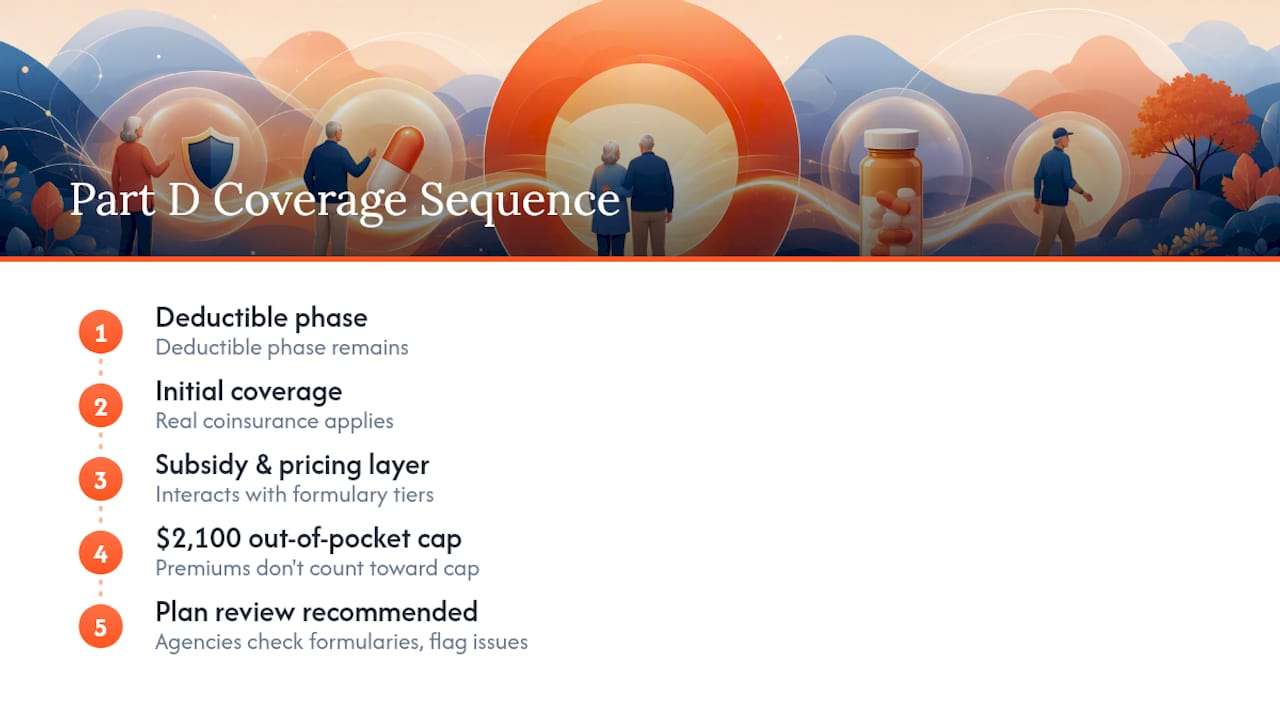
The old system was confusing because of the gap itself. The new system is confusing because the mechanics behind the $2,100 cap, what counts, what doesn’t, how negotiated prices interact with your specific formulary tier, require more upfront homework than a lot of people expect from a “fix.” I’d argue the redesign shifted the burden from mid-year sticker shock to January planning. That’s a better trade, but it’s still a trade, not a free lunch.
The biggest blind spot I see is people assuming their premium counts toward the cap. It doesn’t, and that misunderstanding leads folks to think they’re closer to catastrophic coverage than they actually are. If you only remember one thing from this article, remember that premiums and the $2,100 threshold live in two completely separate buckets.
Some Medicare insurance agencies offer plan-specific reviews including checking formularies, confirming what counts toward out-of-pocket totals, and flagging enrollment timing issues before they turn into penalties. If your 2026 drug costs don’t match what you expected, a personalized Part D plan review can usually explain why within one conversation.
— Zach
This article is general information, not a substitute for advice from a qualified financial advisor. Consult a qualified financial professional about your own circumstances before acting on anything here.
Sources
- How much does Medicare drug coverage cost? | Medicare
- Medicare and You Handbook 2026
- Final CY 2026 Part D redesign program instructions — CMS
- The Medicare Part D donut hole: What you need to know — NCOA
Recommended
Request a No Obligation Phone Call








Get Connected