

MAPD bundles medical and drug coverage into one plan with a provider network; a PDP covers drugs only and pairs with Original Medicare, letting you keep any doctor and add a Medigap policy. If you want extras like dental and vision and don’t mind a network, lean MAPD. If you want provider freedom and already have or want Medigap, lean PDP. Either way, check your medications and your doctors before the enrollment deadline.
TL;DR:
- MAPD plans often have lower or zero premiums due to rebates, but carry network restrictions that may limit provider choice annually.
- PDP plans allow for nationwide provider access and Medigap compatibility but typically have higher premiums and less drug formulary management.
- Medical costs can surpass the drug coverage cap of $2,100 in 2026 for high medical expenses without a Medigap backup, posing a financial risk.
- To decide, review your medication formulary, confirm your doctors’ network status, and estimate your annual costs including premiums and out-of-pocket expenses.
- Enrollments and plan switches are primarily restricted to the period from October 15 to December 7, with special periods for life events outside these dates.
Table of Contents
- PDP vs MAPD: The Quick Comparison
- What Are Coverage, Networks, and Medigap Compatibility?
- What Do MAPD and PDP Cost in 2026?
- What Should You Compare Before Choosing?
- When Can You Enroll or Switch Plans?
- How Safeguard Benefit Services Helps You Compare Plans
- What’s the Smartest Next Step Here?
- Get Your MAPD vs PDP Comparison Done for You
- Where This Information Comes From
- Sources
- FAQ
PDP vs MAPD: The Quick Comparison
Here’s the side-by-side version, stripped down to what actually changes your coverage and your wallet:
- What it covers: MAPD wraps medical (Part A and B) and drug coverage into one plan. A PDP covers drugs only, paired with Original Medicare.
- Doctor access: MAPD usually runs through an HMO or PPO network that can shift year to year. A PDP leaves your provider choice untouched since Original Medicare covers the medical side.
- Medigap: You can’t use a Medigap policy with MAPD. Pair a PDP with Original Medicare and you can still buy or keep Medigap.
- Premiums: MAPD often shows a lower or $0 premium because MA rebates subsidize the plan. Both plan types share the same $2,100 Part D drug out-of-pocket cap in 2026.
- Utilization management: MAPD formularies tend to place more drugs on lower cost tiers with somewhat fewer prior authorization hurdles than PDPs, according to MedPAC’s 2025 structural review.
What Are Coverage, Networks, and Medigap Compatibility?
MAPD, formally Medicare Advantage Prescription Drug plans, replace Original Medicare entirely. The private insurer becomes responsible for your hospital, medical, and drug benefits under one card, one deductible structure, and one network. That network is almost always an HMO or PPO, and it can change from one plan year to the next. Your cardiologist might be in-network this year and gone next January, which is why Medicare Advantage plans require an annual re-check even if you’re happy with your current setup.
A stand-alone Prescription Drug Plan works differently. It only covers medications. Your medical care still runs through Original Medicare, Part A and Part B, which every doctor and hospital in the country that accepts Medicare will honor. There’s no network to worry about because Original Medicare isn’t a network product.
This distinction matters most for one specific group: people who want a Medigap policy. Medigap plans are designed to work alongside Original Medicare, filling in deductibles, copays, and coinsurance. They are not built to coordinate with Medicare Advantage, and in most cases you simply cannot use one while enrolled in MAPD. If you already own a Medigap policy, or you’re planning to buy one, a PDP is the only path that keeps that option open. Compare the tradeoffs in detail on Medicare Advantage vs. Medigap plans before you commit.
Think about who this actually affects. A retiree who splits time between Charlotte and a second home in Florida generally does better with Original Medicare plus a PDP, since national provider access travels with them. Someone with a longtime specialist relationship who never leaves North Carolina might find an MAPD network perfectly workable, and gets dental or vision coverage thrown in as a bonus.
What Do MAPD and PDP Cost in 2026?
MAPD premiums often look cheaper, sometimes $0 a month, because insurers use rebates from Medicare Advantage’s payment structure to subsidize both the medical and drug portions of the plan. A PDP premium is usually a separate, standalone line item you pay on top of whatever you’re spending for Original Medicare and, if you have one, a Medigap premium.
Here’s the part both plan types now share equally: the $2,100 out-of-pocket cap on covered drug costs, in effect for 2026 under Part D reforms detailed on Medicare’s official Part D page. Once you hit that number in a calendar year, covered drug costs stop for the rest of the year, whether you’re in an MAPD or a PDP.
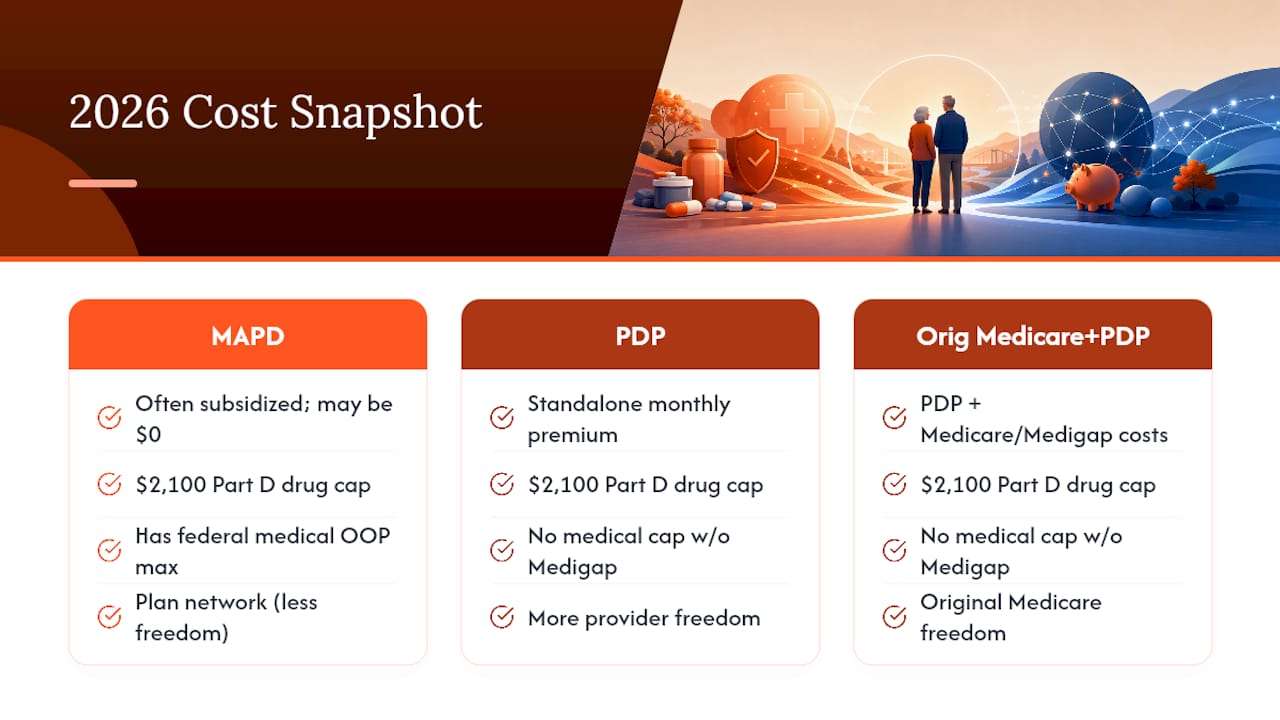
Where the real gap opens up is medical spending. MAPD plans carry a federally required annual out-of-pocket maximum for medical costs. Original Medicare has no such cap. Without a Medigap policy backing it up, a serious hospitalization on Original Medicare plus a PDP can run into real money with no ceiling. That’s the tradeoff nobody mentions when they tout a PDP’s provider freedom: freedom without Medigap is freedom with exposure.
Specialty drugs deserve their own gut check. Prior authorization and step therapy rules vary by plan and by drug, and a specialty medication that’s an easy fill on one formulary might require multiple approval steps on another. Anyone managing a high-cost prescription should also look at partner guidance like this Zepbound coverage breakdown to understand how coverage rules for specific drugs actually play out.
What Should You Compare Before Choosing?
Run through this checklist with every plan you’re seriously considering:
- List every medication you take and check each one against the plan’s formulary tier.
- List your doctors and hospitals and confirm they’re in-network if you’re looking at MAPD.
- Estimate your total annual cost, not just the premium.
- Check pharmacy access, including whether your usual pharmacy is preferred or standard tier.
- Ask about prior authorization and step therapy for any drug you take regularly.
- Confirm Medigap compatibility if you want to keep that option open.
When you talk to a plan rep or an agent, ask direct questions: What tier is my specific drug on, and does that change next year? Are there specialty pharmacy requirements I need to know about? Does this plan’s network include my current specialists? And critically, if I’m looking at a PDP, is a Medigap policy still available to me in my ZIP code?
Pro Tip: Add up your expected annual cost in three parts: monthly premium times twelve, your realistic drug out-of-pocket based on last year’s prescriptions, and a conservative estimate of medical costs based on your recent health history. That three-part total, not the premium alone, is the number that actually tells you which plan wins.
When Can You Enroll or Switch Plans?
The Annual Enrollment Period runs October 15 through December 7 every year, and it’s your main window to switch between MAPD and PDP, or between any two plans. Medicare Advantage enrollees also get a separate Open Enrollment Period from January 1 through March 31 to make one additional change. Certain life events, like moving or losing employer coverage, trigger Special Enrollment Periods outside those windows, explained in detail on how to change your Medicare plan mid-year.
One mechanical detail catches people off guard: enrolling in an MAPD plan automatically drops your existing stand-alone PDP, since you can’t hold both at once. Going the other direction, back to Original Medicare, requires actively enrolling in a new PDP yourself.
Gaps in drug coverage carry real cost. Go 63 days or more without creditable drug coverage and you’ll likely face a permanent late enrollment penalty added to your premium for as long as you have Part D. Run your numbers through our Part D penalty calculator before any coverage gap, and call an agent if you’re unsure whether your prior coverage counts.
How Safeguard Benefit Services Helps You Compare Plans
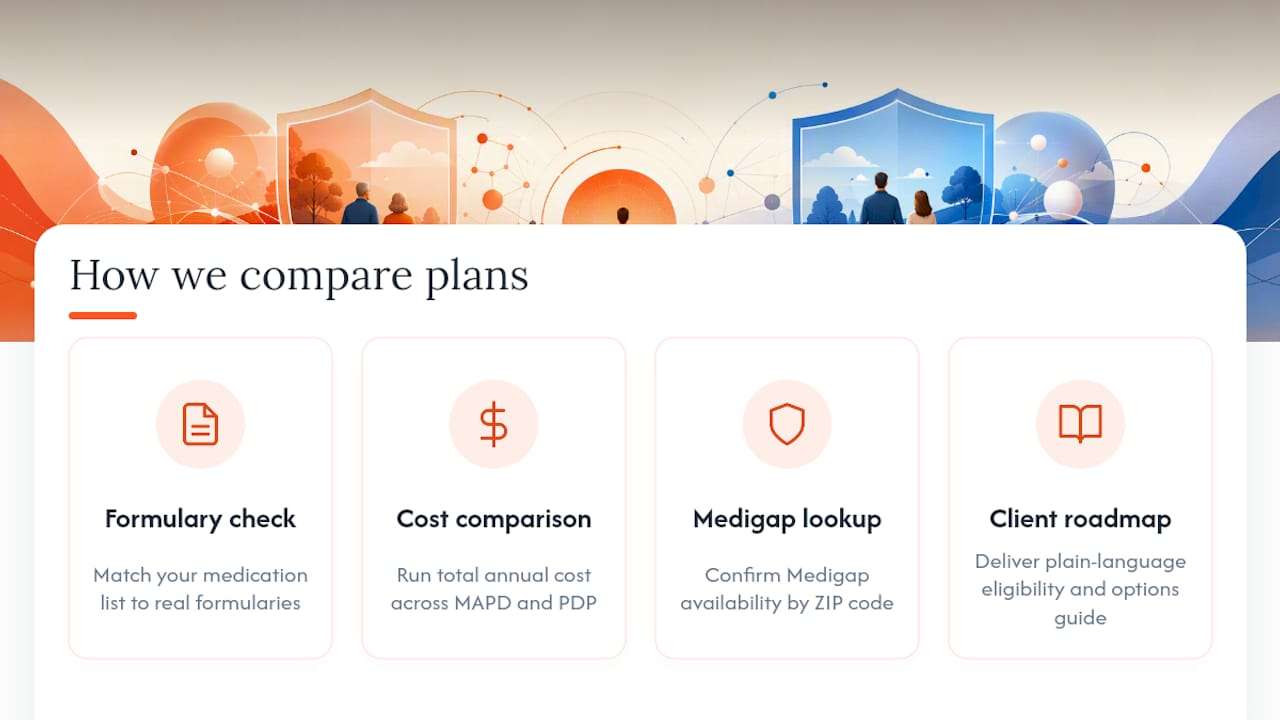
A Medicare insurance agency based in Charlotte, North Carolina, works through these exact comparisons every enrollment season. Agents check your medication list against real formularies, run your total annual cost estimate across MAPD and PDP options, and confirm whether Medigap is available in your ZIP code before you commit to either path. Clients can receive a Medicare roadmap that walks through eligibility and options in plain language, supported by an agent training program aimed at providing clear, informative guidance.
What’s the Smartest Next Step Here?
If you’ve got a stable drug list and no real attachment to Medigap, MAPD’s bundled extras are hard to beat on paper. If you travel, want a specific specialist network, or already lean on Medigap, a PDP keeps that door open. Either way, don’t guess. Run the numbers before AEP closes, and get a licensed agent to confirm your ZIP code specifics.
— Zach
Get Your MAPD vs PDP Comparison Done for You
This service offers an alternative to cross-referencing formularies and network directories yourself by running the comparison for your specific ZIP code, checking medication tiers, and clarifying Medigap options.

We’ll walk through Medicare Advantage plans and Part D prescription drug plans side by side, using your actual drug list and doctor list rather than generic averages. If a coverage gap is putting you at risk of a late enrollment penalty, we’ll flag it before it costs you. Book a free consultation with a licensed local agent and get a clear answer before the enrollment deadline passes, not after.
Where This Information Comes From
Facts in this article draw from Medicare’s official Part D pages, KFF’s 2026 Part D enrollment analysis, MedPAC’s structural review of Part D, and CMS program guidance on 2026 changes.
Sources
- What’s Medicare drug coverage (Part D)?
- Analyzing changes in Medicare Part D enrollment for 2026
- MedPAC — Structural issues in Part D (April 2025)
- CMS press release — Medicare Advantage and Medicare prescription drug programs remain stable; CMS implements improvements
FAQ
Can You Have MAPD and a PDP at the Same Time?
No. Enrolling in an MAPD plan automatically drops any stand-alone PDP you’re carrying, since Medicare doesn’t allow both at once.
Is Medicare Part D Better Than Medicare Advantage?
Neither is universally better. A stand-alone Part D plan (PDP) paired with Original Medicare gives you full provider freedom and Medigap compatibility, while Medicare Advantage often costs less upfront and bundles in extras like dental and vision.
Is a PDP Part of Medicare Advantage?
No. A PDP is a separate, stand-alone drug plan that pairs with Original Medicare. An MAPD is a Medicare Advantage plan that already has drug coverage built in.
Why Do People Say to Stay Away From Medicare Advantage Plans?
The most common complaint is provider networks that narrow or change from year to year, which can force a switch away from a longtime doctor. That risk is real, but it’s specific to network structure, not a reason to avoid MAPD outright if the network fits your needs.
How Do I Know Which Plan Type Fits My Situation?
Compare your specific medications against each plan’s formulary, confirm your doctors are in-network if you’re considering MAPD, and check whether keeping Medigap matters to you, ideally with help from a licensed local agent.
Recommended
Request a No Obligation Phone Call








Get Connected