

Yes, you can switch from Medicare Advantage to Medigap, but getting approved usually hinges on guaranteed-issue rights or passing medical underwriting. The safest windows are the Annual Election Period, the Medicare Advantage Open Enrollment Period, and any trial-right or guaranteed-issue event tied to a life change. Above all, check your guaranteed-issue status before you cancel anything. Dropping Medicare Advantage first, and finding out later that Medigap won’t take you, is how people end up with no supplemental coverage at all.
TL;DR:
- Approval to switch from Medicare Advantage to Medigap depends on guaranteed-issue rights or medical underwriting, making timing and documentation crucial.
- The main windows are the Annual Election Period, Medicare Advantage Open Enrollment, trial rights, and the 63-day guaranteed-issue period following coverage end or life events.
- Applying for Medigap before canceling Medicare Advantage and having written acceptance prevents coverage gaps and protects against underwriting denials.
- Guaranteed-issue rights are triggered by plan termination, moving out of coverage areas, or special enrollment events, but may vary by state.
- Standardized Medigap plans have higher premiums and limited extras compared to Medicare Advantage, which often includes dental, vision, and wellness benefits.
Table of Contents
- When Can You Switch Medicare Advantage to Medigap?
- How Do You Switch From Medicare Advantage to Medigap Safely?
- What Are Guaranteed-Issue Rights, and When Do They Apply?
- What Will You Actually Pay After the Switch?
- The Mistakes That Cost People the Most
- How Safeguard Benefit Services Helps You Make the Switch
- When Switching to Medigap Actually Makes Sense
- Get a Free Medicare Roadmap Before You Switch
- Where to Verify Rules and Dates
- Sources
- FAQ
When Can You Switch Medicare Advantage to Medigap?
Timing decides almost everything here. Miss the right window and you could face medical underwriting instead of automatic approval, or worse, a gap in coverage.
- Annual Election Period: Drop Medicare Advantage and return to Original Medicare during the official enrollment window, with the change effective January 1 of the following year, per Medicare.
- Medicare Advantage Open Enrollment Period (Jan 1 to Mar 31): Leave your MA plan and go back to Original Medicare, effective the first of the next month.
- Trial right: If you joined an MA plan when you first became eligible for Medicare, or dropped a Medigap policy to try MA, you have a trial period to change your mind and buy Medigap with guaranteed-issue protection.
- 63-day guaranteed-issue window: After certain MA coverage endings, you typically have 63 days to apply for Medigap without medical underwriting, according to Medicare.
- Special Enrollment triggers: Moving out of your plan’s service area, your MA plan leaving the market, or the plan misrepresenting its benefits can all open a special enrollment window outside the standard calendar.
Know which one applies to you before you make a move. A switch during AEP looks completely different, effective-date wise, from a switch triggered by your plan exiting your county mid-year.
How Do You Switch From Medicare Advantage to Medigap Safely?
Order matters more than speed. Rushing the sequence is the single biggest reason people end up with a coverage gap.
- Confirm your guaranteed-issue status first. Check whether you qualify through a trial right, a plan termination, or a move, and start collecting your MA plan’s letters and notices as proof.
- Apply for Medigap before dropping your MA plan, unless you already have guaranteed-issue rights locked in. Wait for written acceptance from the Medigap insurer before you touch your MA enrollment.
- Enroll in a standalone Part D plan at the same time. This keeps your prescription drug coverage intact and helps you avoid a late-enrollment penalty. Enrolling in a standalone Part D plan will also automatically end your Medicare Advantage enrollment, according to Medicare, which makes this step a built-in safety switch, not just a formality.
- Use official help channels. Call 1-800-MEDICARE or your state’s State Health Insurance Assistance Program (SHIP) for state-specific rules, and keep every written notice you receive.
- Align your effective dates. Original Medicare, your new Medigap policy, and your Part D plan should all start on dates that connect without a gap. Hold onto your MA card until the switch date actually arrives.
Pro Tip: Never cancel your Medicare Advantage plan before getting written approval for Medigap, unless you’re certain you have guaranteed-issue rights. Applying first, and waiting for acceptance in writing, is what keeps you from being stuck with no supplemental coverage if underwriting says no.
What Are Guaranteed-Issue Rights, and When Do They Apply?
Guaranteed-issue rights mean an insurer has to sell you a Medigap policy, cover your pre-existing conditions, and can’t charge you more because of your health. Without them, you’re subject to medical underwriting, and an insurer can deny you outright or charge a higher premium based on your health history.
The events that typically trigger guaranteed issue include:
- Your Medicare Advantage plan leaving the Medicare program or your service area.
- You move out of your plan’s coverage area.
- The plan misrepresented its benefits or violated marketing rules.
- You’re within your 12-month trial right after first trying MA.
- You apply within the 63-day window after qualifying coverage ends, as outlined by Medicare.
Outside those situations, insurers can and do run full medical underwriting, which means questions about chronic conditions, recent hospitalizations, and current prescriptions. Some states go further than federal minimums. New York, Connecticut, Massachusetts, Maine, and California, among others, offer broader guaranteed-issue protections or annual open enrollment for Medigap, per CMS. Your state’s SHIP office can tell you exactly what applies where you live, and it’s free.
If a health condition already affects your insurance approvals elsewhere, such as coverage for diabetic devices, that same underwriting logic tends to carry over into Medigap review; see this breakdown of how insurers evaluate device and equipment coverage for a sense of how insurers weigh health history.
What Will You Actually Pay After the Switch?
Medicare Advantage bundles most costs into one premium, often low or $0. Medigap unbundles everything: you’ll pay your Part B premium, a separate Medigap premium, and a separate Part D premium.
- Medigap plans are standardized by letter (A, G, N, and others), so the benefits inside each letter are identical no matter which company sells it.
- Premiums for the same lettered plan still vary significantly by insurer and by pricing method: community-rated, issue-age-rated, or attained-age-rated. Get quotes from at least three carriers before deciding.
- Medigap generally does not include the extras many MA plans bundle in, like dental, vision, or hearing. You’ll likely need separate coverage for those.
- Medigap policies sold after 2005 don’t include drug coverage at all, according to Medicare.gov, which is why Part D isn’t optional if you’re leaving an MA plan that included it.
Coverage gaps of more than 63 days without creditable drug coverage trigger a Part D late-enrollment penalty that gets added to your premium for as long as you have Part D, sometimes for the rest of your life. That single number, 63 days, is worth writing on your calendar the day you start this process.
The Mistakes That Cost People the Most
Most switching disasters trace back to one of a handful of avoidable errors.
- Canceling Medicare Advantage before getting written Medigap acceptance, when guaranteed issue didn’t actually apply.
- Forgetting to enroll in Part D during the same window, which opens the door to that 63-day penalty clock.
- Assuming Medigap replaces the dental, vision, or hearing benefits an MA plan included, when it almost never does.
- Tossing termination and acceptance letters instead of keeping them as proof for guaranteed-issue claims.
Pro Tip: Keep a folder, physical or digital, with every plan letter, denial notice, and acceptance confirmation. If a guaranteed-issue dispute ever comes up, that paper trail is your entire case.
How Safeguard Benefit Services Helps You Make the Switch
Coordinating three separate moving parts, disenrolling from MA, applying for Medigap, and enrolling in Part D, on tight timelines isn’t something most people want to manage alone while also tracking 63-day deadlines. That’s the exact gap Safeguard Benefit Services was built to close.
Safeguard Benefit Services offers personalized consultations and a free Medicare roadmap that lays out your guaranteed-issue status, compares Medigap plan letters side by side, and lines up effective dates so nothing falls through the cracks.
- Agents may help gather plan letters and denial notices needed as proof for a guaranteed-issue application.
- Coordination with carriers can help ensure Medigap applications are filed within guaranteed-issue windows.
- Some agencies offer annual reviews to reassess coverage as health, medications, or budgets change.
If you’re staring at a stack of MA plan letters and a calendar full of deadlines, having a licensed local agent walk through the Medicare Advantage versus Medigap trade-offs with you tends to save more money than it costs, since a missed guaranteed-issue window can mean paying underwriting-adjusted rates for years.
When Switching to Medigap Actually Makes Sense
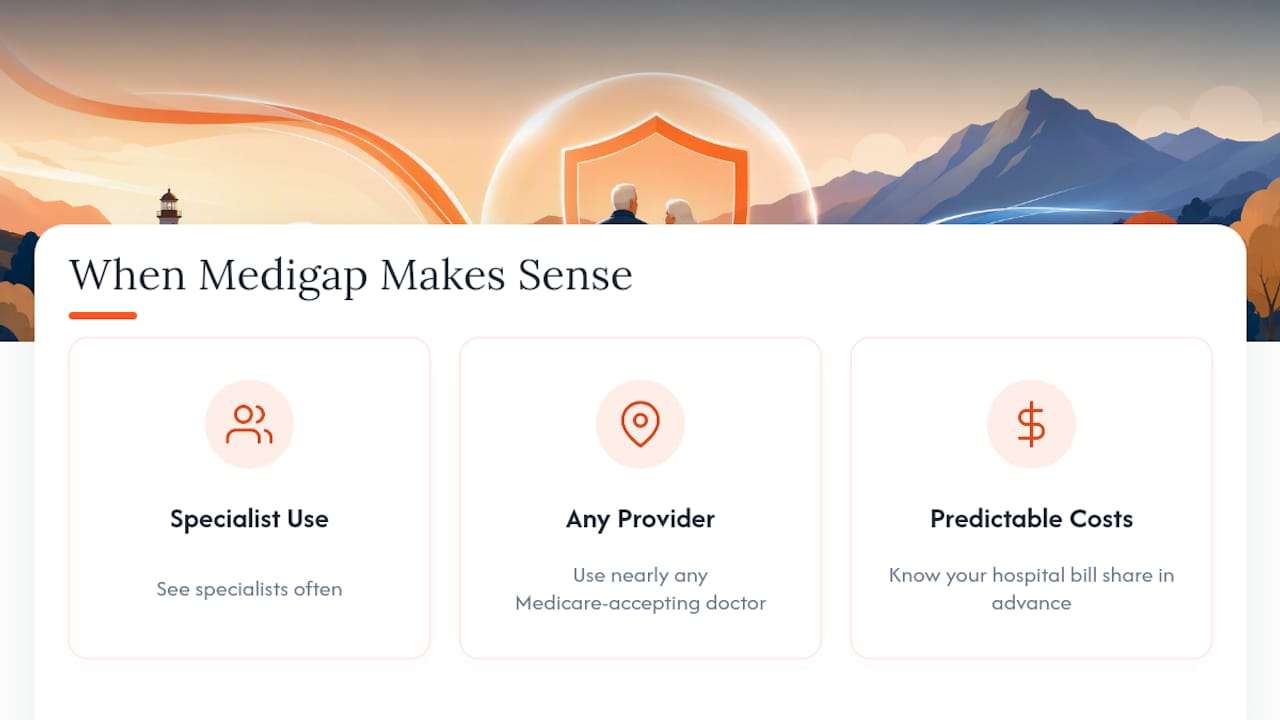
Medigap tends to make sense for people who see specialists often, want the freedom to use nearly any doctor that accepts Medicare, or simply want to know their share of a hospital bill in advance instead of guessing. If you have a complex or unpredictable health situation, that predictability is worth real money.
Medicare Advantage often wins on pure price, plus it can include dental, vision, hearing, and sometimes fitness perks that Medigap doesn’t touch. If you’re healthy, budget-conscious, and your current MA network already includes your doctors, staying put can be the rational call, not a missed opportunity.
Either way, the decision starts in the same place: check your guaranteed-issue status before you commit to anything. That single check determines whether this is a simple paperwork switch or a health-underwriting gamble.
— Zach
Get a Free Medicare Roadmap Before You Switch
Switching plans on your own means tracking guaranteed-issue deadlines, Part D coordination, and effective dates all at once, with no room for a wrong guess. Safeguard Benefit Services builds that roadmap for you, at no cost, before you touch your current enrollment.

Consultations can cover guaranteed-issue eligibility, Medigap quotes from multiple carriers, Part D coordination, and timelines to clarify effective dates. Before your appointment, gather your Medicare card, any letters from your current MA plan, and a current list of your medications and prescribers. Visit Safeguard Benefit Services to schedule a consultation and get your personalized roadmap started.
Where to Verify Rules and Dates
Always confirm your state’s specific rules before making a final decision.
- Medicare for enrollment windows and Medigap basics.
- Cms for state-level Medigap protections and MA/Part D data.
- Your state SHIP office or 1-800-MEDICARE for free, state-specific guidance.
This article is general information, not a substitute for advice from a qualified financial advisor. Consult a qualified financial professional about your own circumstances before acting on anything here.
Sources
FAQ
How Difficult Is It to Switch From Medicare Advantage to Medigap?
The paperwork itself isn’t complicated, but qualifying can be, since approval usually depends on guaranteed-issue rights or passing medical underwriting. If you have a trial right or another guaranteed-issue event, the switch is generally smooth as long as you apply within the 63-day window.
Do Doctors Prefer Medigap or Medicare Advantage?
Neither is universally preferred, but many doctors and hospitals appreciate that Medigap works with Original Medicare, which nearly all Medicare-accepting providers take without network restrictions. Medicare Advantage plans often require staying in-network, which some specialists find more limiting to coordinate around.
Can I Switch From Medicare Advantage to Supplemental Insurance?
Yes, you can switch from Medicare Advantage to a Medigap supplemental policy, but you must first have or return to Original Medicare Parts A and B, according to Medicare.gov. The best time to do it is during AEP, the MA Open Enrollment Period, or a guaranteed-issue event, so you’re not relying on passing underwriting.
Why Do People Say to Stay Away From Medicare Advantage Plans?
The common complaints center on network restrictions, prior authorization requirements, and the risk of getting locked into underwriting if you later want to switch to Medigap. That risk isn’t universal. It depends heavily on your state’s protections and whether you catch a guaranteed-issue window, which is exactly why checking that status early matters so much.
Recommended
Request a No Obligation Phone Call








Get Connected