

You can appeal a Part B late enrollment penalty, but only on certain grounds. You ask Social Security for a reconsideration, generally within 60 days of receiving the penalty letter. The strongest cases show you had qualifying coverage, the penalty was miscalculated, or you now qualify for help such as a Medicare Savings Program. Simply not knowing about the rule rarely wins.
This guide covers who can appeal, how to file, what proof to send, what to do if you missed the deadline, and how to keep the penalty from happening at all.
TL;DR
- The Part B penalty is 10% of the standard premium for each full 12-month period you could have enrolled and didn’t. In 2026 the standard premium is $202.90.
- Appeal through Social Security by requesting reconsideration, generally within 60 days of the decision.
- Good grounds: you were covered by Part B or job-based insurance, the math is wrong, you have a new Initial Enrollment Period, or you are in a Medicare Savings Program.
- Keep paying the penalty while the appeal is reviewed. A successful appeal brings a refund.
- Missed the deadline? Explain your good cause in a letter and attach it.
Table of Contents
- What the Part B penalty is and why the math matters
- When an appeal makes sense
- How to file the appeal, step by step
- The deadline and what to do if you missed it
- What happens after you file
- Our perspective
- Keep it from happening again
- Get help with your coverage in Charlotte
- FAQ
- Sources
What the Part B penalty is and why the math matters
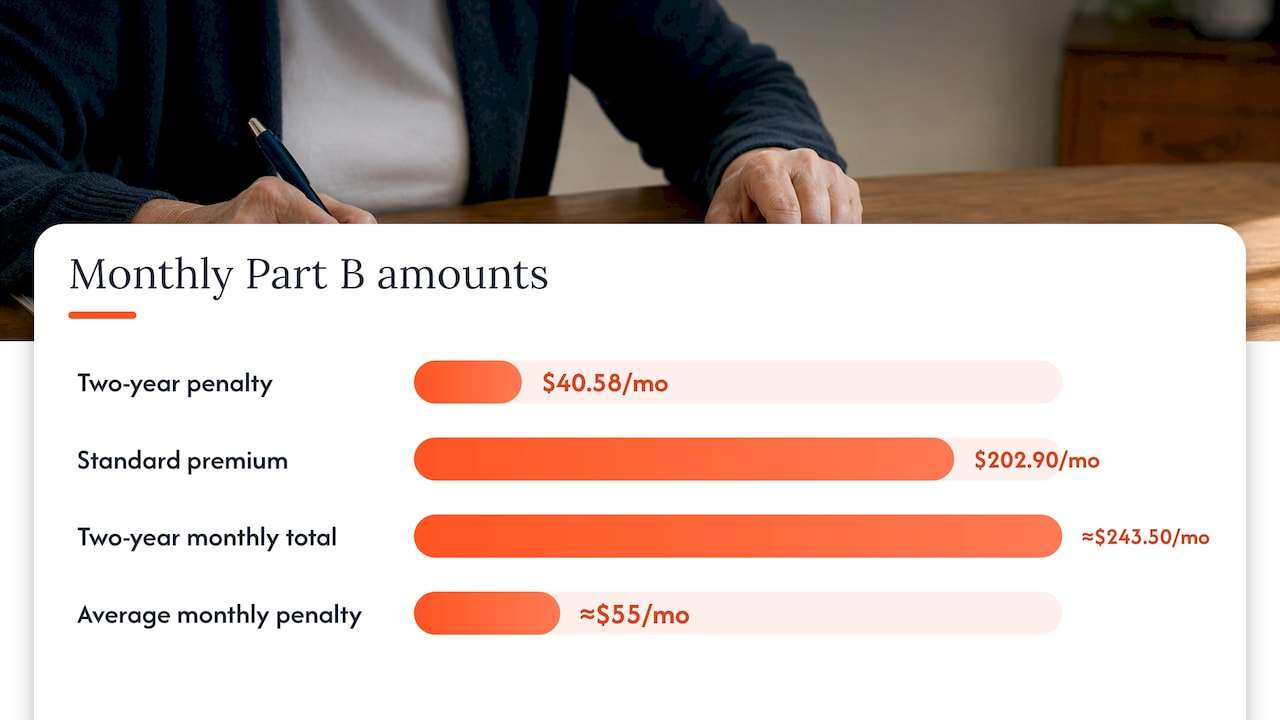
Medicare adds 10% of the standard Part B premium for every full 12-month period you could have had Part B but didn’t. The amount is added to your monthly premium for as long as you have Part B, whether through Original Medicare or a Medicare Advantage plan, according to AARP.
Medicare’s own example: with a 2026 standard premium of $202.90, a two-year delay means a 20% penalty of $40.58. That brings the monthly total to about $243.50, per Medicare.gov. Among people who pay a penalty, MedPAC estimates the average is 27% of the standard premium, about $55 a month in 2026.
Because the penalty lasts for life, even a small error costs real money over time. That is why checking the calculation is worth an hour of your time. You can run your own numbers with our Part B penalty calculator.
When an appeal makes sense
According to Medicare Interactive, you can appeal when:
- You believe you were continuously covered by Part B or by job-based insurance during the period in question.
- You think the penalty amount was calculated incorrectly.
- You have a new Initial Enrollment Period.
- You are enrolled in a Medicare Savings Program.
The same source notes that being unaware you had to enroll in Part B is unlikely to succeed as an argument. Build your appeal around facts you can document.
Coverage that should have counted
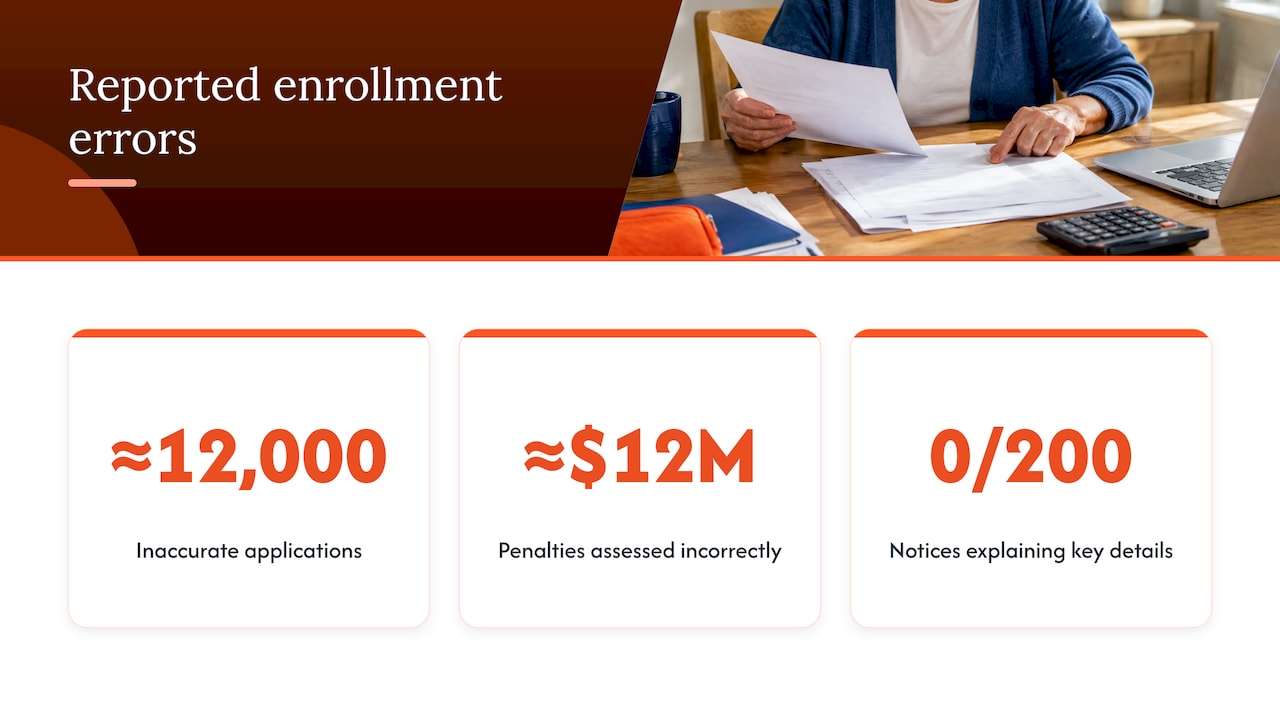
If you or your spouse worked past 65 and had group health coverage through that employment, you may have been entitled to delay Part B without penalty. Social Security sometimes misses this. A 2026 SSA Inspector General report estimated that about 12,000 beneficiaries’ Part B applications were processed inaccurately, producing roughly $12 million in incorrectly assessed penalties. Causes included failing to consider group health plan coverage and applicable enrollment periods.
The Inspector General also found, in a separate March 2026 report, that none of 200 sampled enrollment notices explained the penalty percentage, the months counted, or what to do to reduce it. If your letter left you confused, you are not alone, and asking for a review is reasonable.
Counting errors
The penalty counts months only for the period you were actually eligible and uncovered. Under SSA’s own processing rules, when a request wasn’t processed on time, the months between the end of the enrollment period in which you filed and your Part B entitlement date are not counted. Compare the months on your notice with your real timeline.
Special circumstances
Medicare lists exceptional conditions that can open a Special Enrollment Period without a penalty, including a natural disaster or emergency, incarceration, employer or plan error, or losing Medicaid coverage. MedPAC notes the penalty does not apply to people enrolled in Medicare Savings Programs.
If you were on Medicare because of a disability and paid penalties, they end when you turn 65.
How to file the appeal, step by step
The penalty is a Social Security determination, so it is appealed like other Social Security decisions, as Barley Medical explains.
- Read the penalty letter. Follow the appeal directions printed on it and note the date.
- Gather proof of coverage (see the list below).
- Complete the request. Use the online process at Social Security or upload Form SSA-561-U2, the Request for Reconsideration.
- State your reason plainly. Say whether you were covered, the months were miscounted, or you qualify for an exception.
- Submit within 60 days and keep a copy of everything.
- Keep paying the penalty. If you win, you are refunded what you paid while the appeal was pending.
Evidence that helps
Medicare Interactive lists the following as useful proof of coverage:
- A letter from your former employer or plan confirming enrollment
- Tax returns showing health insurance premiums paid
- W-2s reflecting pre-tax medical contributions
- Pay stubs showing premium deductions
- Insurance cards showing the policy effective date
- Explanations of benefits from the plan
- Receipts or statements showing premium payments
- Medicare Summary Notices showing payment for care
A letter from the employer’s benefits office covering exact start and end dates is usually the cleanest single document. Ask for it early, since HR departments can take weeks.
The form CMS-L564 is the employer coverage verification Medicare uses for this purpose. Our guide on keeping Form CMS-L564 ready explains it.
The deadline and what to do if you missed it
The window is 60 days from receiving the letter. Social Security presumes you received it 5 days after the date printed on it, according to Barley Medical, so the practical limit is about 65 days from the letter date. Don’t count on the extra days; file early.
If you are late, write a letter explaining why and attach it. Medicare Interactive says serious illness is one example. CMS’s good cause page also lists:
- A death or serious illness in your immediate family
- Records destroyed by fire or natural disaster
- Incorrect or incomplete information from the contractor or appeals reviewer
- Not receiving the notice
- Physical, mental, educational or other limitations that delayed filing
What happens after you file
Social Security reviews your request and any evidence. Keep your coverage and payments current in the meantime. If the decision goes against you, the denial letter explains the next level of appeal, so follow its instructions and watch the new deadline closely.
Our perspective
Most of the people who come to us with a penalty letter are surprised by it. Many kept working past 65 with employer coverage and assumed the paperwork took care of itself. Often it didn’t, and the missing piece is a single form or letter.
We train our agents to slow down and walk through your timeline month by month: when you turned 65, what coverage you had, and who can document it. Our guidance comes at no extra cost to you, and we would rather help you prevent a penalty than fight one later.
If you are still deciding when to enroll, our roadmap and annual plan reviews are built to keep gaps and penalties off your record.
Zach
Keep it from happening again
Prevention is far easier than appeal. If you are still working with employer coverage, read about the 8-month window for delaying Part B. Our guides on how to avoid the Part B penalty and when to enroll in Medicare cover the timing rules. Part D has its own penalty, which you can estimate with the Part D calculator.
Get help with your coverage in Charlotte
If you are sorting out a penalty and also need the right plan, our Charlotte team can help you compare Medicare Advantage, Medicare Supplement, Part D, and dental, vision and hearing options.

Talk with us through Safeguard Benefit Services about a personalized consultation and a free Medicare roadmap. You can also read how Medicare Advantage compares with Medigap.
FAQ
Can I get a Part B late enrollment penalty removed?
Yes, if you can show you had qualifying coverage, the penalty was miscalculated, you have a new Initial Enrollment Period, or you are in a Medicare Savings Program. Penalties that were properly assessed generally stay for as long as you have Part B.
How long do I have to appeal?
Generally 60 days from receiving the decision letter, with receipt presumed 5 days after the letter date. If you miss it, attach a good cause letter explaining the delay.
Do I keep paying while my appeal is pending?
Yes. Pay the penalty during review. If your appeal succeeds, you are refunded the penalty amounts you paid in that period.
Which form do I use?
Follow the instructions on your letter. If you have no appeal form, use Social Security’s Form SSA-561-U2 or the online reconsideration request.
Sources
- Avoid late enrollment penalties | Medicare
- MedPAC: Medicare Part B Premium
- AARP: Late Enrollment Penalties for Medicare Part B
- Medicare Interactive: Appealing the Part B late enrollment penalty
- Medicare Interactive: Part B late enrollment penalties
- SSA: Request reconsideration
- Barley Medical: Medicare Late Enrollment Penalty Appeal
- CMS: Good Cause for Late Filing
- Medicare.gov: Sign up for Medicare Part B
- SSA OIG: Incorrect Part B penalties report
- SSA OIG: Medicare Part B Premium Penalties
- SSA POMS HI 00805.195
Recommended
Request a No Obligation Phone Call








Get Connected