
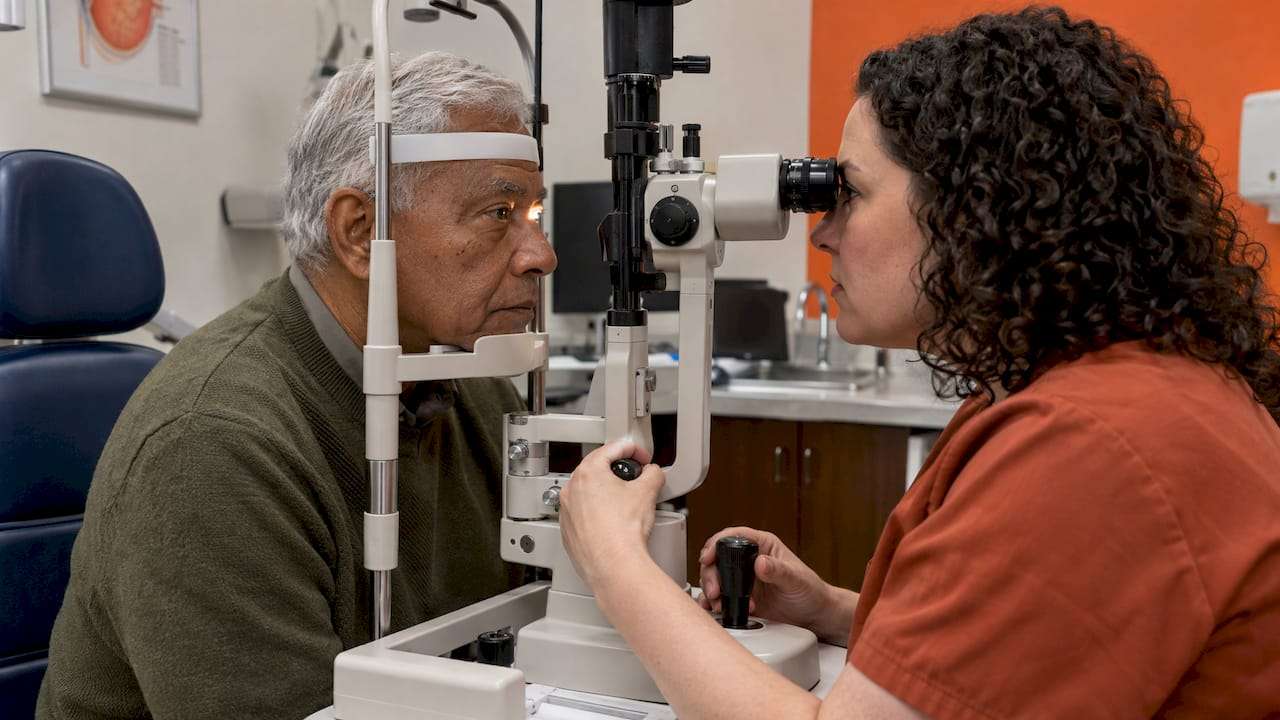
Medicare Part B covers a glaucoma screening once every 12 months, but only if you are in a high-risk group. If you are not, a routine eye exam is not covered under Original Medicare. If you are, you typically pay 20% of the Medicare-approved amount after your Part B deductible. This guide explains who counts as high risk, who can perform the test, what it costs, and what changes with a Medicare Advantage plan.
TL;DR
- Original Medicare (Part B) covers one glaucoma screening every 12 months for people at high risk: diabetes, a family history of glaucoma, African American age 50 or older, or Hispanic age 65 or older.
- You typically pay 20% of the Medicare-approved amount after the Part B deductible. A hospital outpatient setting may add a separate copayment.
- The screening must be done or supervised by an eye doctor who is legally authorized to provide it in your state.
- Medicare does not cover routine eye exams or eyeglasses. If your doctor investigates or treats a problem during the visit, that care is billed separately from the screening.
- Medicare Advantage costs and rules vary by plan, so confirm the details with your plan before you book.
Table of Contents
- What Medicare means by a glaucoma screening
- Who qualifies as high risk
- How often it is covered and who can do it
- What you pay under Original Medicare
- Screening versus diagnostic care
- Medicare Advantage and glaucoma screening
- When the screening is more frequent than covered, or a claim is denied
- Our perspective
- Covering what Medicare does not
- Get help matching your plan to your eye care
- FAQ
- Sources
What Medicare means by a glaucoma screening
Glaucoma damages the optic nerve, often with no early symptoms. That is why the benefit exists. The CDC says that for people at high risk, a comprehensive dilated eye exam can catch glaucoma early, and early treatment can help preserve vision. CMS has noted that an estimated 2 million Americans have glaucoma and do not know it.
Medicare treats this as a preventive service. It is one of the few vision services Original Medicare pays for. Routine vision services such as eyeglasses and routine eye exams are generally excluded, apart from specific categories set in law, and glaucoma screening is one of those.
So a glaucoma test is not automatically part of a routine eye exam under Medicare. If you walk in for new glasses, you are not getting a covered screening. If you are in a qualifying group and the visit is billed as a glaucoma screening, Part B can pay its share.
Who qualifies as high risk
Medicare lists four groups. You qualify if you have diabetes, have a family history of glaucoma, are African American and 50 or older, or are Hispanic and 65 or older. The National Eye Institute describes the benefit the same way: it includes people in the listed high-risk groups and does not extend to routine eye care.
A few practical points:
- Your provider has to document your group. CMS’s vision services fact sheet says the medical record must show the patient’s high-risk group. Tell the office at scheduling if you have diabetes or a family history so it is recorded correctly.
- Age thresholds matter. An African American beneficiary who is 50 or older qualifies, and a Hispanic beneficiary qualifies at 65. Since Medicare generally starts at 65, most people who enroll by age already meet the age test where it applies.
- Not on the list? You can still have a regular eye exam. Medicare just will not pay for it as a screening.
How often it is covered and who can do it
The benefit is once every 12 months. The screening must be performed or supervised by an eye doctor who is legally authorized under state law to do it. Check that your ophthalmologist or optometrist is authorized in North Carolina or whichever state you live in, and that the office accepts Medicare.
On the billing side, CMS’s coverage article says the diagnosis code Z13.5 (encounter for screening for eye and ear disorders) must be used for Medicare-covered glaucoma screenings. You do not need to know the code, but it helps to know the office should bill the visit as a screening for you to get the benefit.
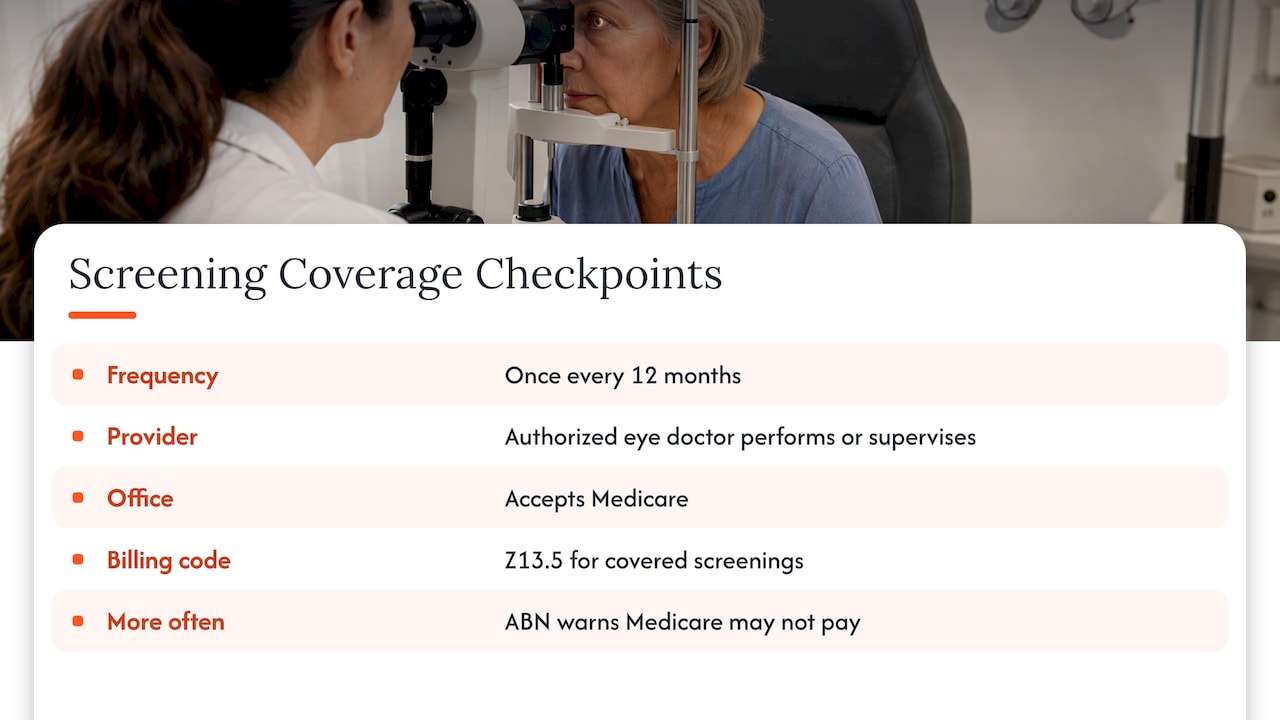
If you want to be screened more often than the benefit allows, the same CMS article says the provider may need an Advance Beneficiary Notice (ABN). An ABN tells you Medicare may not pay, so you can decide before the service whether to proceed and accept the cost.
What you pay under Original Medicare
Under Original Medicare you typically pay 20% of the Medicare-approved amount after you meet the annual Part B deductible. If the screening happens in a hospital outpatient setting, you may also owe a separate copayment.
Two more terms decide your final bill:
| Term | What it means for you |
|---|---|
| Accepts assignment | The provider agrees to take Medicare’s approved amount as full payment and not bill more than your deductible and coinsurance. |
| Does not accept assignment | The provider may charge a limiting charge of up to 15% above the Medicare-approved amount for certain Part B services. |
Before booking, ask two questions: “Do you accept assignment?” and “Will this visit be billed as a glaucoma screening?” Those two answers tell you most of what you need to know about the bill.
If you carry a Medicare Supplement (Medigap) plan, it may help with the 20% coinsurance, depending on the plan letter. Our guide to Medicare Supplement plans walks through how that works.
Screening versus diagnostic care
This is where surprise bills come from. A screening looks for glaucoma in someone without a diagnosis. If your eye doctor sees something that needs to be investigated or treated, that extra work is generally diagnostic rather than screening, and diagnostic care follows different cost-sharing. The same applies if you already have glaucoma and are being monitored.
To avoid surprises:
- Tell the office at booking whether you have a glaucoma diagnosis, symptoms or only a risk factor.
- Ask which parts of the visit will be billed as screening and which, if any, could be billed as diagnostic.
- Keep your Medicare Summary Notice. If a service you expected to be covered is denied, you can appeal through the Medicare Summary Notice process.
If you have a diagnosis, treatment is a separate matter from screening. Laser procedures and surgery for glaucoma are evaluated on medical necessity, not under the preventive benefit.
Medicare Advantage and glaucoma screening
Medicare Advantage (Part C) plans must cover what Original Medicare covers, but your costs and rules come from your plan. CMS’s guidance for these members is to check with the plan about eligibility, coverage and payment, because costs and rules vary.
In practice, check four things in your plan documents or by calling member services:
- Is your eye doctor in the plan’s network? Many plans use HMO or PPO networks, and going out of network can raise costs. Our page on HMO plans explains how referrals and networks work.
- What is the copay for a glaucoma screening or a specialist visit?
- Does the plan include routine vision benefits, such as an exam allowance or eyewear, separate from the screening?
- Do you need a referral first?
If you are still choosing between Part C and Medigap, see Medicare Advantage vs. Medicare Supplement. Eye care access is a good tiebreaker question, particularly if you already see a specific eye doctor.
When the screening is more frequent than covered, or a claim is denied
Sometimes a doctor wants to see you sooner than every 12 months, for example because of a change in your eyes. That is a medical decision, and your eye doctor should explain the reason. Ask whether the visit will be billed as diagnostic care and whether you would be asked to sign an ABN. If you sign one, you accept responsibility for the cost if Medicare declines to pay.
If a claim is denied, read the Medicare Summary Notice, call the provider’s billing office to confirm the visit was coded correctly, and file an appeal if you believe it should have been covered.
Eye health goes beyond glaucoma, too. If you are also thinking about age-related macular degeneration, you may come across questions about lutein versus zeaxanthin for AMD and retina imaging. Those are good topics to raise with your eye doctor at the same visit.
Our perspective
Most people we meet assume “Medicare covers eye exams.” It does not, and glaucoma screening is the exception that proves the rule. The benefit is real and valuable, but only if you qualify and the visit is billed the right way.
Our advice is to treat eye care as part of the plan choice, not an afterthought. Before you pick Medicare Advantage or a Medigap plan, ask where your eye doctor fits: in network or not, what the copay is, and whether you want a separate vision plan for glasses and routine exams. We train our agents to walk through those questions with you, at no extra cost to you, so the decision rests on how you actually use care.
We also recommend an annual plan review. Networks, copays and benefits can change from one year to the next, and a quick check can save you a surprise at the eye doctor’s office. Our Annual Notice of Change checklist shows what to look at.
Zach
Covering what Medicare does not
Because Original Medicare leaves out routine eye exams and glasses, many people add coverage on top. Options include a standalone vision plan or a Medicare Advantage plan with vision benefits. Our pages on what Medicare vision coverage includes and vision insurance in Charlotte lay out the differences. If dental and hearing are also on your list, see your dental, vision and hearing options.
If your eye care may include surgery down the road, read our guide to cataract surgery costs under Medicare. For the broader picture of screenings Medicare pays for, start with preventive services and annual screenings.
Get help matching your plan to your eye care
Safeguard Benefit Services is a Medicare insurance agency in Charlotte, North Carolina. We help you compare Medicare Advantage plans, Medicare Supplements, prescription drug plans, and dental, vision and hearing coverage, and we offer a free Medicare roadmap that clarifies your options and eligibility. Talk with us before your next enrollment decision, and we will check how each option handles the eye care you actually use.

Start on our home page to see the plan types we offer and request a consultation.
FAQ
Does Medicare cover glaucoma screening?
Yes, if you are in a high-risk group. Medicare Part B covers one glaucoma screening every 12 months for people with diabetes, a family history of glaucoma, African Americans age 50 or older, and Hispanic people age 65 or older. The provider must be authorized to perform it under state law.
Is a glaucoma test included in a routine eye exam?
Not under Original Medicare. Routine eye exams are generally not covered, and glaucoma screening is a specific exception set in law. Your visit has to qualify and be billed as a screening for Part B to pay.
How much does a Medicare glaucoma screening cost?
Under Original Medicare you typically pay 20% of the Medicare-approved amount after the annual Part B deductible, plus a possible copayment in a hospital outpatient setting. If a provider does not accept assignment, the charge can be up to 15% higher. A Medigap plan may cover part of the coinsurance.
Does Medicare Advantage cover glaucoma screening?
Medicare Advantage plans cover what Original Medicare covers, but your cost and rules depend on your plan. CMS advises members to check with the plan about eligibility, coverage and payment. Confirm your network and copay before you book.
What if I want screening more than once a year?
More frequent screenings than the benefit allows may require an ABN, which lets you decide in advance whether to accept the cost. If you have symptoms or a diagnosis, ask your eye doctor how the visit will be billed.
Sources
- Glaucoma Test Coverage, Medicare.gov
- Your Guide to Medicare Preventive Services, Medicare.gov
- About Glaucoma, CDC
- National Glaucoma Awareness Month, CMS
- Medicare Benefit for Eye Health, National Eye Institute
- MLN907165 Medicare Vision Services, CMS
- Article: Glaucoma Screening (A53495), CMS Medicare Coverage Database
- Retina Imaging and AREDS2: Zeaxanthin vs Lutein
Recommended
Request a No Obligation Phone Call








Get Connected