

Most Medicare coverage delays have one cause: signing up outside the window your start date depends on. Enroll in your Initial Enrollment Period and coverage can start on time. Miss it, and you may wait months for coverage and pay a penalty that lasts as long as you have Medicare. A lapse after you already have Medicare is a different problem, usually an unpaid premium or a move out of a plan’s service area, and it can often be fixed.
This guide explains when coverage starts, what pushes the start date back, how to avoid a gap, and what to do if one has already happened.
TL;DR
- Your Initial Enrollment Period lasts 7 months: 3 months before your 65th birthday month, the birthday month, and 3 months after. Enrolling inside it is the best way to avoid a delay.
- If you miss it, you generally wait for the General Enrollment Period (January 1 to March 31), and Part B coverage may not start until July 1.
- Working past 65 with employer coverage can protect you, but the 8-month Special Enrollment Period clock is strict.
- The Part B late enrollment penalty is 10% for each full 12-month period you could have enrolled and did not, and it stays for as long as you have Part B.
- If coverage has already lapsed, act fast: appeal deadlines for lost Part B coverage are short.
Table of Contents
- When does Medicare coverage actually start?
- What causes a delay or a gap
- How to avoid a gap when you enroll or switch
- What the late enrollment penalty costs
- What if you already have Medicare and lose Part B?
- Perspective: why we start with the calendar
- Get your dates checked before they cost you
- FAQ
- Sources
When does Medicare coverage actually start?
The start date depends on which window you enroll in. For premium Part A and Part B, CMS states that coverage begins the month after you enroll during the Initial Enrollment Period (IEP), the General Enrollment Period (GEP) or a Special Enrollment Period (SEP). The window you use matters because it decides how long you wait and whether a penalty applies.
Here is how the main windows compare:
| Window | When it runs | What it is for | Typical start of coverage |
|---|---|---|---|
| Initial Enrollment Period | 7 months around your 65th birthday month | First-time Part A and Part B sign-up | The month after you enroll |
| General Enrollment Period | January 1 to March 31 each year | Part A and Part B if you missed other windows | The month after you enroll, per SSA and CMS |
| Special Enrollment Period | Limited circumstances, such as working past 65 with employer coverage | Penalty-free sign-up after a qualifying event | Typically the month after you sign up |
| Open Enrollment | October 15 to December 7 each year | Switching Medicare Advantage or Part D | January 1 if the request arrives by December 7 |
The Initial Enrollment Period is defined in CMS’s Medicare Overview Job Aid as seven months: it begins three months before your 65th birthday month, includes that month, and ends three months after. The same document states that Medicare Advantage and Part D changes made during Open Enrollment take effect January 1 when the request is received by December 7.
Two details trip people up:
- The General Enrollment Period can mean a long wait. HealthCare.gov states that when you enroll during the January 1 to March 31 window, coverage does not begin until July 1. Someone who signs up in January can wait roughly half a year.
- Open Enrollment does not fix a missed Part B deadline. KFF explains that the October 15 to December 7 period cannot be used to enroll in Part A or Part B. It is only for people who already have Medicare to join or switch drug or Medicare Advantage coverage.
For a month-by-month view of your own dates, see our Medicare enrollment timeline and our guide to the Medicare initial enrollment period.
What causes a delay or a gap
A delay is rarely a processing glitch. It is almost always one of these situations.
You missed your Initial Enrollment Period
This is the most common cause. CMS states that if you miss your Special Enrollment Period you must wait for the next General Enrollment Period and might pay a late enrollment penalty. The wait can span most of a year if you miss the window by only a few weeks.
You assumed Medicare would start automatically
Some people are enrolled automatically, but many are not, particularly those not yet collecting Social Security retirement benefits. If you are unsure, check with Social Security well before your 65th birthday month rather than after it.
You left employer coverage and did not enroll in time
Working past 65 with a group health plan can let you delay Part B without penalty. SSA states that people 65 or older covered by an employer group health plan have a Special Enrollment Period with no penalty if they sign up or add Part B during it. SSA’s Medicare Ready materials add that this applies when you have group health insurance through an employer with 20 or more employees.
The risk comes when that coverage ends. CMS’s fact sheet for people over 65 warns that if you do not enroll in Part B within 8 months of losing coverage based on current employment, you may owe a lifetime late enrollment penalty. You may also only be able to enroll during the General Enrollment Period, with coverage starting in July, which may leave a gap. Our page on delaying Part B while working walks through the 8-month deadline in detail.
Retiree coverage or COBRA is not the same as current employment coverage
This is a common trap. The penalty-free Special Enrollment Period is tied to coverage based on current employment. Do not assume that retiree coverage will protect you the same way. Confirm with your benefits office and with Social Security before you let Part B lapse.
You moved out of your plan’s service area
If you already have a Medicare Advantage or Part D plan and move, timing matters. CMS explains that when you tell your plan before you move, your chance to switch starts the month before the move and continues for 2 full months after it. Waiting until after the move to make the call shortens your options.
How to avoid a gap when you enroll or switch
SSA’s advice is simple: sign up promptly to avoid gaps in coverage and late enrollment penalties. In practice, that means a short checklist.
- Mark your window. Count three months back from your 65th birthday month. That is when your Initial Enrollment Period opens.
- Enroll early in the window. Because coverage typically starts the month after you enroll, signing up in the first months of the window lets you choose a start date that lines up with the end of any current coverage. Our guide on locking in your Medicare effective date covers this step by step.
- Do not cancel old coverage until the new coverage is confirmed. Get the effective date in writing first.
- Line up drug coverage and supplemental coverage at the same time. A Part A and Part B start date does not automatically give you Part D or a Medigap policy.
- Review every year. Plans change each year, and the Open Enrollment window from October 15 to December 7 is your regular chance to adjust Medicare Advantage or Part D for January 1.
If you need to change a plan outside the fall window, see how Special Enrollment Periods work mid-year.
A worked example
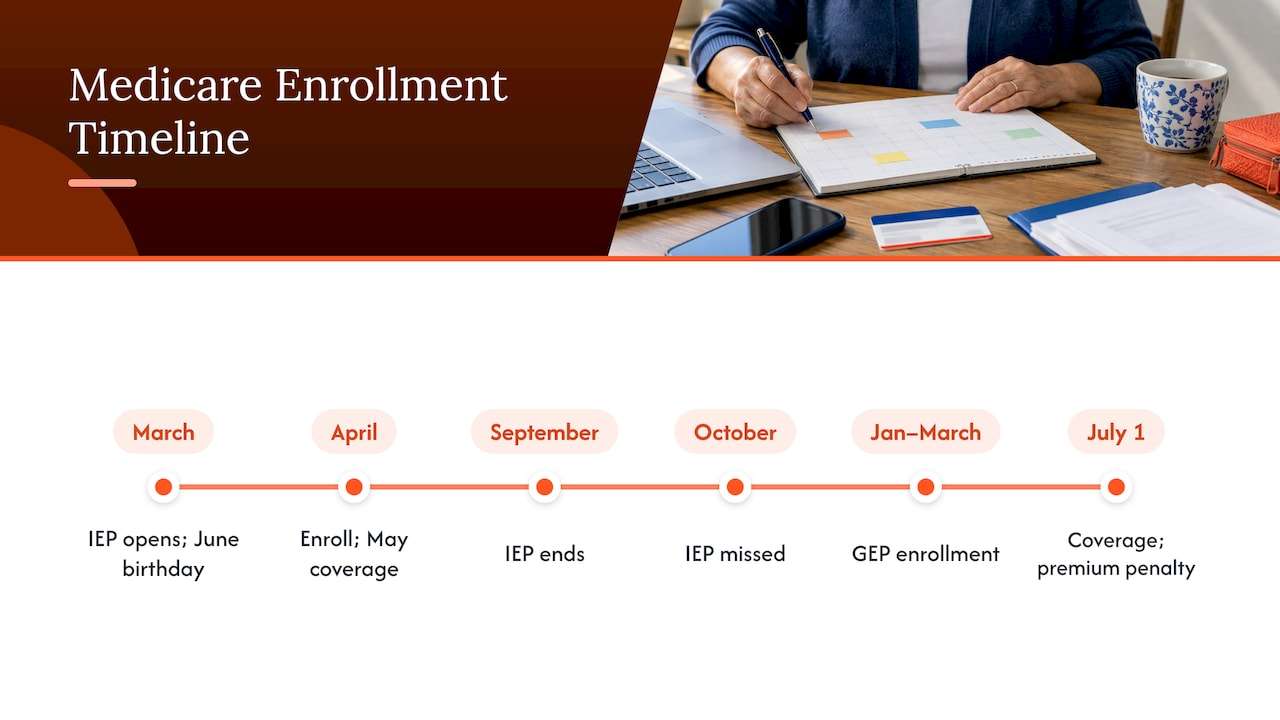
Say your 65th birthday falls in June and you are not working. Your Initial Enrollment Period opens in March, covers June, and ends in September. If you enroll in April, coverage can begin in May. If you wait until October, you have missed the window. You would then have to wait for the General Enrollment Period in January through March, with coverage starting July 1 if you enroll during that window, plus a penalty added to your premium.
What the late enrollment penalty costs
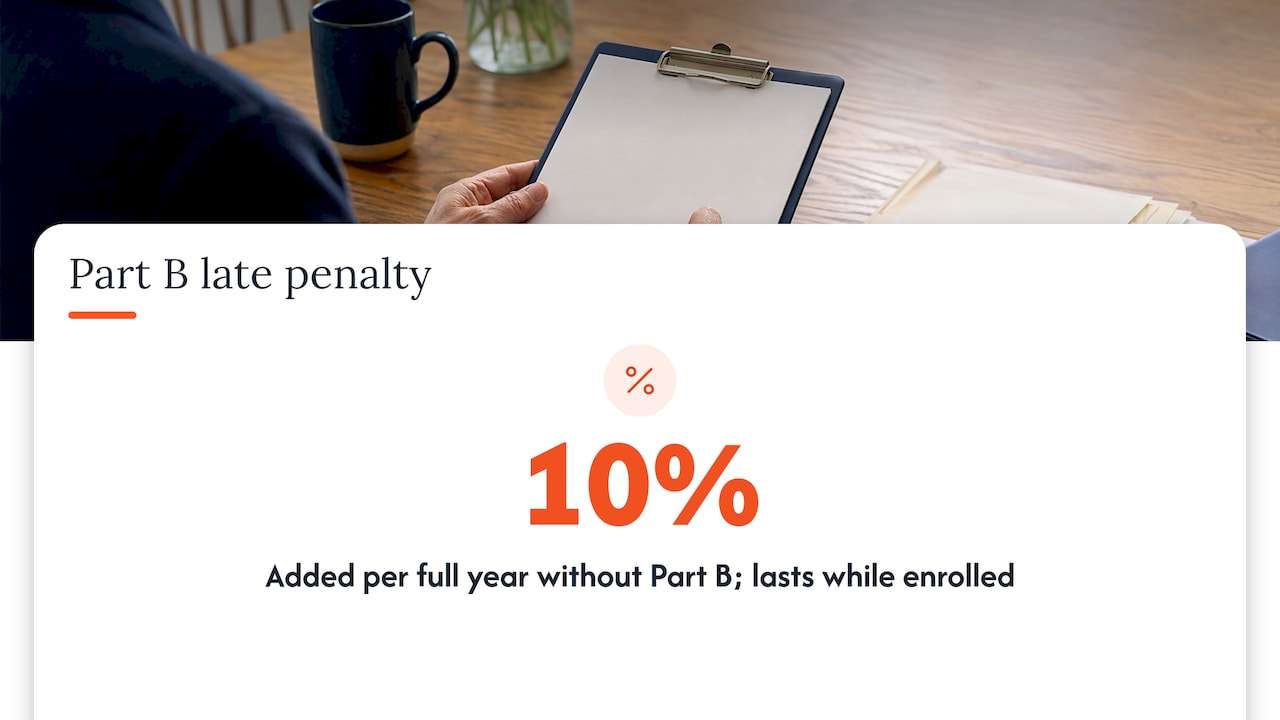
A coverage delay and a penalty often arrive together. CMS states that if you sign up after your Initial Enrollment Period, you may have to pay a late enrollment penalty of 10% for each full 12-month period you did not have Part B but could have signed up. SSA’s materials note the cost increases the longer you go without Part B or employer group coverage.
The penalty does not expire. CMS says the Part B penalty is assessed for as long as you have Part B, and HealthCare.gov says a late-enrollment penalty can apply for as long as you have Medicare.
To estimate your own number, use our Part B late enrollment penalty calculator. If you are also thinking about prescription coverage, the Part D penalty calculator does the same for drug plans. For ways to reduce your exposure, read how to avoid the Part B penalty.
What if you already have Medicare and lose Part B?
A search for “Medicare coverage delays” often comes from people in this situation: they had Medicare, and now a claim is denied or a notice says Part B has ended. The usual cause is an unpaid premium.
If you do not pay Part B premiums, Medicare sends notices before it ends coverage. The notices matter, because the rules for undoing a termination depend on them. Read every letter, and do not set aside mail that looks like a bill. Setting up automatic payment, or having a family member help watch your mail, can prevent most of these problems.
If coverage has already been terminated, there is a legal path back. Under 42 CFR 408.102, coverage may be reinstated without interruption of benefits if all three of these are true:
- You appeal the termination by the end of the month after the month in which SSA sent the termination notice.
- You state, and it is found, that you did not receive timely and adequate notice that premiums were overdue.
- You pay all premiums due through the month of your appeal within 30 days after SSA’s subsequent request for payment.
The deadlines are short, so contact Social Security right away if you receive a termination notice. For a hospital stay or serious illness that kept you from paying, ask Social Security about good-cause reinstatement when you call.
If you miss the reinstatement window, you may need to sign up again. CMS says that, in the case of a person in custody who loses Part B for unpaid premiums, re-enrollment happens in the General Enrollment Period or through a special exceptional-condition period, with GEP coverage starting the first day of the month after enrollment. Outside that situation, most people who lose Part B will also use the General Enrollment Period and may face the penalty described above.
Perspective: why we start with the calendar
In our experience, the people who call us worried about a Medicare delay are rarely the victims of a slow system. They are people who were never shown the dates. Nobody told them the Initial Enrollment Period has edges, that January to March means a July start, or that leaving a job starts an 8-month clock.
That is why our agents go through a training program before they advise anyone, and why we begin every consultation with your timeline, not a plan brochure. We want you to see your enrollment windows, your current coverage end date and the penalty exposure before we talk about a single carrier.
We believe a plan is only as good as the date it starts. Medicare Advantage, Medicare Supplement (Medigap) and Part D plans each have their own timing, and they have to fit around your Part A and Part B start. Our guidance comes at no extra cost to you, and we review your coverage every year so that a missed deadline does not turn into a missed year.
If you are within a year of 65, or you are about to leave an employer plan, call before the deadline, not after it.
Zach
Get your dates checked before they cost you
Safeguard Benefit Services is a Medicare insurance agency in Charlotte, North Carolina. We help with Medicare Advantage plans, Medicare Supplements, Prescription Drug Plans, and dental, vision and hearing coverage, along with cancer, life and hospital indemnity insurance. We also help you work out your eligibility and enrollment dates so you can avoid penalties and gaps. Our free Medicare roadmap lays out your options in order.

If you are choosing between plan types, start with our comparison of Medicare Advantage and Medicare Supplement, or talk to us directly through the Safeguard Benefit Services home page. For drug coverage, see our Charlotte prescription drug plans.
FAQ
How long does it take for Medicare coverage to start after I sign up?
For Part A and Part B, coverage generally begins the month after you enroll during the Initial, General or Special Enrollment Period, according to CMS. The exception is the General Enrollment Period, where HealthCare.gov states that coverage does not begin until July 1. Confirm your exact effective date in writing when you enroll.
Can I avoid a gap if I am still working at 65?
Often yes. If you are covered by an employer group health plan, SSA states there is a Special Enrollment Period with no penalty when you sign up or add Part B. The 8-month clock after your employment-based coverage ends is firm, so enroll before it runs out, ideally before your employer coverage ends.
Can I use Open Enrollment to start Part B after I missed my window?
No. KFF explains that the October 15 to December 7 period is for people who already have Medicare to join or switch drug or Medicare Advantage coverage. If you missed your Part B window, the General Enrollment Period from January 1 to March 31 is the route, with a possible late enrollment penalty.
Why did I lose my Medicare Part B?
The most common reason is unpaid premiums. Medicare sends notices first, and coverage can be reinstated in limited cases if you appeal on time and pay what is owed, under 42 CFR 408.102. Call Social Security as soon as you get a termination notice, because the deadlines are short.
Does a late enrollment penalty ever go away?
Not for Part B. CMS says it is assessed for as long as you have Part B, and it grows by 10% for each full 12-month period you could have enrolled and did not. Getting the dates right at the start is the only dependable way to avoid it.
Sources
- Original Medicare (Part A and B) Eligibility and Enrollment, CMS
- When to sign up for Medicare, SSA
- Information for people with Medicare, HealthCare.gov
- Medicare Overview Job Aid, CMS
- Fact Sheet: Medicare decisions for those over 65 and nearing retirement, CMS
- Medicare Ready, SSA
- Understanding Medicare Advantage and Medicare drug plan enrollment periods, CMS
- Application for Medicare Part A and Part B Special Enrollment Period, Exceptional Conditions, CMS
- Medicare open enrollment FAQs on Part B late enrollment, KFF
- 42 CFR 408.102, Reconsideration of termination, eCFR
- Incarcerated Medicare Beneficiaries, CMS
Recommended
Request a No Obligation Phone Call








Get Connected