

Wondering which Medicare preventive services in 2026 are covered and what could still result in out-of-pocket costs? You’re not alone. Many North Carolina residents approaching Medicare eligibility have questions about annual screenings, wellness visits, vaccines, and the often-confusing line between “preventive” and “diagnostic” billing. This guide breaks down what to expect—and how to stay protected—when using your Medicare benefits for prevention and early detection.
What Preventive Services Does Medicare Cover in 2026?
Medicare’s goal is to help you stay healthy and catch problems early. In 2026, Original Medicare continues to cover a comprehensive list of preventive services with no cost-sharing when certain conditions are met. According to the official Medicare.gov guidance and the CMS Preventive Services chart, the following are among the key preventive services covered:
- Annual Wellness Visits
- “Welcome to Medicare” preventive visit
- Screenings for cancer (e.g., breast, colorectal, prostate, lung)
- Cardiovascular disease screenings and blood pressure checks
- Diabetes screening tests
- Bone mass measurement
- Vaccinations (flu, COVID-19, pneumonia, hepatitis B for at-risk adults, and others as recommended by the CDC)
- Obesity and tobacco use counseling
- HIV and STI screenings
- Depression screening
- Other select screenings based on risk and guidelines
Most preventive services are billed with no copayment when performed by a provider who accepts Medicare assignment. This means you pay $0 for the service—so long as you meet the specific eligibility criteria set out by Medicare or the U.S. Preventive Services Task Force (USPSTF) guidelines.

How Does Medicare Distinguish Preventive from Diagnostic Services?
One of the most common sources of confusion is the difference between “preventive” and “diagnostic” billing under Medicare, especially for screenings like mammograms and colonoscopies. The distinction determines whether you pay out-of-pocket.
- Preventive services are tests or exams performed to check for potential health issues before symptoms appear. These are usually covered at no cost.
- Diagnostic services are performed to investigate symptoms or follow up on previous abnormal results. These are billed differently and can have copayments or deductibles.
For example, a screening colonoscopy (done because of age or risk status) is a preventive benefit, but if a polyp is found and removed during the screening, Medicare may process some parts of the appointment as diagnostic. In that case, you may face coinsurance or copays. The same holds true for mammograms if more views are needed following an abnormal screening result.
It’s important to ask your provider—and your plan’s claims department—how they will bill common preventive tests, especially if you have symptoms or personal/family history of disease.
Which Vaccines Are Free with Medicare in 2026?
Vaccinations are a crucial part of Medicare preventive services in 2026. Under Medicare Part B, you are entitled to coverage for several vaccines when given by a participating provider:
- Influenza (flu) – annually for most people
- Pneumococcal – typically two different shots over your lifetime
- COVID-19 – as recommended by CDC and CMS
- Hepatitis B – for those with medium/high risk
As of 2024, Part D plans must also cover shingles (Shingrix) and Tdap vaccines with no out-of-pocket costs at in-network pharmacies or providers, per the Inflation Reduction Act (IRA) rules (CMS.gov, 2023). These protections are expected to continue in 2026.
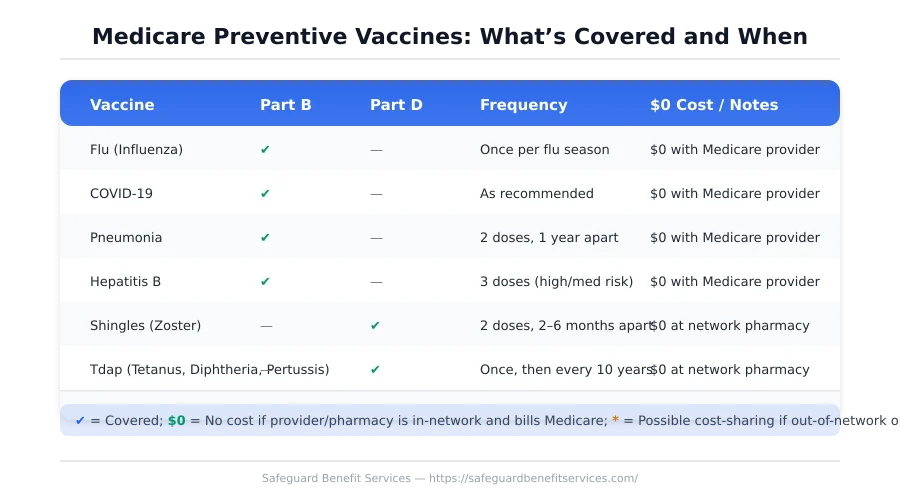
Always check if the provider or pharmacy is in your plan’s network to avoid unexpected charges. Not all vaccines are billed the same way across Part B and Part D.
What Is an Annual Wellness Visit? How Does It Work?
The Medicare Annual Wellness Visit (AWV) is not a typical head-to-toe physical exam. Instead, it’s a yearly appointment for you and your doctor to create or update a personalized prevention plan. The AWV often includes:
- Review of your medical and family history
- Medication review
- Routine measurements (height, weight, blood pressure)
- Risk assessment for depression, falls, and cognitive impairment
- Screening schedule planning (e.g., which cancer screenings are due?)
- Personalized health advice, including nutrition and exercise
The Annual Wellness Visit is free—but if your provider addresses new or complex health problems, those parts of your appointment may be billed as diagnostic, resulting in potential charges.
Before your visit, ask the provider’s office what is included in the AWV and what might fall outside the “preventive” category. Practices in Charlotte and across North Carolina frequently help patients prepare by reviewing Medicare’s current preventive service list first.
What Out-of-Pocket Costs Can Happen with Preventive Services?
While most Medicare preventive services in 2026 are no-cost, there are still ways you could end up with a bill:
- You receive a diagnostic test or procedure at the same time as a preventive service.
- Your provider is out-of-network or does not accept Medicare assignment.
- An extra service is performed that isn’t considered preventive (e.g., unrelated blood tests, treatment during a screening).
- You haven’t met the eligibility criteria for a particular screening—for instance, getting more frequent cancer screenings than Medicare allows.
- Vaccines given in a hospital or non-participating pharmacy may be billed as Part D or not covered at 100%.
Your coverage may also differ if you have a Medicare Advantage (Part C) plan. These plans must cover at least the same preventive benefits as Original Medicare, but costs and approved provider lists can vary, especially in high-population areas around Charlotte.
How Can North Carolina Residents Maximize Medicare Preventive Benefits?
Local Medicare experts recommend several steps for making the most of your benefits in 2026:
- Consult with an independent Medicare advisor to review coverage limits, recommended schedules, and plan-specific requirements before making appointments.
- Use in-network doctors and pharmacies whenever possible.
- Ask up front: “Will this be billed as preventive or diagnostic?”
- Bring an up-to-date list of medications and health concerns to your wellness visit.
- Double-check vaccination locations using your plan’s pharmacy locator or by contacting your insurer.
- Keep all explanation of benefits (EOB) statements and ask about any unexpected bills promptly.

What Should You Do If a Preventive Service Is Billed Incorrectly?
If you receive a bill for a Medicare preventive service in 2026 that was supposed to be free, don’t panic. The first step is to:
- Review the explanation of benefits (EOB) from Medicare or your insurer for service codes.
- Contact the doctor’s billing office to clarify how it was submitted. Sometimes a simple coding error can be corrected.
- Request a corrected claim if an exam or screening was mistakenly billed as diagnostic.
- If you have a Medicare Advantage plan, check restrictions and get the plan’s help line involved if needed.
- Appeal the charge in writing if it remains unresolved.
Professional insurance agents, like those at Safeguard Benefit Services, regularly help clients in North Carolina navigate mistakenly billed services and advise how to avoid surprises at the point of care.
Where Can You Find Accurate, Up-to-Date Information on Medicare Preventive Services?
Each year, the Centers for Medicare & Medicaid Services (CMS.gov) and the official Medicare.gov preventive services page publish updates on required coverage, billing codes, and eligibility rules for screenings, wellness visits, and vaccines. It’s also wise to:
- Download the current CMS “Medicare Preventive Services” Quick Reference Chart (MLN006559)
- Call 1-800-MEDICARE for official answers
- Work with a licensed, North Carolina-based Medicare agent familiar with regional networks and major plans in Charlotte and beyond
Safeguard Benefit Services has been serving Medicare clients in North Carolina since 2017 and holds all required state insurance licenses. Our advisors bring local knowledge and national expertise to help you interpret official guidelines, read between the lines of benefit summaries, and ensure compliance with the latest preventive care rules.
Wondering Which Medicare Preventive Services You Need? We’re Here to Help
Medicare’s preventive service coverage can be your strongest defense against unexpected health problems—but only if you understand what’s included, how “preventive” is billed, and what your particular plan may exclude. If you’re a Charlotte resident or live anywhere in North Carolina and want personalized guidance tailoring your coverage to your health goals, contact Safeguard Benefit Services today. Our independent, compassionate advisors will walk you through every benefit, help you avoid pitfalls, and make sure you get the most from your Medicare in 2026 and beyond.
This article is for informational purposes only and does not constitute financial advice. Consult a qualified professional for your specific situation.








Get Connected