
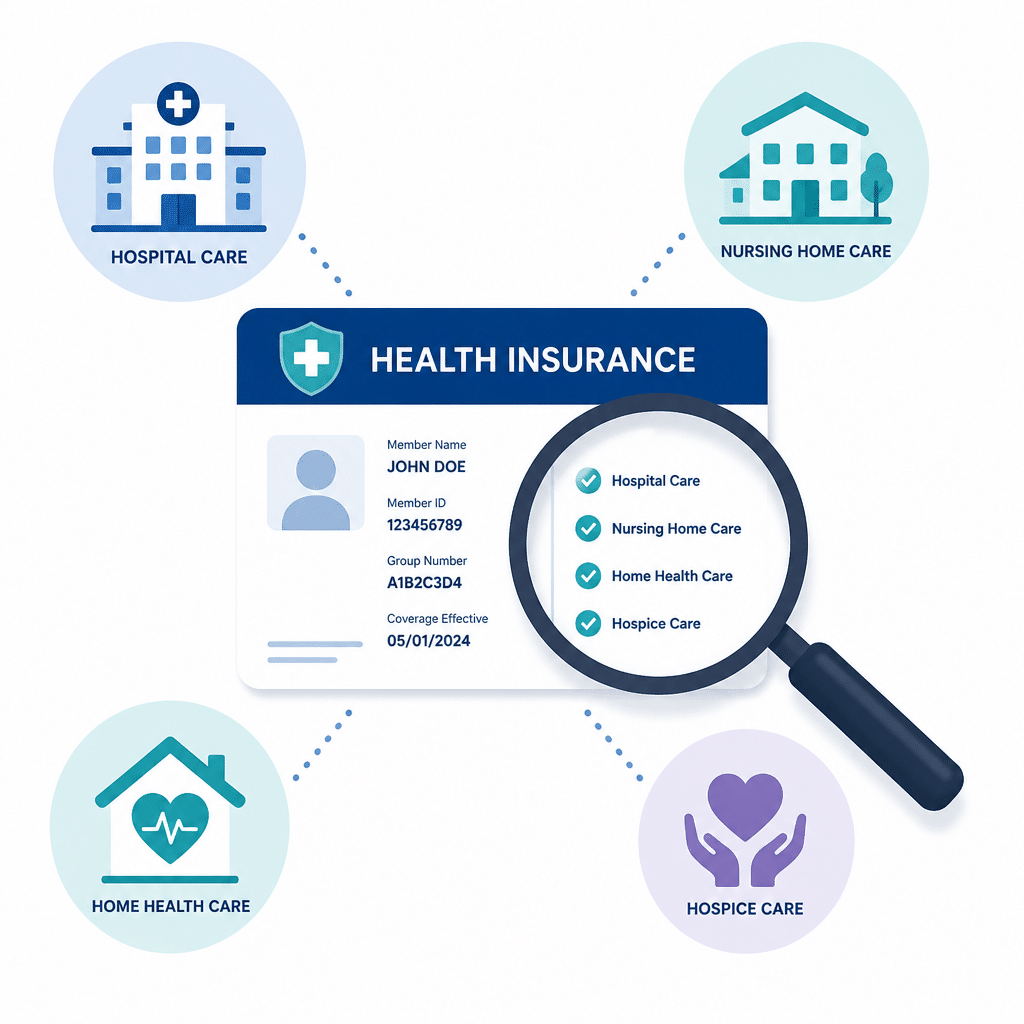
Most people turning 65 assume Medicare is a single insurance card that covers everything. Then they get admitted to the hospital, receive a bill for a deductible they did not know existed, and realize they were wrong. Medicare Part A, often called hospital insurance, is the foundation of Original Medicare, but it has specific rules, dollar limits, and gaps that catch beneficiaries off guard every year. If you are approaching Medicare age in North Carolina and trying to make sense of what does Medicare Part A cover before you enroll, this plain-English breakdown is written specifically for you.
Table of Contents
- Quick Takeaways
- What Is Medicare Part A?
- Inpatient Hospital Coverage
- Skilled Nursing Facility Care
- Hospice Care Coverage
- Home Health Care Coverage
- What Part A Does NOT Cover
- Part A Costs at a Glance: A Comparison Table
- How to Fill the Gaps in Part A
- Frequently Asked Questions
- References
Quick Takeaways
| Key Insight | Explanation |
|---|---|
| Most people pay $0 in Part A premiums | If you or your spouse worked and paid Medicare taxes for at least 40 quarters (10 years), your Part A premium is $0 per month. |
| The deductible resets per benefit period, not per year | The 2025 Part A deductible is $1,676, and it applies each time a new benefit period begins, not once per calendar year. Multiple hospitalizations can mean multiple deductibles. |
| Hospital coinsurance kicks in after day 60 | Days 61 to 90 cost $419 per day in 2025. After day 90, you start burning through 60 lifetime reserve days at $838 per day. |
| Skilled nursing facility coverage requires a 3-day hospital stay first | Part A only covers skilled nursing care after a qualifying inpatient hospital stay of at least 3 days. Observation status does not count. |
| Hospice care is fully covered for terminal illness | Part A covers hospice services with no deductible if a doctor certifies a terminal prognosis. The focus shifts to comfort, not cure. |
| Long-term custodial care is NOT covered | Part A covers short-term skilled care only. If you need help with daily activities long-term, Medicare will not pay for it. |
| A Medicare Supplement can eliminate most Part A cost-sharing | Plans like Medigap Plan G cover the Part A deductible and coinsurance, turning unpredictable hospital bills into a predictable monthly premium. |
What Is Medicare Part A?
Medicare Part A is the hospital insurance portion of Original Medicare. It is one of two parts that make up the federal health insurance program for people age 65 and older, as well as certain younger people with disabilities. Part A does not handle doctor visits or outpatient services. That is the job of Part B. Part A focuses on what happens when you are admitted to a facility.
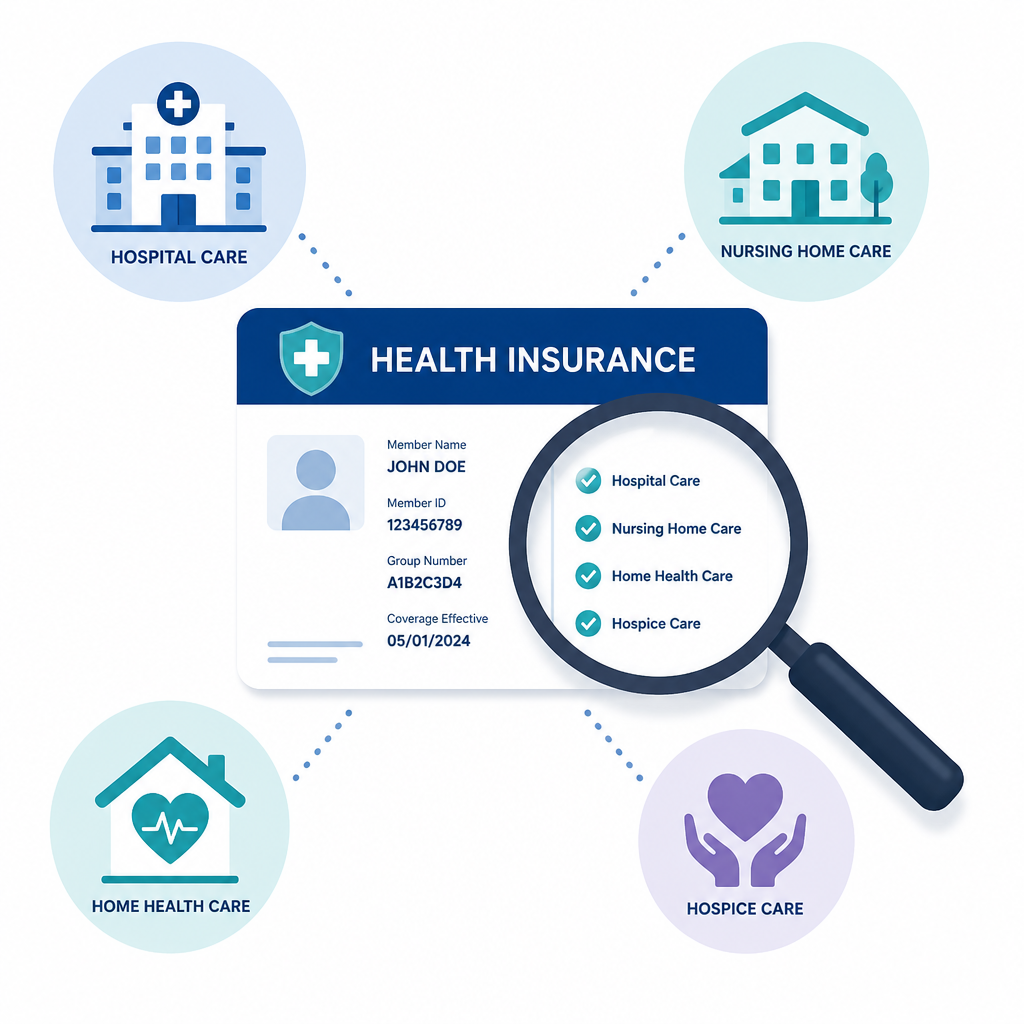
The four main categories Part A covers are inpatient hospital care, skilled nursing facility (SNF) care, hospice care, and some home health care. Each of these comes with its own eligibility rules and cost-sharing structure. Understanding those rules before you need them is exactly what prevents a $5,000 surprise bill after a hip replacement.

Inpatient Hospital Coverage
When you are formally admitted to a hospital, Part A pays for a semi-private room, meals, general nursing care, medications administered during your stay, and other necessary hospital services and supplies. Doctor and surgeon fees during that same stay are billed separately under Part B, so both parts are usually at work during any hospitalization.
The Benefit Period Structure
Part A does not track costs by calendar year the way most commercial insurance does. It uses benefit periods. A benefit period begins the day you are admitted to a hospital or skilled nursing facility and ends after you have been out of inpatient care for 60 consecutive days. Once that 60-day clock resets, a new benefit period starts if you are admitted again, and the $1,676 deductible applies again.
This is one of the most misunderstood features of Medicare. Someone hospitalized twice in one year, with more than 60 days between stays, pays the deductible twice. A Medicare Supplement plan is designed precisely to protect against this kind of unpredictable cost stacking.
Hospital Coinsurance by Day
For the first 60 days of a hospitalization in a benefit period, Part A covers all costs above the deductible. Starting on day 61, you pay $419 per day in 2025. Between day 91 and day 150, you draw from a pool of 60 lifetime reserve days at $838 per day. These lifetime reserve days are not replenished each year. Once you use them, they are gone. Beyond 150 days, Part A pays nothing.
Pro tip: If your doctor places you under “observation status” rather than formally admitting you, you are technically an outpatient. Part A will not kick in, and your stay will not count toward the 3-day requirement needed to qualify for skilled nursing facility coverage. Always ask the admitting team whether you are being admitted or placed under observation.
Skilled Nursing Facility Care
After a qualifying hospital stay of at least 3 consecutive days as a formal inpatient, Part A covers short-term care in a Medicare-approved skilled nursing facility. This covers scenarios like recovering from a stroke, a joint replacement, or a serious infection where you still need daily skilled nursing or therapy but no longer need acute hospital-level care.
What Is Covered and for How Long
The coverage schedule for skilled nursing facility stays in 2025 breaks down as follows. Days 1 through 20 are covered at 100% of the Medicare-approved amount after you have met the Part A deductible. Days 21 through 100 require a daily coinsurance payment of $209.50. After day 100, Part A pays nothing. All costs beyond that point fall entirely on you.
The 100-day maximum per benefit period sounds like a long time. In practice, many patients hit the day-21 coinsurance threshold faster than expected, and the $209.50 daily charge adds up to over $6,000 for a 50-day stay in the coinsurance window. This is another area where a well-chosen Medicare Supplement plan provides real financial protection.
A common mistake among new Medicare beneficiaries is assuming “nursing home” and “skilled nursing facility” mean the same thing for coverage purposes. They do not. Medicare covers short-term skilled care. It does not cover custodial care, which is help with bathing, dressing, or eating when no skilled medical treatment is actively required.
Pro tip: If you are discharged from a skilled nursing facility and then readmitted within 30 days to the same or a different Medicare-approved SNF, you may not need a new qualifying hospital stay. The 30-day window rule can preserve your benefit period, letting you pick up SNF coverage without starting from zero. Ask the facility’s discharge planner before you leave.

Hospice Care Coverage
Part A covers hospice care when a doctor certifies that a beneficiary has a terminal illness and a life expectancy of 6 months or less, and the beneficiary chooses to receive palliative comfort care rather than curative treatment. This is a significant shift in care philosophy, not just a billing category.
Covered hospice services include physician services, nursing care, medical equipment, prescription drugs for symptom management and pain relief, short-term inpatient care for pain control, and respite care for family caregivers. For most hospice services, Part A covers costs in full, with no deductible. There may be a small copayment for prescription drugs or respite care, but these amounts are minimal.
Hospice care can be provided at home, in a hospice facility, or in a nursing home. The emphasis is on quality of life and dignity. A patient can leave hospice if their condition improves or if they change their mind about treatment, and then re-enroll later.
Home Health Care Coverage
Part A, along with Part B, covers some home health care for beneficiaries who are homebound and need part-time or intermittent skilled nursing care or therapy. The care must be prescribed by a doctor and provided by a Medicare-certified home health agency.
Covered services include skilled nursing visits, physical therapy, occupational therapy, speech-language pathology, and medical social services. For covered home health services, your cost is $0. However, durable medical equipment ordered through home health (such as a wheelchair or hospital bed) is typically covered under Part B at 80%, with you responsible for the remaining 20%.
Home health under Part A is limited to medically necessary, skilled care. It is not intended to cover ongoing personal care or homemaking services. If care shifts from skilled to purely custodial, coverage stops.
What Part A Does NOT Cover
Knowing what Part A skips is just as important as knowing what it includes. Original Medicare Part A does not cover routine dental cleanings, fillings, or dentures. It does not cover routine vision exams or eyeglasses. It does not cover hearing aids or routine hearing exams.
Long-term custodial care is explicitly excluded. If you need help with activities of daily living such as bathing, dressing, or eating, and no active skilled medical treatment is involved, Part A will not pay regardless of how long the need persists. This is where Medicaid planning or long-term care insurance becomes relevant for many North Carolina families.
Care received outside the United States is generally not covered by Part A either, with very narrow exceptions. Routine foot care and most cosmetic procedures are also excluded.
Part A Costs at a Glance: A Comparison Table
The table below compares your cost-sharing across the three main Part A benefit categories in 2025, so you can see at a glance where the financial exposure is highest.
| Coverage Category | What Medicare Pays (2025) | What You Pay (2025) |
|---|---|---|
| Inpatient Hospital, Days 1-60 | All costs above the deductible | $1,676 deductible per benefit period |
| Inpatient Hospital, Days 61-90 | All costs above daily coinsurance | $419 per day |
| Inpatient Hospital, Days 91-150 (Lifetime Reserve) | All costs above daily coinsurance | $838 per day |
| Inpatient Hospital, Beyond Day 150 | $0 | All costs |
| Skilled Nursing Facility, Days 1-20 | 100% of approved amount | $0 |
| Skilled Nursing Facility, Days 21-100 | All costs above daily coinsurance | $209.50 per day |
| Skilled Nursing Facility, Beyond Day 100 | $0 | All costs |
| Hospice Care | Nearly all costs | Small copay for drugs or respite care |
| Home Health (skilled, medically necessary) | 100% of covered services | $0 for services; 20% for durable medical equipment |
How to Fill the Gaps in Part A
Part A is solid hospital coverage, but it leaves real financial gaps. The per-benefit-period deductible, daily coinsurance for long stays, and the total absence of coverage beyond lifetime reserve days create unpredictable out-of-pocket exposure.
Medicare Supplement (Medigap) Plans
A Medicare Supplement plan, also called Medigap, wraps around Original Medicare to cover much of the cost-sharing Part A leaves behind. For example, Medigap Plan G covers the Part A coinsurance and hospital costs up to an additional 365 days after Medicare benefits run out, as well as the skilled nursing facility coinsurance. The Part A deductible is also covered by Plan G for those who enrolled before January 2020. High-Deductible Plan G is a lower-premium option worth examining if you are healthy and want catastrophic protection rather than first-dollar coverage.
The critical thing to know about Medigap in North Carolina is that your best window to enroll without medical underwriting is during your Medigap Open Enrollment Period, which begins the month you turn 65 and are enrolled in Part B. After that window closes, insurers can use your health history to deny coverage or charge higher premiums.
Medicare Advantage Plans
Medicare Advantage (Part C) plans replace Original Medicare and often include different cost-sharing structures for hospital stays. Some Medicare Advantage plans waive the 3-day hospital requirement for skilled nursing facility coverage and cap your annual out-of-pocket spending, which Original Medicare does not do. The trade-off is that you are typically working within a network of providers.
The right choice between Original Medicare with a Supplement versus Medicare Advantage depends on your health, your preferred doctors, and your financial situation. At Safeguard Benefit Services, our licensed advisors work through that comparison with you at no cost, using plans from 30+ carriers to find the fit that actually makes sense for your life in North Carolina.
If you want a personalized look at how your Part A benefits interact with the supplement or Advantage options available in your area, schedule a free consultation with the Safeguard Benefit Services team. There is no pressure and no obligation.
Frequently Asked Questions
Does Medicare Part A cover ambulance transportation?
Ambulance services are generally covered under Medicare Part B, not Part A. Part B covers medically necessary ambulance transportation to a hospital or other facility when other transport would be unsafe. If you arrive at the hospital by ambulance and are then formally admitted, Part A takes over for the inpatient stay itself.
Will Part A pay for a private room in the hospital?
Part A covers a semi-private room as the standard. If you request a private room for personal preference rather than a documented medical necessity, you will pay the difference in cost out of pocket. A private room can be covered if your doctor certifies that it is medically required due to your condition.
What counts as a qualifying hospital stay for skilled nursing facility coverage?
To qualify for Part A SNF coverage, you must have been formally admitted as an inpatient to an acute care hospital for at least 3 consecutive days, not counting the day of discharge. Days spent under “observation status” do not count toward this requirement, even if you were physically in a hospital bed overnight. This distinction is one of the most financially damaging surprises in Medicare and is worth confirming at the time of any hospitalization.
Can I have both Part A and a Medicare Advantage plan at the same time?
When you enroll in a Medicare Advantage plan, that plan takes the place of Original Medicare Parts A and B. The plan is required to cover everything that Original Medicare covers, and usually more. You technically remain enrolled in Medicare Parts A and B, but your Advantage plan becomes the active coverage. You cannot use a Medigap supplement alongside a Medicare Advantage plan.
Is there a penalty for not enrolling in Part A on time?
For most people who qualify for premium-free Part A, there is no late enrollment penalty. However, if you have to pay a premium for Part A and you do not enroll when first eligible, your monthly premium may increase by 10%. That penalty lasts for twice the number of years you were eligible but did not enroll. If you are still working and covered by an employer group health plan at 65, specific rules govern when your enrollment window begins, and getting this wrong can cost you money. A Medicare advisor can walk you through your specific situation.
Does Part A cover mental health inpatient care?
Yes, Part A covers inpatient mental health care in a general hospital using the same cost-sharing rules as other inpatient stays. For inpatient psychiatric hospital stays in a freestanding psychiatric facility, Part A covers up to 190 days in a lifetime. That lifetime limit does not apply when mental health treatment occurs within a general acute care hospital.
What if I need care in a nursing home long-term after my 100 days of SNF coverage runs out?
After the 100-day SNF benefit period ends, Part A pays nothing for continued nursing home care. Long-term custodial care is one of the biggest gaps in Medicare. At that point, you are generally paying out of pocket until you spend down assets enough to qualify for Medicaid. Some people plan for this scenario using long-term care insurance purchased before Medicare age. This is a planning conversation worth having well before you need that care, not after.
Have questions about how your Medicare Part A benefits work with the supplemental coverage options available in North Carolina? Share your experience or drop a question below. We read every comment and our team is happy to help.
References
- Medicare Part A hospital insurance coverage explained, including 2025 deductibles and coinsurance rates
- Official 2025 Medicare Parts A and B premiums and deductibles from the Centers for Medicare and Medicaid Services
- North Carolina Department of Insurance 2025 Medicare Part A covered services cost chart
- Medicare skilled nursing facility coverage rules including the 3-day hospital stay requirement and benefit period limits
- Medicare Part A coverage categories and 2025 cost-sharing breakdown by service type








Get Connected