

Most people turning 65 assume Medicare enrollment is a one-time event with a hard deadline and no second chances. That assumption leads to serious, expensive mistakes. A Medicare Special Enrollment Period (SEP) is a protected window that opens after a qualifying life event, giving you the legal right to enroll in or change your Medicare coverage outside the standard enrollment calendar. These windows are not automatic, they are not indefinite, and they are not forgiving. Miss yours and you could face permanent premium penalties that follow you for the rest of your life, plus months of coverage gaps while you wait for the next available enrollment window. If you are approaching 65 or already on Medicare and a major life change is on the horizon, this guide is exactly what you need to read before anything else.
Table of Contents
- What Is a Medicare Special Enrollment Period?
- Which Life Events Qualify for a Medicare SEP?
- SEP Windows and Deadlines by Coverage Type
- The Part B SEP: Retiring or Losing Employer Coverage
- Medicare Advantage and Part D SEPs
- The Real Cost of Missing Your SEP Window
- Comparing Your Enrollment Options After a Life Event
- How to Actually Use Your Medicare SEP Step by Step
- Common SEP Mistakes That Cost People Money
- Frequently Asked Questions
- References
What Is a Medicare Special Enrollment Period?
| Key Insight | Explanation |
|---|---|
| SEPs are triggered, not automatic | A Medicare SEP opens only after a qualifying life event. Simply being eligible for Medicare does not activate one. You must proactively act within the window. |
| Most SEP windows last 60 days | The majority of Medicare Advantage and Part D SEPs give you two months from the qualifying event to enroll or switch. The Part B SEP after losing employer coverage lasts eight months. |
| Different rules apply to different coverage types | The SEP rules for Original Medicare (Parts A and B) differ significantly from those governing Medicare Advantage plans and Part D drug plans. Do not assume the same timeline applies across all parts. |
| Documentation is required | You typically need proof of the qualifying event, such as a letter from an employer confirming coverage loss, a lease or utility bill confirming a move, or a notice of Medicaid eligibility change. |
| Missing the SEP has lasting consequences | Missing a Part B SEP means waiting for the General Enrollment Period (January 1 to March 31) with coverage starting July 1, and potentially paying a permanent 10% premium increase per missed year. |
| The 5-Star SEP requires no qualifying life event | If a Medicare Advantage or Part D plan in your area earns a 5-star CMS quality rating, you can switch to it once per year between December 8 and November 30, with no life event required. |
| Dual eligibility (Medicare and Medicaid) opens a monthly SEP | As of 2025, people with both Medicare and Medicaid can join, switch, or disenroll from a Medicare Advantage or Part D plan up to once per month, upgraded from the previous quarterly limit. |
A Medicare SEP is not a loophole or a workaround. It is a formally protected enrollment right that Congress and the Centers for Medicare and Medicaid Services (CMS) built into the system specifically because life does not wait for open enrollment windows. The challenge is that most people do not know these windows exist, how long they last, or what evidence they need to use them.
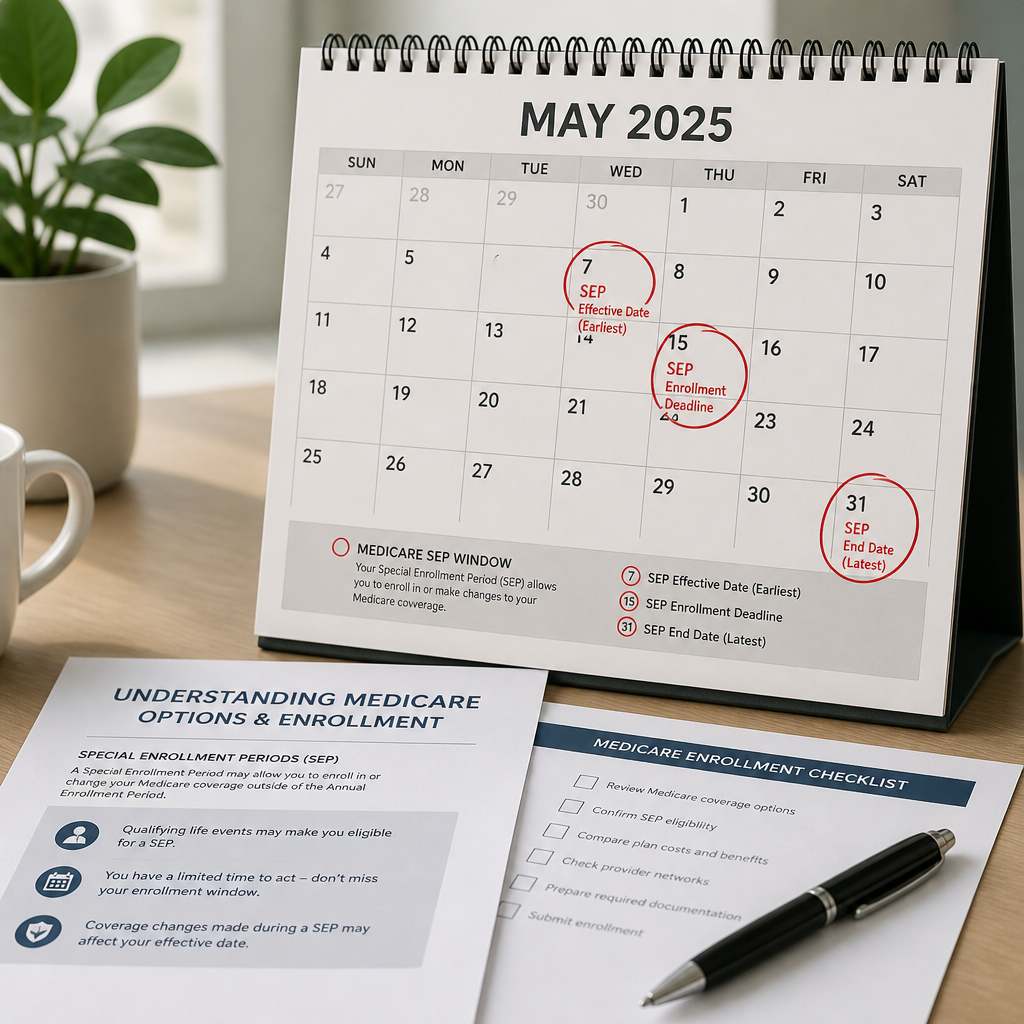

Which Life Events Qualify for a Medicare SEP?
Not every change in your life qualifies. CMS defines the list of triggering events precisely, and if your situation does not fit one of those categories, you will be waiting for the next standard enrollment window regardless of your circumstances. Here is what actually qualifies.
Losing Employer or Union Coverage
This is the most commonly used SEP for Original Medicare. If you delayed Part B enrollment because you or your spouse had active group health plan coverage through an employer or union, you are protected. When that employment ends or coverage stops, whichever comes first, your SEP begins.
A critical clarification that trips up many people: COBRA continuation coverage does not count as active employer coverage for purposes of delaying Part B enrollment. If you retire and transition to COBRA instead of Medicare, you are not protected from the Part B late enrollment penalty once your employer coverage ends. Start your Part B enrollment before or immediately when your group health plan ends.
Making a Permanent Move
Relocating permanently can trigger a SEP for Medicare Advantage and Part D plans because those plans are geographically restricted. If you move outside your plan’s service area, you qualify for a two-month SEP. That window typically starts the month before your move and extends two months after you notify Medicare of your new address.
Changes in Medicaid Eligibility
Gaining or losing Medicaid eligibility is a qualifying event. People with both Medicare and Medicaid, known as dual-eligible beneficiaries, have special ongoing flexibility: as of 2025, they can join, switch, or disenroll from a Medicare Advantage or Part D plan once per month.
Plan Termination or Contract Non-Renewal
If your Medicare Advantage or Part D plan stops operating in your area or loses its Medicare contract, you do not get left without options. If the contract is not renewed for the coming year, your SEP runs from December 8 through the last day of February. If a plan terminates mid-year, your SEP begins two months before the termination date and continues for an additional month afterward.
Losing Creditable Drug Coverage
If you had employer-sponsored, union, TRICARE, or VA drug coverage that qualified as creditable, meaning it was at least as good as standard Medicare Part D, you can delay Part D enrollment without penalty. The moment that creditable coverage ends, your two-month SEP begins immediately. Act on it.
SEP Windows and Deadlines by Coverage Type
The length of a Medicare SEP depends entirely on which part of Medicare is involved and what event triggered it. There is no single universal SEP window, and assuming there is one is one of the most common and costly mistakes people make.
For Part B enrollment after losing employer group health coverage, the SEP lasts eight months from the date employment ends or coverage ends, whichever comes first. This is the longest SEP window in the Medicare system, and it exists specifically so workers and retirees have adequate time to transition. Do not misinterpret that length as an invitation to delay. Enrolling in month seven means your coverage starts later, and a gap in coverage during those months is a real healthcare risk.
For Medicare Advantage and Part D SEPs triggered by most life events, including moving, losing creditable coverage, and plan termination, the window is generally two months. Beginning January 1, 2024, people who sign up for Medicare Part A and Part B due to a qualifying life event have two months to enroll in a Medicare Advantage or Part D plan, with coverage beginning on the first day of the month after enrollment.
The qualifying event determines how much time you have, and deadlines range from two months to twelve months depending on the circumstance. Getting the timing right matters because missing an SEP can mean months without coverage and permanent premium surcharges that follow you for life.
Pro tip: Document the exact date your qualifying event occurs, whether that is your last day of employer coverage, the date you receive a plan termination notice, or the date you establish a new permanent residence. That date sets your SEP clock. If you cannot pinpoint it, you risk miscounting your window and losing your protected enrollment right.
The Part B SEP: Retiring or Losing Employer Coverage
If you are approaching 65 and still working with employer coverage, or if you have a spouse whose employer covers you, the Part B SEP is probably the most relevant Medicare life event enrollment scenario for you. This is also where the most consequential mistakes happen.
The rule is straightforward in principle: delay Part B while you have active group health coverage through a current employer (your own or a spouse’s), and you preserve your right to enroll in Part B without penalty for up to eight months after that coverage ends. The plan does not need to be through your current employer specifically. Spouse’s employer coverage counts. Retiree coverage from a former employer does not count.
What “Active Employer Coverage” Actually Means
The coverage must be through an employer that currently employs you or your spouse. Retiree health plans do not qualify as active employer coverage. COBRA does not qualify. If you leave your job, transition to COBRA, and then try to use the Part B SEP later, Medicare may not honor the delay, and you could face the late enrollment penalty dating back to when your original active coverage ended.
When to Enroll Even if You Have Employer Coverage
If your employer has fewer than 20 employees, Medicare becomes your primary payer at 65 regardless of whether you have employer coverage. In that scenario, delaying Part B is a mistake because Medicare pays first, and your employer plan pays second. Not having Part B means your employer plan could deny claims that Medicare would have handled as the primary insurer.
Medicare Advantage and Part D SEPs
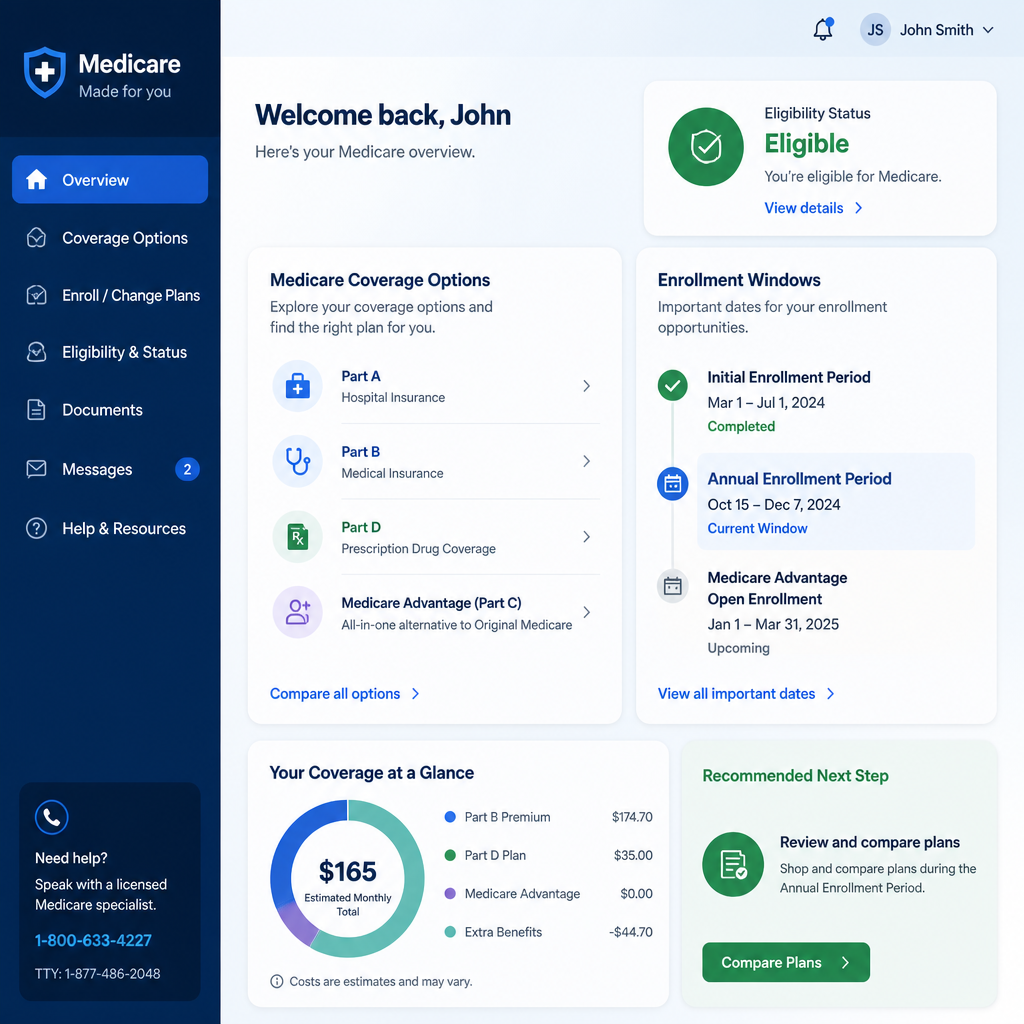
Once you are already enrolled in Medicare, certain life events give you the right to switch or enroll in Medicare Advantage and Part D plans outside the Annual Enrollment Period (October 15 to December 7). These SEPs are separate from the Part B SEP and have their own distinct rules.
Moving Out of Your Plan’s Service Area
Medicare Advantage plans are built around geographic service areas. If you move to a location outside your current plan’s service area, you qualify for a SEP. The window begins the month before your move and extends through the second month after you notify Medicare of your new address. If you are moving to a new region in North Carolina, or relocating to or from Charlotte, your existing Medicare Advantage plan may not follow you, and this SEP is your protected opportunity to pick a plan that covers your new zip code.
The 5-Star SEP: No Life Event Required
One SEP stands apart from all others because no qualifying event is required. If a Medicare Advantage or Part D plan in your area receives a 5-star quality rating from CMS, you can switch to that plan once between December 8 and November 30 of the following year. This is available once per calendar year and gives you an option to upgrade your coverage quality even when no other enrollment window is open.
Entering or Leaving a Skilled Nursing Facility
Admission to or discharge from a nursing home or skilled nursing facility is a qualifying event that opens a two-month SEP. If your care needs change and your current Medicare Advantage plan is not serving you well in that context, this is your window to make a switch.
Pro tip: If you receive a notice that your Medicare Advantage or Part D plan is being terminated or will not be renewed, read it carefully and note the dates. Your SEP window is defined by the termination schedule, and acting early in that window gives you more time to compare replacement plans rather than rushing a decision in the final days.
The Real Cost of Missing Your SEP Window
Missing a Medicare SEP is not like missing a sale. The financial consequences are permanent and compound over years. Every person approaching Medicare needs to understand exactly what is at stake before they assume they have more time than they do.
For Medicare Part B, the late enrollment penalty is 10% of the standard Part B premium for each full 12-month period you were eligible but did not enroll, and did not have qualifying employer coverage. The standard Part B premium in 2025 is $185.00 per month. If you were eligible for two full years without enrolling or holding a qualifying SEP, your premium surcharge adds 20% permanently, and that surcharge lasts for as long as you have Part B coverage, which for most people is the rest of their life.
For Medicare Part D, the late enrollment penalty is calculated differently and is also permanent for as long as you hold Part D coverage. Delaying Part D enrollment in Medicare Advantage (with drug coverage) or a standalone Part D plan past your SEP window makes you subject to this penalty. The only way to avoid it is to have creditable drug coverage during the gap period, which means coverage at least as good as standard Medicare drug coverage.
If you miss your Part B SEP, your next opportunity is the General Enrollment Period, which runs January 1 through March 31 each year, with coverage starting July 1 of that year. That means a potential gap in coverage of months, on top of the permanent penalty, depending on when your SEP closed.
Comparing Your Enrollment Options After a Life Event
When a qualifying life event occurs, you have real choices about how to proceed. The right path depends on what type of coverage you are transitioning from, what you need going forward, and how quickly you act. Here is a direct comparison of the three primary paths most people face.
| Enrollment Approach | Best For | Key Risks and Tradeoffs |
|---|---|---|
| Use Your SEP Immediately Upon Qualifying Event | Anyone who has lost employer coverage, moved, or had a plan terminated. The standard recommended path. | Minimal risk if done correctly. Requires documentation of the qualifying event and prompt action within the window. |
| Wait for Annual Enrollment Period (Oct. 15 to Dec. 7) | People with a Medicare Advantage or Part D change who still have current coverage and are not at risk of a gap before the AEP begins. | Works only if your current coverage remains active until AEP changes take effect on January 1. Risky if your plan terminates before then. |
| Use the General Enrollment Period (Jan. 1 to Mar. 31) | People who missed both their Initial Enrollment Period and their SEP and need Part B. A last-resort option. | Coverage starts July 1, creating a long potential gap. Late enrollment penalties apply based on how long you went without Part B. Avoid this path whenever possible. |
How to Actually Use Your Medicare SEP Step by Step
Knowing your SEP exists is only half the battle. Using it correctly requires documentation, timing, and in most cases a licensed professional who can confirm you are taking the right steps for your specific situation.
Start by identifying the exact date of your qualifying event. That date starts your clock. Next, gather documentation that proves the event occurred. A termination letter from your employer works for loss of employer coverage. A utility bill, lease agreement, or official mail at your new address works for a move. A notice from your plan works for plan termination or non-renewal.
For Part B enrollment through a SEP after leaving employer coverage, you file through Social Security, either online at SSA.gov, by phone, or in person at a Social Security office. For Medicare Advantage and Part D SEPs, you can contact Medicare directly at 1-800-MEDICARE (1-800-633-4227) or work directly with a licensed insurance agent who can submit the enrollment application on your behalf.
A common mistake is assuming that notifying your old plan is the same as enrolling in a new one. Canceling or losing your old plan does not automatically enroll you in a replacement. You must actively submit an enrollment application for your new coverage.
At Safeguard Benefit Services, we work with clients across Charlotte and throughout North Carolina to navigate exactly these transitions. A qualifying life event is not the time to figure out Medicare on your own. We offer free consultations and represent over 30 insurance companies, so we can help you find the right plan within your SEP window without pressure or guesswork. Reach out to our team before your SEP window closes.
Common SEP Mistakes That Cost People Money
After years of helping clients in the Charlotte area navigate Medicare enrollment, the same errors surface repeatedly. Every one of them is avoidable with the right information at the right time.
Mistake 1: Treating COBRA as a substitute for Medicare. COBRA continuation coverage does not count as active employer group health coverage for the purpose of delaying Medicare Part B without penalty. Retiring and choosing COBRA instead of Medicare Part B is one of the fastest ways to accidentally trigger the late enrollment penalty.
Mistake 2: Waiting until the last week of the SEP window. Most people think they have plenty of time and then rush at the end. If you are comparing Medicare Advantage or Part D plans, you need time to evaluate options, gather documentation, and submit an application. Starting on day 58 of a 60-day window is a recipe for errors or missing the deadline entirely.
Mistake 3: Assuming a move within the same state keeps your plan intact. Medicare Advantage plans cover specific service areas defined by zip codes, not state boundaries. Moving from one part of North Carolina to another can place you outside your plan’s service area and requires you to use your SEP to select a plan that covers your new location.
Mistake 4: Not knowing the difference between the SEP and AEP. The Annual Enrollment Period (October 15 to December 7) lets anyone on Medicare make changes. A SEP lets you make changes outside that window because of a specific life event. These are separate mechanisms. Missing your SEP window and hoping to use the next AEP can mean months without appropriate coverage.
Mistake 5: Not working with a licensed Medicare advisor. The Medicare enrollment rules are detailed, and the consequences of getting them wrong are permanent. A licensed sales representative from an agency like Safeguard Benefit Services costs you nothing for consultation, and can prevent mistakes that would cost you thousands in unnecessary premium surcharges.
Frequently Asked Questions
What triggers a Medicare Special Enrollment Period?
A Medicare SEP is triggered by a qualifying life event defined by CMS. Common triggers include losing employer or union group health coverage, moving permanently outside your current plan’s service area, experiencing a change in Medicaid eligibility, losing creditable drug coverage, or having your Medicare Advantage or Part D plan terminated or non-renewed. Each of these events opens a protected window to enroll in or change Medicare coverage outside the standard enrollment calendar.
How long do I have to act once my Medicare SEP opens?
It depends on the type of coverage and the qualifying event. The most common windows are eight months for Part B enrollment after losing employer group health coverage, and two months for Medicare Advantage and Part D changes after most other qualifying life events. Some specialized SEPs have different timeframes. The date the qualifying event occurs starts the clock, so tracking that date precisely matters.
Can I use my Medicare SEP to switch from Original Medicare to a Medicare Advantage plan?
Yes, in certain circumstances. If you experience a qualifying life event that opens an SEP for Medicare Advantage enrollment, you can use that window to enroll in a Medicare Advantage plan for the first time or switch between plans. Working with a licensed Medicare advisor is the best way to confirm which options are available to you under your specific SEP and to compare plans before your window closes.
What happens if I miss my Medicare Special Enrollment Period?
If you miss a Part B SEP, you will generally need to wait for the General Enrollment Period (January 1 to March 31), with coverage starting July 1. You may also face a permanent 10% late enrollment penalty for each 12-month period you were eligible but not enrolled and did not have qualifying employer coverage. For Medicare Advantage and Part D, missing your SEP typically means waiting for the next Annual Enrollment Period (October 15 to December 7). In either case, there is a potential gap in coverage and possible lasting premium surcharges.
Does moving to a new home always trigger a Medicare SEP?
Moving triggers a SEP for Medicare Advantage and Part D plans if your new permanent address is outside your current plan’s service area, or if you move to an area where additional plan options are available. Moving within your current plan’s service area does not trigger a SEP. For Original Medicare (Parts A and B), a move alone does not trigger an enrollment SEP because Parts A and B have no geographic service restrictions.
Is there a Medicare SEP that does not require a qualifying life event?
Yes. The 5-Star Special Enrollment Period allows you to switch to a Medicare Advantage or Part D plan that has earned a 5-star quality rating from CMS, without needing a qualifying life event. This SEP runs from December 8 through November 30 of the following year and can be used once per calendar year. It is a valuable but underused option for people who want access to a higher-quality plan outside of the Annual Enrollment Period.
Do I need to work with a Medicare insurance agency to use my SEP?
You are not legally required to, but working with a licensed Medicare advisor is strongly recommended. SEP rules are specific, deadlines are strict, and the consequences of errors are often permanent. An agency like Safeguard Benefit Services offers free consultations and can help you compare plans from multiple carriers within your SEP window, so you are not making a rushed, uninformed decision under deadline pressure.
Have you recently experienced a qualifying life event that affected your Medicare coverage? Share what happened and what you wish you had known sooner, your experience could help someone else avoid a costly mistake.
References
- Medicare Special Enrollment Period types, qualifying events, and eligibility rules explained by Medicare Resources
- Medicare SEP frequently asked questions including the 5-Star SEP and creditable coverage rules on MedicareFAQ
- Overview of Medicare Special Enrollment Periods and how to qualify from the National Council on Aging
- Official 2025 Medicare Part B premium and deductible amounts from the Centers for Medicare and Medicaid Services
- Medicare SEP rules, deadlines, and late enrollment penalty details from Legal Clarity








Get Connected