

Are you asking what Medicare dental, vision, and hearing benefits really include? Many North Carolina Medicare recipients are surprised to find significant gaps in their coverage. Understanding the differences between Medicare Advantage plans and standalone supplemental options can make a substantial impact on your out-of-pocket expenses and access to critical care. Let’s break down what’s really included, common benefit limits, and how to choose what’s best for your needs.
Does Original Medicare Cover Dental, Vision, and Hearing Needs?
Before considering extra benefits, it’s essential to know what Original Medicare actually covers. Both Medicare Part A (hospital) and Part B (medical) provide only very limited coverage for dental, vision, and hearing services. According to the Centers for Medicare & Medicaid Services (CMS):
- Medicare does not cover routine dental exams, cleanings, fillings, crowns, or dentures.
- It does not cover eye exams for glasses or contact lenses, except after cataract surgery.
- Hearing exams and hearing aids are generally excluded unless linked to specific medical procedures (such as a hearing test ordered in conjunction with a physician’s treatment plan).
For many, this leaves critical gaps. Basic preventive dental or a routine eye exam are simply not paid by Original Medicare, making supplemental coverage essential for comprehensive care.

What Extra Dental, Vision, and Hearing Benefits Come with Medicare Advantage Plans?
Medicare Advantage (MA) plans, also called Medicare Part C, are administered by private insurers and must cover everything Original Medicare offers. However, the real draw for many people is the extra benefits—particularly for dental, vision, and hearing. In North Carolina, most MA plans include some or all of the following:
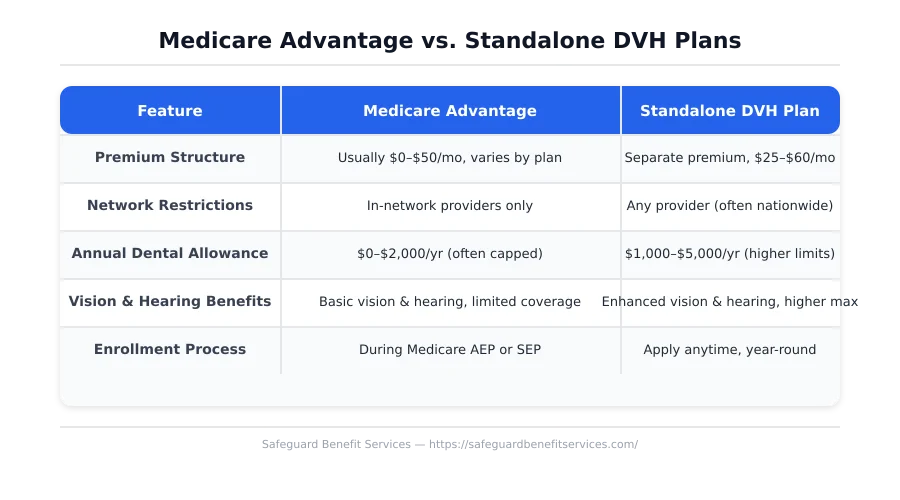
- Dental coverage: Preventive services like exams, oral cleanings, x-rays, and sometimes restorative care like fillings, crowns, or even dental implants. Annual maximums commonly range from $1,000–$2,000.
- Vision and hearing: Routine vision coverage typically includes an annual eye exam, coverage for glasses or contacts (often via an allowance), and a network of optometrists. Hearing benefits usually cover a hearing exam and offer an annual or biennial allowance toward hearing aids.
A 2023 report from the Kaiser Family Foundation found that most Medicare Advantage enrollees have access to dental (97%), vision (99%), and hearing (98%) benefits. However, specific services, allowances, out-of-pocket limits, and provider networks vary widely from one plan to the next.
How Do Standalone Dental, Vision, and Hearing Plans Compare?
For those who keep Original Medicare (often combined with a Medigap supplement), it’s possible to buy standalone dental, vision, and hearing (DVH) policies. These are different from MA plans:
- Separate enrollment and premium: Coverage is not bundled. You choose and pay for DVH policies separately from your Medicare and Medigap coverage.
- Broader provider networks: Standalone plans sometimes offer broader access or out-of-network options—important if you want to stay with a longtime dentist or specialist in North Carolina.
- Higher allowances but stricter annual limits: Some plans may allow $1,500–$3,000 per year in dental care, but may have waiting periods for major services.
Key brands such as Cigna, Aetna, and Delta Dental offer these policies nationwide, with North Carolina-specific networks—making them a flexible alternative for those not on an MA plan.
How Do Benefit Structures and Allowances Actually Work?
Every plan—whether MA or standalone—has unique benefit structures, annual maximums, and coverage details:
- Preventive dental care: Most plans cover 100% or have a $0 copay for oral exams, cleanings, and basic x-rays up to twice a year.
- Restorative dental care: Original Medicare (Parts A and B) does not cover restorative dental care such as fillings, crowns, bridges, or implants, except in specific circumstances where the dental service is integral to a covered medical procedure. However, many Medicare Advantage (Part C) plans offer dental benefits that may cover these services, often with cost-sharing elements like deductibles and coinsurance, which can vary by plan. There’s typically an annual cap, ranging from $1,000–$2,500.
- Vision coverage: Many MA and DVH plans pay the full cost for an annual eye exam and provide a set allowance (e.g., $100–$250 per year) for glasses or contact lens purchases.
- Hearing benefits: Coverage often includes one hearing exam per year and an allowance toward hearing aids (commonly $500–$2,000 per device every 2–3 years), but not all models or providers may be in-network.
Understanding your plan’s coverage limits, cost-sharing, and allowance structure is crucial before enrolling.
Which Provider Networks and Limitations Should You Watch Out For?
Choosing between MA and standalone dental, vision, and hearing coverage means considering network access and geographic reach:
- Medicare Advantage plans: Most use network arrangements (HMO, PPO). HMO plans usually require in-network providers for dental, vision, and hearing services in Charlotte and the wider North Carolina region. PPO options offer more flexibility but at higher out-of-pocket costs.
- Standalone plans: Network sizes vary, but plans may allow out-of-network care—sometimes at a reduced benefit. Nationwide plans can be an advantage if you split time between states or travel frequently.
Before you commit, ask for a copy of the provider directory and confirm your current dentist, eye doctor, or audiologist is on the list.

What Questions Should You Ask Before Choosing Dental, Vision, or Hearing Coverage?
Given the differences in supplemental Medicare dental, vision, and hearing benefits across MA and standalone plans, it’s important to evaluate your personal needs and the plan’s fine print. Here are key questions to ask:
- What dental services are included? Does the plan just cover cleanings, or does it help with fillings, root canals, or dental implants?
- Are there waiting periods on coverage for major dental work, hearing aids, or specialty lenses?
- What annual allowance or limit applies to dental, vision, or hearing care? How might your needs change from year to year?
- Is your preferred provider in-network? If not, what are your out-of-network benefits?
- What is the claims or reimbursement process for each benefit?
Be sure to get full plan documents and consult a licensed, independent agent like Safeguard Benefit Services for true apples-to-apples comparisons—especially since coverage details change yearly and vary by region.
How Do Costs Stack Up: Premiums, Copays, and What You Pay Out-of-Pocket?
Medicare Advantage plans offering dental, vision, and hearing benefits often include these extras with little or no added premium. However, copays and cost-sharing can surprise you—especially for major dental procedures or hearing aids.
- Typical MA plan copays: $0 for preventive oral exams and cleanings; $30–$50 for eye exams; and 20–50% coinsurance after deductible for restorative dental work or hearing devices.
- Standalone plans generally charge a monthly premium ($20–$60), with fixed copays or percentage coinsurance. Some plans include limits such as 2 cleanings and 1 oral exam per year, or a max benefit of $1,500–$3,000 annually for dental coverage.
Ultimately, your costs will depend on which providers you see, how often you use your coverage, and the services you require—making yearly plan review a must.
Which Type of Plan Best Fits Specific Needs?
There’s no universal answer to what’s best—it depends on your health profile and priorities:
- Medicare Advantage plans may be the right fit if you prefer convenience, want most benefits bundled, and primarily use local in-network providers in Charlotte or across North Carolina.
- Standalone DVH policies excel for those with complex needs, higher anticipated dental work, or loyalty to certain providers outside of an MA plan’s network.
Working with an experienced, independent agent is the best way to get a personalized benefit comparison based on your medication list, oral and hearing health history, and provider preferences.
How Can North Carolina Residents Get Local, Expert Help With Medicare Dental, Vision, and Hearing Options?
Safeguard Benefit Services has specialized in serving North Carolina Medicare beneficiaries since 2019, with agency licenses and experience guiding seniors, retirees, and caregivers through complex plan choices. Our approach emphasizes:
- Transparent comparison of all MA and standalone dental, vision, and hearing benefit options locally
- Clear explanations of benefit allowances, network rules, and annual limits
- Guidance through the Medicare enrollment process—and year-round support
Ready to review your current coverage or learn how to maximize your dental, vision, and hearing benefits? Contact Safeguard Benefit Services today for a no-pressure, personalized plan review. Let’s make sure you don’t miss out on the extras that can truly enhance your health and quality of life.
This article is for informational purposes only and does not constitute financial advice. Consult a qualified professional for your specific situation. Data sources: Centers for Medicare & Medicaid Services (CMS), Kaiser Family Foundation 2023, plan documents from major North Carolina insurance carriers.








Get Connected