

Most people turning 65 assume Medicare will handle their eye care the same way it handles doctor visits and hospital stays. It does not. Medicare vision coverage is one of the most misunderstood parts of the entire program, and the gap it leaves can cost hundreds of dollars a year out of pocket if you do not plan for it. Knowing exactly where Original Medicare draws the line, and which plan options close that gap, is not optional knowledge. It is the difference between budgeting correctly and getting blindsided by bills you thought were covered. Here is the clear, no-nonsense breakdown.
Table of Contents
- Quick Takeaways
- What Original Medicare Does Not Cover for Vision
- What Medicare Does Cover for Your Eyes
- Medicare Advantage and Vision Benefits
- Medicare Supplement and Vision: The Truth
- Standalone Vision Plans for Medicare Beneficiaries
- Comparing Your Vision Coverage Options
- How North Carolina Seniors Should Approach This
- Frequently Asked Questions
- References
Quick Takeaways
| Key Insight | Explanation |
|---|---|
| Original Medicare skips routine vision entirely | Parts A and B do not cover annual eye exams, eyeglasses, or contact lenses for standard vision correction. |
| Medical eye conditions are a different story | Medicare Part B does cover diagnosis and treatment of eye diseases like glaucoma, cataracts, diabetic retinopathy, and macular degeneration. |
| Medicare Advantage fills the routine vision gap | The vast majority of Medicare Advantage plans include routine eye exams and an annual eyewear allowance as an added benefit. |
| Medigap does not add routine vision coverage | Medicare Supplement plans only cover cost-sharing for services Original Medicare already pays for. They do not add new vision benefits. |
| Standalone vision plans are a real option | Private vision insurance plans can be purchased separately for roughly $10 to $25 per month and work alongside Original Medicare or a Medigap policy. |
| Glaucoma screening has specific eligibility rules | Part B covers an annual glaucoma test only if you are at high risk, which includes people with diabetes, a family history of glaucoma, African Americans age 50 and older, and Hispanic Americans age 65 and older. |
| One pair of glasses is covered, but only after cataract surgery | Original Medicare Part B covers one pair of eyeglasses or one set of contact lenses after medically necessary cataract surgery with an intraocular lens implant. |
What Original Medicare Does Not Cover for Vision
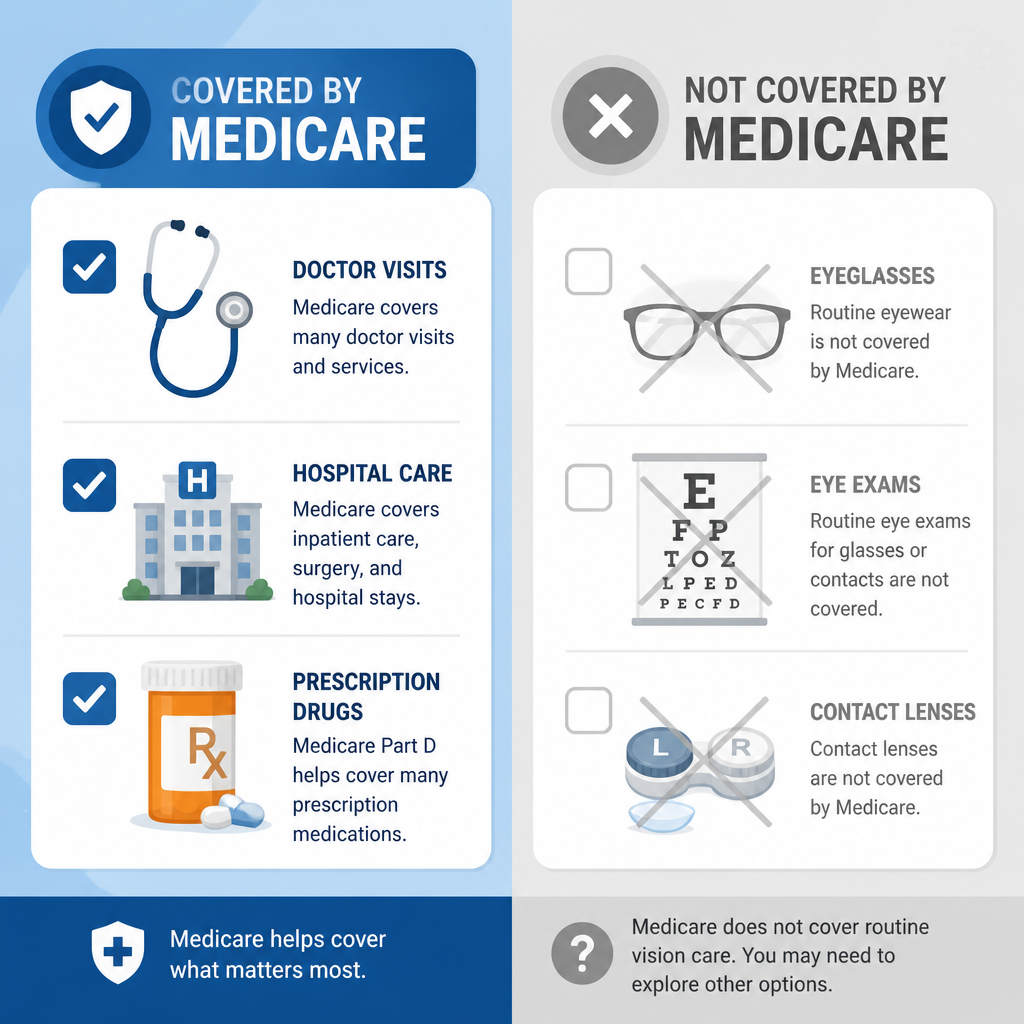
This is the part most people wish someone had told them before they enrolled. Original Medicare, meaning Parts A and B, does not cover routine vision care. That includes the annual eye exam you get to update your glasses or contact lens prescription, the frames and lenses themselves, and contact lenses. If you go to your optometrist for a standard checkup and walk out with a new prescription, Original Medicare will not pay any part of that bill.
The list of excluded routine vision services is specific and worth knowing cold:
- Routine eye exams for glasses or contact prescriptions
- Eyeglasses and frames (except one pair after cataract surgery)
- Contact lenses (except one set after cataract surgery)
- Lens upgrades such as progressive lenses, anti-reflective coatings, or photochromic lenses
This is not a gray area or a billing technicality. It is a structural limitation built into the original Medicare law. The program was designed to cover medical conditions and hospitalizations, not routine preventive maintenance of the senses. Vision, dental, and hearing were left out.
Pro tip: When your doctor refers you to an ophthalmologist to evaluate a specific symptom, such as sudden blurring or floaters, that visit is typically billed as medically necessary and Part B may cover it. When you schedule your own annual checkup to update your glasses prescription, it is routine and Part B will not. The distinction hinges on medical necessity, not who the doctor is.

What Medicare Does Cover for Your Eyes
Original Medicare’s vision coverage is narrower than most people expect, but it is not nothing. Medicare Part B does cover medically necessary eye care, meaning the diagnosis and treatment of specific eye diseases and conditions. The key phrase is medical necessity. If a condition threatens your health or vision, Medicare steps in.
Diabetic Retinopathy Exams
If you have diabetes, Medicare Part B covers one diabetic eye exam per year for diabetic retinopathy. The program pays 80 percent of the Medicare-approved amount, and you are responsible for the remaining 20 percent after meeting your Part B deductible. This is one of the most commonly used Medicare vision benefits and one of the most important, since diabetic retinopathy is a leading cause of blindness in adults.
Glaucoma Screenings
Part B covers an annual glaucoma test for people at high risk. High-risk factors include having diabetes, having a family history of glaucoma, being African American and age 50 or older, or being Hispanic American and age 65 or older. As with diabetic eye exams, Medicare pays 80 percent and you pay 20 percent after the deductible.
Cataract Surgery
Medicare Part B covers medically necessary cataract surgery, including the procedure to remove the cloudy lens and replace it with an artificial intraocular lens. This is one area where glasses coverage does apply: after cataract surgery with an intraocular lens implant, Part B will cover one pair of eyeglasses or one set of contact lenses. Part A covers the inpatient hospital portion if the surgery is performed in that setting.
Macular Degeneration
If your doctor suspects age-related macular degeneration, Medicare Part B may cover specific tests to diagnose it, as well as treatment for the condition. This includes injections and other treatments used to manage wet macular degeneration, which are among the more expensive eye care procedures seniors face.
The line Medicare draws is between treating disease and maintaining routine vision. Every service it covers involves a diagnosed medical condition. Every service it excludes is about correcting ordinary vision changes that come with age.
Medicare Advantage and Vision Benefits
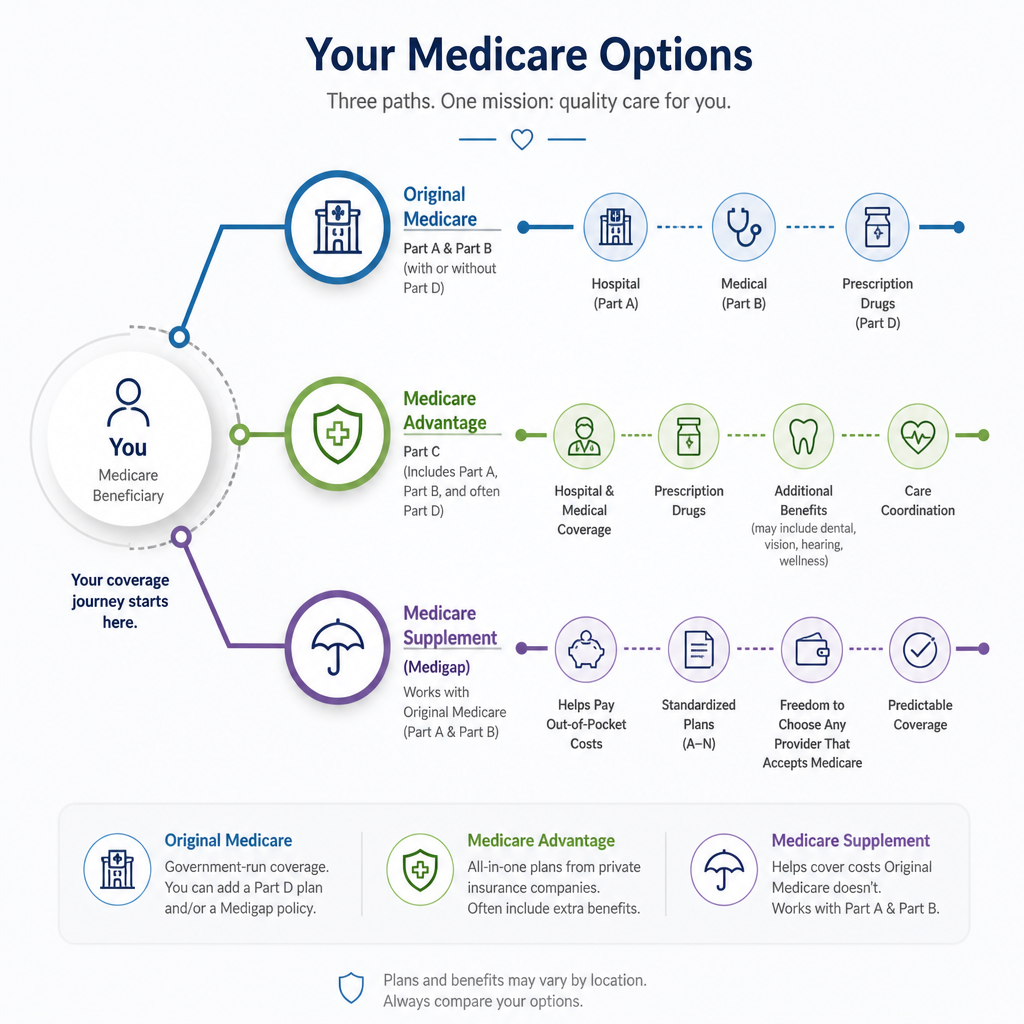
If you want routine vision coverage under Medicare, a Medicare Advantage plan is the most direct path to getting it. Medicare Advantage plans, also called Part C, are sold by private insurers approved by Medicare and must cover everything Original Medicare covers. Beyond that baseline, most plans add extra benefits, and vision is one of the most common.
The numbers on this are striking. In 2025 and 2026, approximately 99 percent of Medicare Advantage plans include some form of vision coverage. Typical benefits include routine annual eye exams and an annual eyewear allowance, which generally runs in the range of $100 to $300 per year depending on the plan. That allowance can be applied toward eyeglass frames, lenses, or contact lenses.
What varies significantly between plans is the network of vision providers, the amount of the eyewear allowance, and whether the benefit rolls over if you do not use it in a given year. Some plans in North Carolina structure vision benefits through a debit-style card that can be used at participating optical retailers. Others have a dedicated network of optometrists and ophthalmologists you must use to receive the benefit. Reading the summary of benefits before you enroll is not optional if vision care matters to you.
Pro tip: When comparing Medicare Advantage plans in North Carolina, pull the Summary of Benefits document for each plan and look specifically at the vision section. Check three things: the annual exam copay, the eyewear allowance dollar amount, and whether your current eye doctor is in the plan’s vision network. A plan with a higher premium might actually save you money if the vision benefit is significantly better.
Medicare Supplement and Vision: The Truth
This is where a lot of confusion happens, especially for people who choose a Medicare Supplement plan, also called Medigap, alongside Original Medicare. The straightforward answer is this: standard Medigap plans do not add routine vision coverage.
Medigap plans are designed to cover cost-sharing for services that Original Medicare already covers. They pay the 20 percent coinsurance, the deductibles, and the copays that you would otherwise owe. But they cannot cover a service category that Medicare itself excludes. Since routine eye exams and glasses are not covered by Part A or Part B, a Medigap plan has nothing to supplement there.
What Medigap does help with is the 20 percent cost-sharing on medically necessary vision services that Part B does cover. If you have cataract surgery or a diabetic eye exam, your Medigap plan can pick up the coinsurance portion. That is real financial value. It just does not solve the routine vision gap.
People who choose Original Medicare plus a Medigap policy and want routine vision coverage need to either purchase a standalone vision insurance plan or accept paying out of pocket for routine eye care. That is not a flaw in the strategy; it is just the trade-off that comes with it.
Standalone Vision Plans for Medicare Beneficiaries
A standalone vision insurance plan is a private plan you purchase directly from an insurer, completely separate from Medicare. It is not connected to your Medicare coverage, which means you can have Original Medicare plus a Medigap policy plus a standalone vision plan. They do not interfere with each other.
These plans typically cost in the range of $10 to $25 per month. For that premium, you generally get coverage for one annual eye exam and an allowance toward frames, lenses, or contacts each year. Major providers in this space include VSP, EyeMed, and Humana, among others. The trade-off compared to Medicare Advantage vision benefits is that you pay a separate premium, but the advantage is flexibility. You can usually choose from a wider network of independent eye doctors rather than being limited to a plan’s proprietary network.
For North Carolina seniors who specifically want to keep Original Medicare and a strong Medigap plan for their medical coverage, a standalone vision plan is often the cleanest way to add eye care benefits without switching to Medicare Advantage.
Comparing Your Vision Coverage Options
| Coverage Option | Routine Eye Exam Covered? | Eyewear Benefit |
|---|---|---|
| Original Medicare (Parts A & B) | No. Covered only if medically necessary due to a diagnosed condition. | One pair of glasses or contacts after cataract surgery only. No routine eyewear coverage. |
| Medicare Advantage (Part C) | Yes, in the vast majority of plans. Annual routine exam typically included. | Annual eyewear allowance typically in the $100 to $300 range, varying by plan. |
| Standalone Vision Insurance Plan | Yes. Annual exam typically covered, often with a small copay. | Annual allowance toward glasses or contacts, with wider provider network flexibility. |
The right option depends entirely on whether you are planning to stay on Original Medicare with a Medigap plan, or whether you are open to Medicare Advantage. Both paths can get you to routine vision coverage. They just get there differently, and the cost and network implications vary.
How North Carolina Seniors Should Approach This
If you are approaching 65 in Charlotte or anywhere in North Carolina, the vision coverage question should be part of your Medicare enrollment planning, not an afterthought. The decisions you make when you first enroll set the structure of your coverage for the year ahead, and switching plans later comes with timing rules and potential gaps.
The first step is deciding between Original Medicare plus Medigap versus Medicare Advantage. That decision drives everything else. If you go the Medicare Advantage route, check the vision benefits carefully across available plans in your county, because they differ more than most people realize. If you go the Original Medicare route, budget for either a standalone vision plan or out-of-pocket eye care costs.
The second step is accounting for any medical eye conditions you already have. If you have diabetes, glaucoma risk factors, or a history of macular degeneration, Original Medicare Part B will cover those specific services regardless of which path you choose. Those are not benefits you lose by picking one option over another. They come with Part B.
At Safeguard Benefit Services, we work with clients across North Carolina to compare Medicare Advantage plans from more than 30 carriers side by side, including their vision, dental, and hearing benefits. We provide free consultations because most people are making these decisions without having compared all their options, and the cost of getting it wrong adds up over time. If you are not sure which path makes the most sense for your specific situation, that is exactly the conversation we are here to have.
Frequently Asked Questions
Does Medicare cover routine eye exams?
No. Original Medicare does not cover routine eye exams for eyeglasses or contact lens prescriptions. Part B only covers eye exams that are medically necessary due to a specific diagnosed condition, such as diabetes, glaucoma, or macular degeneration. If you want routine eye exam coverage, you need either a Medicare Advantage plan that includes it or a standalone vision insurance plan.
Does Medicare cover glasses or contact lenses?
Generally, no. The only exception in Original Medicare is one pair of eyeglasses or one set of contact lenses after medically necessary cataract surgery that includes an intraocular lens implant. For any other eyewear needs, you would need a Medicare Advantage plan with an eyewear allowance or a standalone vision plan.
Does Medicare cover cataract surgery?
Yes. Medicare Part B covers medically necessary cataract surgery, including the removal of the cloudy lens and the implantation of an artificial intraocular lens. It also covers one pair of corrective lenses after the procedure. If the surgery is performed in an inpatient hospital setting, Part A would cover the hospital portion as well.
Will my Medicare Supplement plan cover vision care?
Standard Medicare Supplement plans do not add routine vision coverage. They are designed to cover cost-sharing for services that Original Medicare already pays for. Since Original Medicare does not cover routine vision care, a Medigap plan does not fill that gap. Medigap will, however, help with the 20 percent coinsurance on medically necessary vision services that Part B does cover, such as diabetic eye exams or cataract surgery.
I have diabetes. Does Medicare cover my annual eye exam?
Yes, if you have diabetes, Medicare Part B covers one annual eye exam for diabetic retinopathy. Medicare pays 80 percent of the Medicare-approved amount, and you pay the remaining 20 percent after your Part B deductible. This is a medical benefit available under Original Medicare and applies regardless of whether you have a Medicare Advantage plan or a Medigap plan.
What vision benefits do Medicare Advantage plans in North Carolina typically offer?
Most Medicare Advantage plans available in North Carolina include an annual routine eye exam and an eyewear allowance that typically ranges from $100 to $300 per year. Specific benefits, networks, and allowance amounts vary between plans and by county. A licensed Medicare insurance agent can pull the current benefit comparisons for plans available in your zip code so you can see exactly what each plan offers before you enroll.
Can I buy vision insurance separately if I have Original Medicare?
Yes. Standalone vision insurance plans from private insurers are completely separate from Medicare and can be purchased at any time. They typically cost in the range of $10 to $25 per month and provide an annual eye exam benefit plus an eyewear allowance. This is a practical option for people who want to keep Original Medicare and a Medigap plan but still want coverage for routine eye care.
Have you already run into a vision coverage gap with Medicare, or are you still figuring out which plan option makes the most sense for your situation? Share your experience or questions in the comments below.
References
- Medicare eye exam and routine vision coverage explained, including what Part B covers for diabetic retinopathy and glaucoma
- Medicare coverage for eye exams, cataract surgery, glaucoma testing, and macular degeneration treatment
- Medicare Interactive guide to what vision care Medicare covers and does not cover
- North Carolina health plans guide to Medicare vision coverage and Medicare Advantage vision benefits
- Comparison of Medicare Advantage vision benefits versus standalone vision insurance plans for seniors








Get Connected