

Most people turning 65 assume that Medicare will handle the bulk of hospital costs. Then they get the bill. The Medicare Part A deductible alone is $1,736 per benefit period in 2026, and if you’re hospitalized more than once in a year, you can owe that amount more than once. Add daily coinsurance charges for extended stays, and a single hospitalization can drain thousands from a fixed income before Medicare pays a dime. Hospital indemnity insurance for Medicare enrollees exists precisely because these gaps are real, predictable, and often ignored until it’s too late. This guide explains exactly what hospital indemnity coverage is, who needs it, and how it fits alongside your Medicare plan.
Table of Contents
- What Is Hospital Indemnity Insurance?
- The Medicare Gaps It Fills
- Who Needs Hospital Indemnity Plans for Seniors?
- How Hospital Indemnity Works with Medicare Advantage
- Hospital Indemnity vs. Medigap: How They Compare
- How to Enroll and What to Look For
- Medicare Supplemental Insurance in Charlotte and North Carolina
- Quick Takeaways
- Frequently Asked Questions
- References
What Is Hospital Indemnity Insurance?
Hospital indemnity insurance is a type of supplemental coverage that pays a fixed cash benefit directly to you when you are hospitalized. Unlike traditional health insurance, which sends payment to the provider, an indemnity plan sends money straight to your bank account. You decide how to spend it, whether that means covering your Medicare deductible, paying the mortgage while you recover, or handling transportation to follow-up appointments.
The plan works on a per-day or lump-sum basis. You pay a monthly premium to keep the policy active, and when a qualifying hospitalization occurs, you file a claim and receive the predetermined benefit amount. There are no restrictions on how that cash is used.
Pro tip: Hospital indemnity plans are not the same as Medicare Supplements (Medigap). Medigap pays the provider for Medicare cost-sharing. Hospital indemnity pays you cash. Both can coexist, and for many Medicare Advantage enrollees, hospital indemnity is the only supplemental option available.
The Medicare Gaps It Fills
Original Medicare leaves real, documented financial exposure at the hospital door. Understanding those gaps is the first step toward knowing whether hospital indemnity coverage makes sense for your situation.
Medicare Part A Cost-Sharing in 2026
For inpatient hospital stays in 2026, Medicare enrollees owe a $1,736 deductible per benefit period before coverage begins. That deductible resets every time you start a new benefit period, which means two hospitalizations more than 60 days apart in a single year could cost you $3,472 in deductibles alone. After day 60 of a hospital stay within one benefit period, you also owe $434 per day in coinsurance for days 61 through 90. For stays exceeding 90 days, that daily coinsurance rises to $868 per lifetime reserve day.
This cost structure is unlike any other insurance most people have encountered. There is no single annual deductible cap that applies to all hospitalizations. Each new benefit period opens a fresh liability.
Medicare Part B Exposure During a Hospital Stay
Part B covers physician services, including those provided while you are an inpatient. In 2026, the Part B annual deductible is $283, and you pay 20 percent coinsurance on all Part B-covered services after that deductible. For a serious medical event requiring specialists, imaging, and consultations during a hospital stay, that 20 percent adds up fast because there is no out-of-pocket cap under Original Medicare.
A benefit period begins the day you are admitted to a hospital or skilled nursing facility and ends when you have not spent the night in one for 60 consecutive days. A single year can include more than one benefit period, each triggering its own deductible.
Who Needs Hospital Indemnity Plans for Seniors?
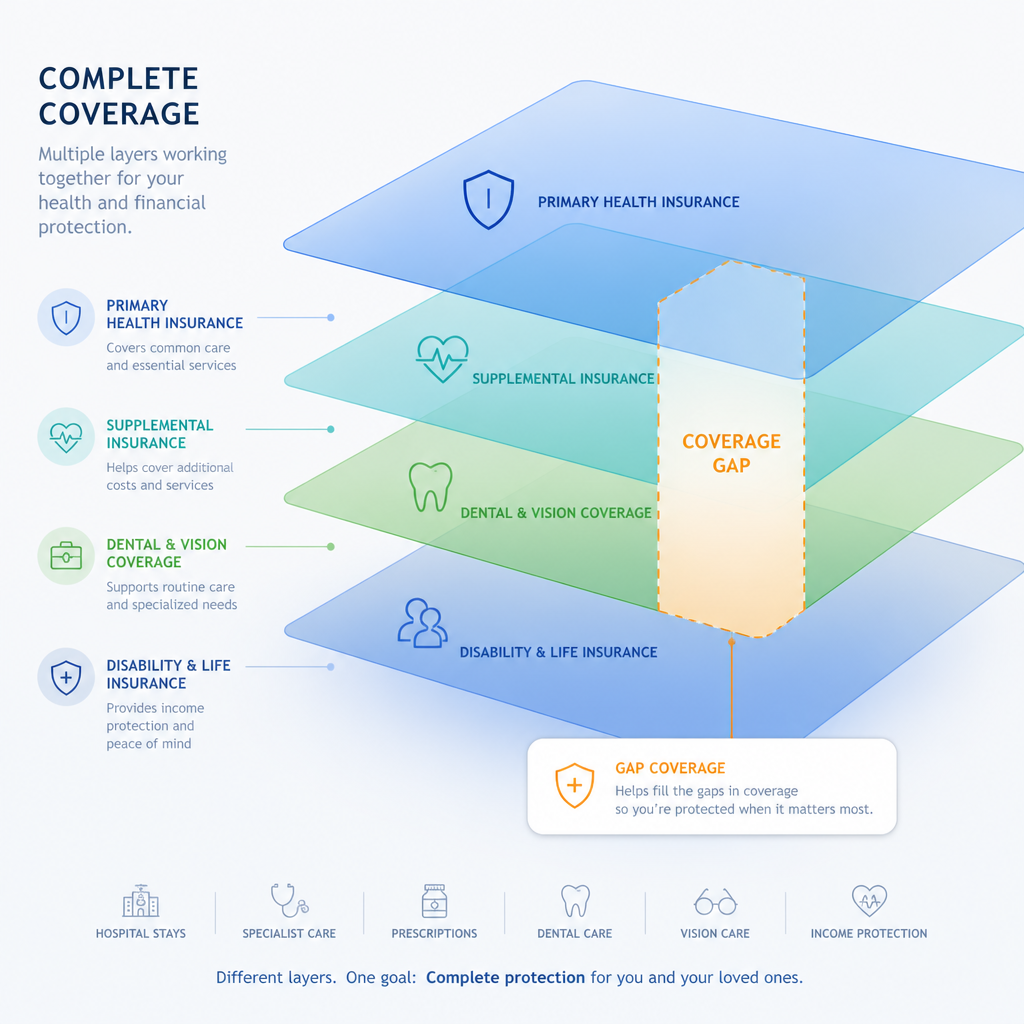
Not every Medicare enrollee needs a hospital indemnity plan, but certain profiles make it almost a no-brainer. The clearest candidates are people on Medicare Advantage plans with high hospital copays, people on fixed incomes without cash reserves to cover a sudden deductible, and anyone who has been hospitalized more than once in the past few years.

Medicare Advantage Enrollees with High Copays
Medicare Advantage plans are attractive for their low or zero premiums and their extra benefits like dental and vision. The tradeoff is that they can carry high cost-sharing for hospitalization. Medicare Advantage plans can have annual out-of-pocket limits as high as $9,250 in-network. If you are hospitalized and rack up costs toward that limit, hospital indemnity cash benefits can fill the gap between what you owe and what you have on hand.
People on Fixed Incomes Without Emergency Savings
A $1,736 deductible is not a rounding error for someone living on Social Security. Hospital indemnity plans are generally more affordable than other supplemental insurance types, making them a realistic option for seniors who cannot afford the higher premiums of a full Medigap plan but still need some financial protection against hospitalization.
Seniors with Chronic Conditions
If you manage a condition that carries a higher-than-average risk of inpatient care, such as heart disease, COPD, or diabetes, hospital indemnity coverage is not a luxury. It is a rational hedge against a predictable financial risk. Hospital stays for these conditions can be lengthy, and every extra day past day 60 in a benefit period adds hundreds of dollars in daily coinsurance under Original Medicare.
Pro tip: Ask your licensed Medicare agent to model a realistic hospital stay scenario based on your specific plan’s cost-sharing. The difference between what you would owe and what an indemnity plan would pay is often the clearest argument for or against adding the coverage.
How Hospital Indemnity Works with Medicare Advantage
Medicare Advantage enrollees cannot purchase a Medigap plan. That is federal law. But there is no such restriction on hospital indemnity insurance. If you are on a Medicare Advantage plan, hospital indemnity is one of the few supplemental products you can legally add to shore up your hospital coverage.
The mechanics are straightforward. When you are admitted to a hospital, your Medicare Advantage plan applies its cost-sharing structure. Separately, your hospital indemnity plan pays its benefit directly to you. The two payments are independent. You can use the indemnity cash to pay your MA plan’s hospital copay, cover lost income during recovery, or handle household expenses you could not have anticipated.
What Hospital Indemnity Typically Covers
Hospital indemnity benefits associated with a hospital stay can help cover deductibles, copays, ambulance rides, observation stays, emergency room visits, surgeries, medications, and transportation or lodging costs related to treatment. Some plans also include benefits for skilled nursing facility stays, which matter a great deal if a hospital stay is followed by a rehab or recovery period.
The benefit payment goes directly to you, not to any provider. That flexibility is the core value proposition: you decide what the money solves for you, not what a claims processor decides your covered expense is.

Hospital Indemnity vs. Medigap: How They Compare
Medigap (Medicare Supplement) and hospital indemnity insurance are frequently confused, but they work in fundamentally different ways. Understanding the distinction determines which product, or which combination of products, is right for your situation.
| Feature | Hospital Indemnity Insurance | Medigap (Medicare Supplement) |
|---|---|---|
| Who receives the benefit payment? | You (cash paid directly) | The provider (pays Medicare cost-sharing) |
| Can Medicare Advantage enrollees buy it? | Yes | No. MA enrollees cannot purchase Medigap. |
| What does it cover? | Fixed cash benefit per hospital event or per day; use for anything | Medicare-approved Part A and Part B deductibles, copays, and coinsurance |
| Typical premium range | Generally more affordable; varies by age, benefit level, and add-ons | Higher premiums; varies by plan letter, age, and location |
| Coverage for non-medical expenses? | Yes. Cash can cover groceries, rent, transportation, or anything else. | No. Applies only to Medicare-covered medical cost-sharing. |
| Can you have both? | Yes, if you are on Original Medicare | Only with Original Medicare, not Medicare Advantage |
In practice, Original Medicare enrollees with a Medigap plan have strong hospital coverage already. Adding hospital indemnity on top provides extra cash for non-medical expenses during a hospitalization, which some people find valuable and others do not. For Medicare Advantage enrollees, hospital indemnity fills a gap that no other product legally can.
How to Enroll and What to Look For
Hospital indemnity plans are not sold through Medicare.gov. They are sold by private insurance carriers and require a separate application. Most plans are available year-round and are not tied to Medicare’s Open Enrollment periods, though some Medicare Advantage-bundled indemnity products may follow enrollment windows. You can typically apply any time as long as you meet the plan’s eligibility criteria.
Key Plan Features to Evaluate
When comparing hospital indemnity plans, focus on these factors before anything else. First, check the daily or lump-sum benefit amount and make sure it is high enough to offset your Medicare plan’s actual hospital cost-sharing. A benefit that covers a fraction of your deductible is better than nothing, but sizing it to your realistic out-of-pocket exposure is always the goal.
Second, review the elimination period, which is the number of days you must be hospitalized before benefits begin. Some plans pay from day one of admission. Others may require a minimum stay. For seniors, day-one benefits are worth prioritizing.
Third, look at whether the plan covers observation stays. A hospital stay classified as outpatient observation does not trigger Medicare Part A the same way an inpatient admission does, and many people are surprised to find their indemnity plan does not cover it either. Confirm observation stay coverage explicitly before you enroll.
Fourth, senior-focused plans often let you customize your daily benefit amount and number of covered days to match your primary plan’s cost-sharing structure. Take that customization seriously. A plan sized to your specific Medicare Advantage copays is far more useful than a generic low-benefit policy.
Medicare Supplemental Insurance in Charlotte and North Carolina
Over 2.2 million North Carolinians are enrolled in Medicare, and 2026 is bringing higher premiums, higher deductibles, and in some Medicare Advantage plans, higher copays. For residents in Charlotte and across North Carolina, reviewing supplemental coverage before costs increase is not a luxury recommendation. It is basic financial planning for anyone on or approaching Medicare.
Safeguard Benefit Services, based in Charlotte, works with 30-plus insurance carriers to help Medicare enrollees in North Carolina compare hospital indemnity plans, Medicare Supplements, and Medicare Advantage options side by side. Their licensed agents provide free consultations with no obligation, which is the right way to approach this decision. Hospital indemnity is not a product that should be chosen based on a generic online calculator. It needs to be sized against your specific plan’s cost-sharing, your health history, and your financial situation.
For anyone in the Charlotte area who is approaching Medicare eligibility or currently enrolled and rethinking their coverage, a conversation with a local, independent agent who can shop multiple carriers is a far better starting point than trying to decode plan documents alone. You can schedule a free consultation to review your current Medicare plan and find out whether adding hospital indemnity coverage makes sense for your situation.
Quick Takeaways
| Key Insight | Explanation |
|---|---|
| Medicare’s hospital deductible resets per benefit period | In 2026, the Part A deductible is $1,736 per benefit period. Two hospitalizations more than 60 days apart in one year can trigger two separate deductibles. |
| Medicare Advantage enrollees cannot buy Medigap | Federal rules prohibit MA enrollees from purchasing a Medicare Supplement. Hospital indemnity is one of the few supplemental options legally available to them. |
| Hospital indemnity pays you, not the hospital | Cash goes directly to the policyholder. There are no restrictions on how it is spent, including non-medical expenses like rent or groceries during recovery. |
| Daily coinsurance climbs sharply after day 60 | For days 61 through 90 of a hospital stay in one benefit period, you owe $434 per day under Original Medicare in 2026. Days beyond 90 cost $868 per lifetime reserve day. |
| Observation stay classification is a real risk | Hospital stays classified as outpatient observation may not trigger Part A, and some indemnity plans exclude them. Always confirm observation coverage before enrolling. |
| Premiums are generally lower than Medigap | Hospital indemnity plans are typically more affordable than Medicare Supplement plans, making them a realistic option for seniors on fixed incomes. |
| North Carolina Medicare costs are rising in 2026 | Over 2.2 million North Carolinians are on Medicare. Higher premiums and deductibles in 2026 make a supplemental hospital coverage review especially timely. |
Frequently Asked Questions
Can I buy hospital indemnity insurance if I am on Medicare Advantage?
Yes. Hospital indemnity insurance is available to Medicare Advantage enrollees and is actually one of the few supplemental insurance products they can legally purchase. Unlike Medigap, hospital indemnity is not restricted by federal rules that prohibit MA enrollees from buying Medicare Supplement plans. It is sold separately by private carriers and can be added to your coverage at any time you qualify for the plan.
Does hospital indemnity insurance replace Medicare?
No. Hospital indemnity insurance works alongside Medicare, not instead of it. Medicare (either Original or Advantage) remains your primary coverage. Hospital indemnity pays a separate cash benefit directly to you when a qualifying hospitalization occurs. It supplements your existing coverage; it does not substitute for it.
How much does hospital indemnity insurance cost for seniors?
Premiums vary based on your age, the daily or lump-sum benefit amount you choose, and any optional riders you add. Hospital indemnity plans are generally considered more affordable than Medigap plans. Senior-focused plans typically let you customize the benefit amount to align with your specific Medicare plan’s cost-sharing, which means you can scale the premium up or down based on what level of protection you actually need. A licensed agent can run real comparisons from multiple carriers to show you actual premium ranges for your situation.
What is the difference between hospital indemnity insurance and Medicare Supplement insurance?
Medigap (Medicare Supplement) pays providers directly for Medicare-approved cost-sharing such as deductibles, copays, and coinsurance. Hospital indemnity insurance pays cash directly to you, with no restrictions on how you use it. Medigap is only available to Original Medicare enrollees. Hospital indemnity is available to both Original Medicare and Medicare Advantage enrollees. The two products can also coexist for Original Medicare enrollees who want comprehensive coverage plus a cash cushion during hospitalizations.
Is a hospital observation stay covered by hospital indemnity insurance?
It depends on the plan. Some hospital indemnity plans explicitly cover observation stays, while others do not. This is an important distinction because hospitals frequently classify patients as outpatient observation rather than inpatient admissions, which changes how Medicare Part A applies and whether your indemnity plan pays. Always ask specifically about observation stay benefits before enrolling in any plan, and get the answer in writing in the policy documents.
When is the best time to enroll in hospital indemnity insurance?
Hospital indemnity plans are generally available year-round and are not tied to Medicare’s Open Enrollment windows. The best time to enroll is when you first select your Medicare plan, because you can size the indemnity benefit to match your new plan’s cost-sharing from day one. If you already have Medicare and have not reviewed your supplemental coverage recently, reviewing it before Medicare costs increase each year is a smart approach. If you are approaching 65 in North Carolina, a free consultation with a licensed local agent is the most efficient starting point.
Have you looked into hospital indemnity coverage as part of your Medicare plan? Share your experience or questions below. We would love to hear what you found most confusing or most helpful when sorting through your options.
References
- Health Affairs analysis of hospital indemnity insurance among Medicare beneficiaries
- NCOA guide to Medicare out-of-pocket costs in 2026
- CMS official 2026 Medicare Part A deductible and coinsurance amounts
- North Carolina Health News report on 2026 Medicare changes for NC enrollees
- How hospital indemnity insurance works alongside Medicare coverage








Get Connected