

Choosing between Medicare Advantage vs Medigap North Carolina options is one of the most important coverage decisions for retirees, caregivers, and people newly eligible for Medicare. The right choice depends on how you use doctors, prescriptions, travel, monthly premiums, and out-of-pocket expense protection—not just which plan looks least expensive today.
Why is Medicare Advantage vs Medigap in North Carolina such a different decision?
Medicare Advantage and Medigap solve different problems. A Medicare Advantage plan, also called Part C, is an alternative way to receive your Medicare benefits through private insurance companies approved by Medicare. Medigap, also called Medicare supplement insurance, works alongside Original Medicare to help pay certain costs that Parts A and B do not pay.
With Original Medicare, you generally use Medicare Part A for hospital care and Medicare Part B for doctor and outpatient services. If a provider accepts Medicare, you can usually see that provider anywhere in the United States without a plan network. A medigap policy can reduce or cover some of your deductibles, copayments, and coinsurance.
A Medicare Advantage plan replaces the way you access Original Medicare benefits, though you still remain in the Medicare program and must keep paying your Part B premium. The plan may use HMO or PPO networks, prior authorization rules, referral requirements, and local service areas. Many Medicare Advantage plans include prescription drug coverage, dental, vision, hearing, fitness, or other supplemental benefits.
According to the Centers for Medicare & Medicaid Services, Medicare Advantage plans must cover all medically necessary services that Original Medicare covers, but plans can have different costs and rules. The National Association of Insurance Commissioners also notes that medigap policies are standardized by plan letter in most states, meaning the basic benefits of the same lettered medigap plan are the same regardless of company.
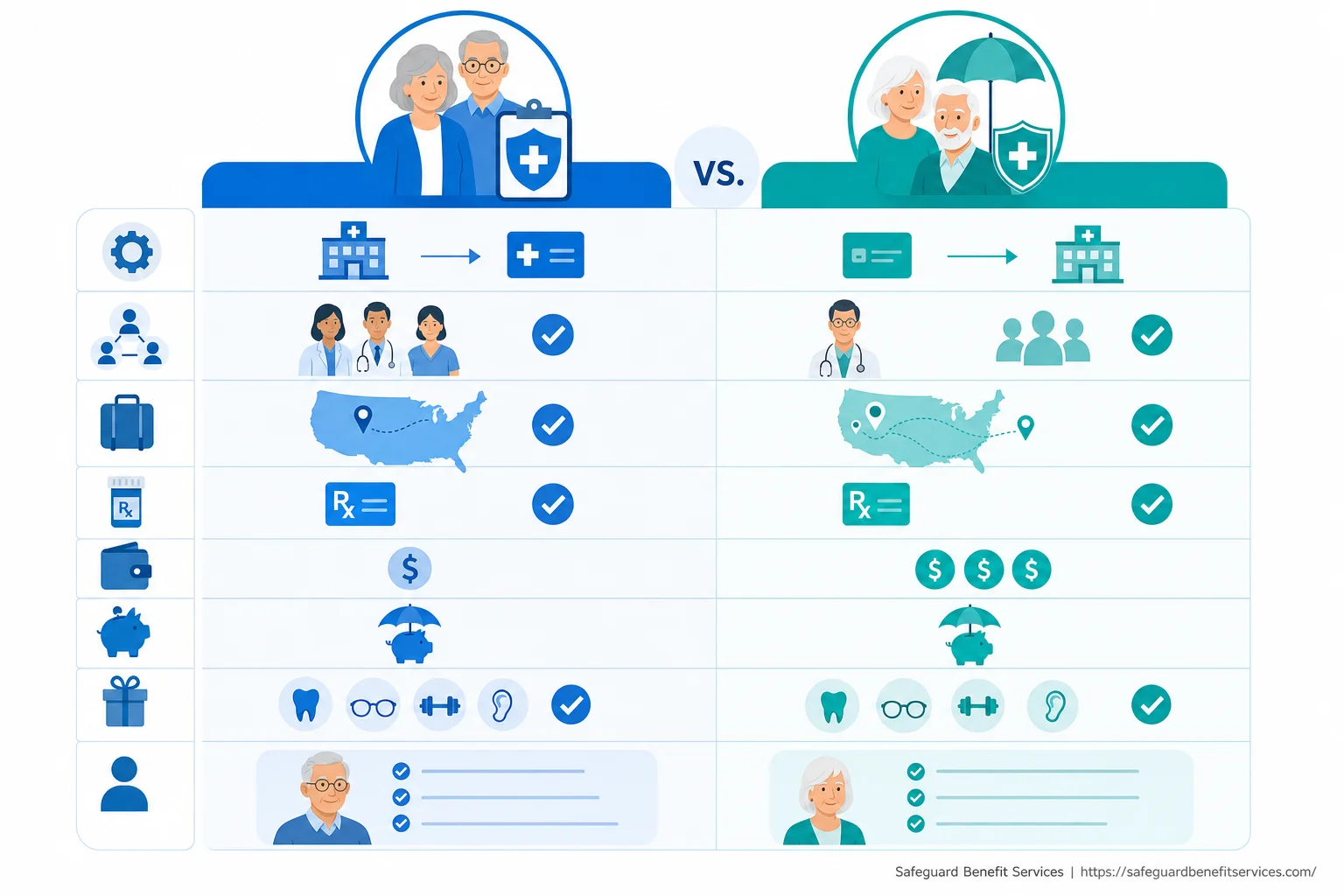
How do provider choice and networks affect Medicare Advantage vs Medigap North Carolina decisions?
Provider access is often the deciding factor in the Medicare Advantage vs Medigap North Carolina comparison. Medigap works with Original Medicare, so your primary question is whether your doctors, hospitals, and specialists accept Medicare. This can be especially important if you receive care from multiple specialists or travel between North Carolina and another state.
With a Medicare Advantage plan, your access usually depends on the type of plan. HMO plans often require you to use in-network providers except in emergencies, while PPO plans generally allow some out-of-network care at higher cost. A Medicare Advantage plan may also require referrals or prior authorization for certain services.
In real-world plan reviews, licensed insurance agents often start by checking the client’s doctors before discussing premiums. For example, a retiree in Charlotte who uses an Atrium Health specialist, a Novant Health primary care physician, and a Duke Health subspecialist may need a very careful network review. One plan’s network can look convenient locally, while another may better support regional specialist access.
Medigap can be simpler for provider choice because it travels with Original Medicare. If a doctor or facility accepts Medicare, your medicare supplement plan may help pay the remaining covered cost according to the plan letter. That flexibility can matter if you split time between North Carolina and another state or want fewer network restrictions.
Which option is better if you travel or split time outside North Carolina?
Travel is where medigap often has a practical advantage. Original Medicare is accepted nationwide by participating Medicare providers, and many medigap plans help with the cost-sharing that Original Medicare leaves behind. Some medigap plans also include limited foreign travel emergency benefits, subject to plan rules and lifetime limits.
Medicare Advantage can still work for travelers, but it requires more attention. Emergency and urgent care are covered when medically necessary, but routine care outside the service area may not be covered or may cost more. PPO plans can be more flexible than HMOs, yet out-of-network billing and provider participation must still be reviewed.
For North Carolina residents who spend winters in Florida, visit adult children in South Carolina, or frequently travel for extended periods, this distinction is important. A supplement plan paired with Original Medicare may provide broader access. A Medicare Advantage plan may be a strong local fit if most care happens near home and preferred doctors are in network.

How do monthly premiums compare between Medicare Advantage and Medigap?
Monthly premium is one reason many people first consider Medicare Advantage. Some Medicare Advantage plans have low or even $0 plan premiums, although you still generally pay the Medicare Part B premium. The Centers for Medicare & Medicaid Services explains that costs vary by plan, county, and benefit design.
Medigap usually has a separate monthly premium in addition to your Part B premium and, if needed, a separate Part D prescription drug plan premium. The trade-off is that a medigap plan can make covered medical costs more predictable. For many people, the decision is whether they prefer lower premiums with more pay-as-you-go risk or higher premiums with less uncertainty for covered services.
It is important not to compare only the advertised premium. A Medicare Advantage plan may have copays for primary care, specialists, hospital stays, outpatient surgery, diagnostic imaging, and therapy. A medicare supplement premium may be higher, but the plan could reduce out-of-pocket exposure when medical use increases.
In North Carolina, premiums also vary by age, location, tobacco status, household discounts, underwriting rules, and insurance company pricing method. The North Carolina Department of Insurance and its Seniors’ Health Insurance Information Program, known as SHIIP, remind consumers to compare Medicare supplement plans carefully because companies can charge different premiums for the same standardized benefits.
What should you know about maximum out-of-pocket limits?
A key difference is that Original Medicare by itself does not have an annual maximum out-of-pocket limit for Part A and Part B services. Medigap helps address that gap by paying some or most Medicare-approved cost-sharing, depending on the medigap plan letter. This is one reason people with frequent medical care often compare medigap carefully.
Medicare Advantage plans are required to include an annual maximum out-of-pocket limit for covered Part A and Part B services. Once you reach that plan limit, the plan pays 100% of covered medical services for the rest of the year. However, the limit, copays, and coinsurance can vary by plan and may be different for in-network and out-of-network services.
This is where the lowest premium may not equal the lowest total cost. Someone who sees doctors rarely may value a low-premium Medicare Advantage plan. Someone managing cancer treatment, cardiac care, joint replacement, kidney disease, or multiple specialists may place more value on predictable cost-sharing and broad provider access through Original Medicare plus medigap.
Prescription drug costs are separate from medical out-of-pocket limits. Medicare.gov explains that drug coverage rules are governed by Part D, whether through a stand-alone Part D plan or a Medicare Advantage plan with drug coverage. That means your medication list must be reviewed separately from doctor and hospital costs.
How do Part D changes in 2026–2027 affect Medicare Advantage vs Medigap in North Carolina?
Prescription drug coverage is one of the most important 2026–2027 issues in the Medicare Advantage vs Medigap in North Carolina decision. Medigap does not include modern outpatient prescription drug coverage, so most people who choose Original Medicare and medigap also enroll in a stand-alone Part D plan. Many Medicare Advantage plans include Part D drug coverage in the same plan package.
The Inflation Reduction Act changed Medicare Part D significantly. Medicare.gov states that beginning in 2025, people with Medicare Part D have a yearly out-of-pocket cap for covered drugs, and CMS announced the 2026 Part D out-of-pocket threshold is $2,100. Future thresholds can change under federal rules, so 2027 plan details should be reviewed when official plan information becomes available.
Even with the cap, drug plan choice still matters. Formularies, tiers, pharmacy networks, prior authorization, step therapy, and quantity limits can differ from one Medicare plan to another. A plan that works well for one person’s prescriptions may be expensive or restrictive for another person taking different medications.
This is also where Medicare Advantage and medigap require different shopping habits. With medigap, you typically compare the medigap policy and the Part D plan separately. With Medicare Advantage, you compare the medical network, benefits, Part D formulary, pharmacies, and total out-of-pocket exposure together.
What supplemental benefits can Medicare Advantage plans offer that Medigap usually does not?
Medicare Advantage plans offer benefits that Original Medicare and medigap typically do not cover, such as dental, vision, hearing aids, over-the-counter allowances, transportation, meal support after hospitalization, or fitness memberships. Medicare Advantage plans include these extras at the plan’s discretion and subject to rules, limits, networks, and annual changes. These benefits can be valuable, but they should not be the only reason to choose a plan.
Medigap focuses on medical cost-sharing rather than extras. A medigap plan is designed to help pay Medicare-approved deductibles, coinsurance, or copayments based on the standardized plan letter. If you want dental, vision, or hearing coverage with medigap, you may need to purchase separate coverage or pay directly.
In practice, the best-fit answer depends on what you value most. A healthy retiree in Mecklenburg County may appreciate a Medicare Advantage plan with dental and vision benefits. A person with complex medical needs may prefer the broader provider flexibility and predictable covered medical costs of Original Medicare plus medigap.

What are the cons of Medicare Advantage compared with Medigap?
The common cons of Medicare Advantage are not flaws for everyone, but they are trade-offs to understand. Network limits, prior authorization, plan rule changes, and county-specific availability can affect how you receive care. A Medicare Advantage plan may be a very good fit when your doctors, hospitals, medications, and budget align with the plan design.

Potential Medicare Advantage trade-offs include:
- Provider networks that may limit routine care to participating doctors or facilities.
- Prior authorization requirements for some services, procedures, equipment, or medications.
- Annual plan changes to premiums, copays, formularies, pharmacies, and supplemental benefits.
- Travel limitations for non-emergency care outside the plan service area.
- Out-of-pocket variability depending on how much care you need during the year.
The cons of medigap are different. Medigap premiums can be higher, prescription drug coverage must be handled separately, and supplemental benefits are usually limited. You may also face medical underwriting if you try to buy or change certain medigap policies after your protected enrollment rights end.
According to Medicare.gov, your Medigap Open Enrollment Period generally lasts six months and starts the month you are 65 or older and enrolled in Medicare Part B. During that period, companies generally cannot use medical underwriting to deny you a policy or charge more because of health conditions. Outside protected periods, your options may be more limited depending on state and federal rules.
Can you switch later between Medicare Advantage and Medigap in North Carolina?
You can change Medicare Advantage plans or return to Original Medicare during certain Medicare election periods, such as the Annual Enrollment Period. However, moving from Medicare Advantage back to Original Medicare does not always guarantee that you can buy the medigap plan you want without underwriting. This is a major reason to think beyond the first-year premium.
If you are newly eligible for Medicare, your initial decisions carry long-term consequences. You may have a strong guaranteed access window for medigap when you first enroll in Part B. If you delay medigap and later want it, insurance companies may be allowed to ask health questions unless you qualify for a specific guaranteed issue right.
There are exceptions, including certain trial rights and loss-of-coverage situations. The North Carolina Department of Insurance and Medicare.gov provide consumer guidance on guaranteed issue rights and enrollment protections. Because these rules are fact-specific, it is wise to review your timing before making a change.
Who is usually a better fit for Original Medicare plus Medigap?
Original Medicare plus medigap is often attractive for people who want broad provider choice and predictable medical cost-sharing. It may be especially helpful for those who see specialists, receive care in multiple states, or want fewer network concerns. This route can also appeal to caregivers helping a parent coordinate care across several health systems.
You may lean toward medigap if you:
- Want the freedom to see providers nationwide who accept Medicare.
- Travel often or live part of the year outside North Carolina.
- Prefer predictable costs for Medicare-approved medical services.
- Are comfortable paying a separate monthly premium for a Medicare supplement plan.
- Are willing to select a separate Part D prescription drug plan.
Medigap is not the same as Medicaid, long-term care insurance, or a stand-alone dental plan. It does not replace Medicare Parts A and B. It supplements Original Medicare by helping with covered cost-sharing.
Who is usually a better fit for a Medicare Advantage plan in North Carolina?
A Medicare Advantage plan can be a practical choice for people who want coordinated local coverage, potentially lower monthly premiums, and bundled benefits. Many Medicare Advantage plans offer medical, hospital, and Part D drug coverage in one plan. They can be especially appealing when your doctors and prescriptions line up well with the plan.
You may lean toward Medicare Advantage if you:
- Use doctors and hospitals that are in the plan’s network.
- Prefer a lower monthly premium over broader provider flexibility.
- Value included dental, vision, hearing, transportation, or fitness benefits.
- Do not travel for routine care outside the service area often.
- Are comfortable reviewing plan changes every year.
When you compare Medicare Advantage options, look beyond the premium. Review the provider directory, drug formulary, pharmacy network, referral rules, prior authorization requirements, hospital copays, specialist costs, and maximum out-of-pocket limit. Also confirm whether the plan is an HMO, PPO, Special Needs Plan, or another type of plan.
How should North Carolina residents compare Medicare Advantage and Medigap for 2026–2027?
The most useful comparison starts with your real life, not a brochure. List your doctors, hospitals, prescriptions, pharmacies, travel patterns, medical conditions, and monthly budget. Then compare how each option handles those needs under official plan documents.
A practical checklist includes:
- Confirm that your doctors and hospitals accept Medicare or participate in the Medicare Advantage network.
- Compare premiums, deductibles, copays, coinsurance, and annual medical out-of-pocket exposure.
- Run every prescription through the Part D formulary, including dosage and preferred pharmacy.
- Check whether prior authorization applies to services you are likely to use.
- Review travel needs, especially if you receive routine care outside North Carolina.
- Separate “nice-to-have” supplemental benefits from must-have medical access.
For North Carolina residents, local context matters. Medicare Advantage availability, networks, and pricing can vary by county, while medigap premiums can vary by company and rating method. A Charlotte resident may face different network considerations than someone in a rural county, even when the plan name sounds similar.
Safeguard Benefit Services works with Medicare-eligible North Carolinians, including older adults, retirees, people with disabilities, and caregivers, to compare Medicare Advantage and Medigap options in a clear, step-by-step way. Our licensed insurance professionals can help you review provider access, Part D drug coverage, HMO vs. PPO networks, Medicare supplement choices, and Special Needs Plan availability without pressuring you into a one-size-fits-all answer.
What is the clearest bottom line for Medicare Advantage vs Medigap North Carolina choices?
The clearest bottom line is that Medicare Advantage is often about managed local coverage with potential extras, while medigap is often about broader provider access and predictable cost-sharing with Original Medicare. Neither option is automatically better for every North Carolina resident. The better choice is the one that matches your doctors, medications, health risks, budget, and travel habits.
If you are comparing Medicare Advantage vs Medigap North Carolina plans for 2026–2027, do not rely only on premium, television ads, or a neighbor’s plan. Your prescriptions, specialists, county, and preferred hospitals can change the answer. A careful comparison now can help avoid costly surprises later.
If you want help understanding how a Medicare Advantage plan, medigap, Part D, or a Medicare supplement plan would work for your specific situation, Safeguard Benefit Services can help you compare options side by side. Visit Safeguard Benefit Services at / to start a guided review with a local North Carolina Medicare insurance professional.
This article is for informational purposes only and does not constitute financial advice. Consult a qualified professional for your specific situation.








Get Connected