

Whether a preexisting condition affects your Medigap application depends almost entirely on when you apply. Inside your six-month Medigap Open Enrollment Period, insurers cannot turn you down or charge you more for your health. Outside it, in most states, they can, unless you qualify for a guaranteed issue right. Even then, a Medigap policy may make you wait up to six months for a condition you were recently treated for, and prior coverage can erase that wait.
Below, we walk through each rule, the situations that protect you, what underwriting looks like, and how to avoid the most common mistakes.
TL;DR
- During your one-time, six-month Medigap Open Enrollment Period, insurers cannot use medical underwriting, deny you or charge more because of your health.
- Outside that window, with no guaranteed issue right, insurers in most states can ask health questions, decline you or raise your premium. Underwriting standards vary a lot by company.
- A Medigap policy can exclude a condition treated or diagnosed in the prior six months for up to six months. Proof of at least six months of continuous prior coverage, with no break over 63 days, can waive that wait.
- Original Medicare keeps paying for your care during any waiting period. Only the Medigap share is delayed.
Table of Contents
- The rule that matters most: your Medigap Open Enrollment Period
- What happens if you apply after the window closes
- The preexisting condition waiting period
- Guaranteed issue rights: when you are protected outside open enrollment
- What medical underwriting looks like
- Your options if you are declined or priced too high
- Our perspective: apply early, apply honestly
- Get help matching your health history to the right plan
- FAQ
- Sources
The rule that matters most: your Medigap Open Enrollment Period
Federal law gives you a six-month Medigap Open Enrollment Period. It starts the first month you have Medicare Part B and are 65 or older. During it, you can buy any Medigap policy sold in your state, and the insurer cannot use medical underwriting, refuse you, or charge a higher rate because of a health condition.
Two details trip people up:
- It happens once. The period does not renew. If you let it pass, you do not get a second one at 66 or 67.
- It is tied to Part B, not your birthday. If you stay on an employer plan past 65 and delay Part B, your clock starts when Part B starts. Your Medigap rights depend on when you enroll in Part B, as the CMS Medigap training workbook stresses.
For most people with diabetes, heart disease, cancer history or a long medication list, this window is the best chance to get any plan at the best available price. We cover the timing in more detail in our guide to locking in Medigap during your six-month open enrollment.
What happens if you apply after the window closes
Missing the window does not mean you can never buy a Medigap policy. Per SHIP guidance, it means you lose the federal guarantee against underwriting. Outside a protected period, insurers in most states may:
- ask detailed health questions on the application;
- screen for conditions and check your medications;
- deny the application;
- charge a higher premium based on your health.
Some states are more generous. SHIP notes that states such as New York and Connecticut allow Medigap purchases throughout the year regardless of health. If you live in North Carolina or another state, check your state’s rules with your state’s SHIP counselor or department of insurance before assuming you have the same flexibility.
Why a denial is not the end
Every insurer sets its own underwriting guidelines. SHIP explains that carriers often use build charts and drug lists, and the limits differ widely. One company may decline a 5’8" applicant above a certain weight while another has no height and weight restriction at all. A decline from one carrier does not mean every carrier will say no.
That is why who you ask matters. An agent who works with several carriers can screen your health history against each company’s guidelines before you apply, so you do not collect a string of denials.
The preexisting condition waiting period
There is a second, separate rule. Even if an insurer accepts you, the policy may include a preexisting condition waiting period. According to CMS, a Medigap policy can refuse to pay Medigap benefits for a condition you were diagnosed with or treated for in the six months before the policy starts, for up to six months.
What that means in practice:
- Original Medicare still pays. Medicare covers your care during the wait as usual. What you lose temporarily is the Medigap payment of your coinsurance and deductibles for that condition.
- Only the related condition is affected. Care for unrelated problems is covered by the Medigap policy from the start.
- Time already spent on a prior policy may count. If you are replacing one Medigap policy with another, ask how the new insurer credits the time you held the old one.
How creditable coverage waives the wait
The exclusion is not automatic. CMS explains that the waiting period is waived if you had at least six months of continuous creditable coverage immediately before the new policy, with no break longer than 63 days. Creditable coverage can include things like employer group coverage, Medicare Advantage or a prior Medigap policy.
So keep your paperwork. Hold on to the letters, certificates and coverage statements that show the dates your last plan was in force. Without them, an insurer may apply the waiting period you could have avoided.
Guaranteed issue rights: when you are protected outside open enrollment
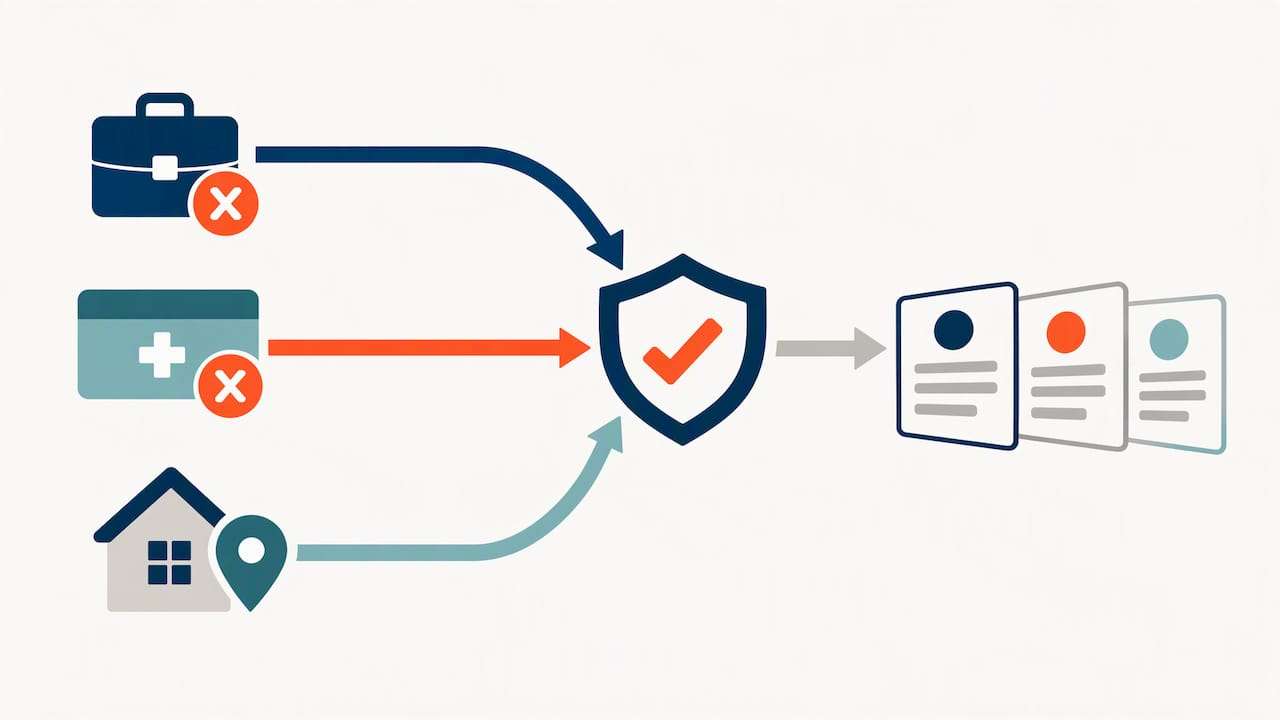
Certain events give you a guaranteed issue right, which means the insurer must sell you certain Medigap policies and cannot use your health against you. Typical triggers include losing employer coverage, your Medicare Advantage plan leaving your area or ending, and moving out of your plan’s service area. The rules about which policies you may buy and how long you have to apply depend on the event, and Medicare.gov lists them.
The deadlines are short. If you are leaving Medicare Advantage, the clock can be as short as 63 days, which is why our article on switching from Medicare Advantage to Medigap within 63 days matters if that is you. Life events that open other windows are covered in our special enrollment period life events guide.
A caution about Medicare’s Open Enrollment in the fall
The October 15 to December 7 Medicare Open Enrollment lets you change Medicare Advantage and Part D plans (see our open enrollment dates guide). It is not a Medigap guarantee. Moving from Medicare Advantage back to Original Medicare during that time is easy. SHIP warns that you may have limited options for buying a Medigap policy afterward. Do not drop a plan that works until you know a Medigap insurer will accept you.
What medical underwriting looks like
When underwriting applies, the application becomes a health interview. Expect questions about diagnoses, hospital stays, surgeries and medications. The insurer may request your medical records or call you to clarify answers.
Honesty matters here more than anywhere. SHIP warns that misreporting conditions or medications, even by accident, can lead to a denied claim or a policy cancelled retroactively for material misrepresentation. Before you apply:
- Make a list of every diagnosis and medication from the last several years, with dates.
- Ask your doctors’ offices for records if you are unsure what is on file.
- Answer every question exactly, including conditions you consider minor.
Your records also reflect where you get care. If some of your treatment happens outside conventional insurance billing, such as functional medicine visits and how insurance treats them, it helps to know how those visits are documented, because underwriters read what is in your chart.
Your options if you are declined or priced too high
A decline or a surcharge is a decision by one company, not a ruling on you. You can:
- Apply to a different carrier whose guidelines fit your health history better.
- Ask about a different plan letter. Benefits are standardized by plan, but underwriting is not, so the same person can be accepted for one carrier’s plan and declined for another’s.
- Look at Medicare Advantage. Medicare Advantage plans do not use medical underwriting for enrollment, though their networks and cost sharing work differently. Our comparison of Medicare Advantage and Medigap lays out the tradeoffs.
- Wait for a guaranteed issue event if one is realistically coming, such as a plan leaving your area.
- Call your state’s SHIP. Counselors are free and can explain your state’s rules.
For a broader look at choosing coverage with health conditions, see our guide on choosing a Medicare plan if you have preexisting conditions.
Our perspective: apply early, apply honestly
In our Charlotte practice, the costliest mistakes we see are not about the condition itself. They are about timing and paperwork. People assume they have time after retirement, drop a Medicare Advantage plan before checking whether a Medigap insurer will take them, or throw away the letter proving prior coverage.
We train our agents to explain these rules in plain terms and to give guidance that fits your situation, at no extra cost to you. Because Medigap benefits are the same by plan letter, the real differences are the insurer’s price, its rate increase history and its underwriting. We think those are worth comparing before you sign. Our guide on Medigap rate increases explains why.
If you are within a year of 65, the best thing you can do is write down your Part B start date and mark the six months that follow. Everything else gets easier from there.
— Zach
Get help matching your health history to the right plan
Safeguard Benefit Services is a Medicare insurance agency in Charlotte, North Carolina. We help with Medicare Supplements, Medicare Advantage, Part D, and dental, vision and hearing coverage, and we offer a free Medicare roadmap. If you are not sure whether you are inside a protected window, talk to us about Medicare Supplement plans before you apply or cancel anything.
FAQ
Can a Medigap plan deny me for a preexisting condition?
Not during your six-month Medigap Open Enrollment Period, and not when you have a guaranteed issue right. Outside those situations, in most states, an insurer can deny you or charge more after reviewing your health history. Another carrier may still accept you.
How long is the preexisting condition waiting period on Medigap?
It can last up to six months and applies to a condition you were diagnosed with or treated for in the six months before your policy began. Original Medicare still pays for your care during that time. Continuous creditable coverage of at least six months, with no gap over 63 days, can waive it.
Can I apply for a Medigap plan at any time?
You can apply any time, but you are only guaranteed acceptance during open enrollment or after a qualifying event. At other times the insurer may underwrite you. A few states, including New York and Connecticut, allow year-round enrollment without regard to health.
Does Medicare itself exclude preexisting conditions?
No. Original Medicare covers medically necessary care regardless of when a condition began. The preexisting condition rules apply to Medigap policies, which are sold by private insurers.
Sources
- Get ready to buy a Medigap policy | Medicare.gov
- Medigaps | State Health Insurance Assistance Programs
- Medicare Supplement (Medigap) Insurance and Medical Underwriting | SHIP
- Module 3: Medigap (Medicare Supplement Insurance) | CMS
- Medicare’s Open Enrollment Period | SHIP
Recommended
Request a No Obligation Phone Call








Get Connected